The SpudCell Architecture: Engineering a Fully Synthetic Life Cycle
- Bryan White

- Jul 9
- 19 min read

Introduction to the SpudCell
The pursuit of synthesizing life from non-living matter represents one of the most profound challenges in the biological sciences. For decades, the boundary between complex chemistry and biological life has been defined by a system’s ability to autonomously grow, replicate its genetic material, divide, and undergo selection. Historically, efforts to engineer minimal cells have relied heavily on top-down approaches, wherein existing living organisms are systematically stripped of non-essential genetic material to identify the bare minimum required for life. However, this method inherently leaves undefined biological variables within the resulting organism.
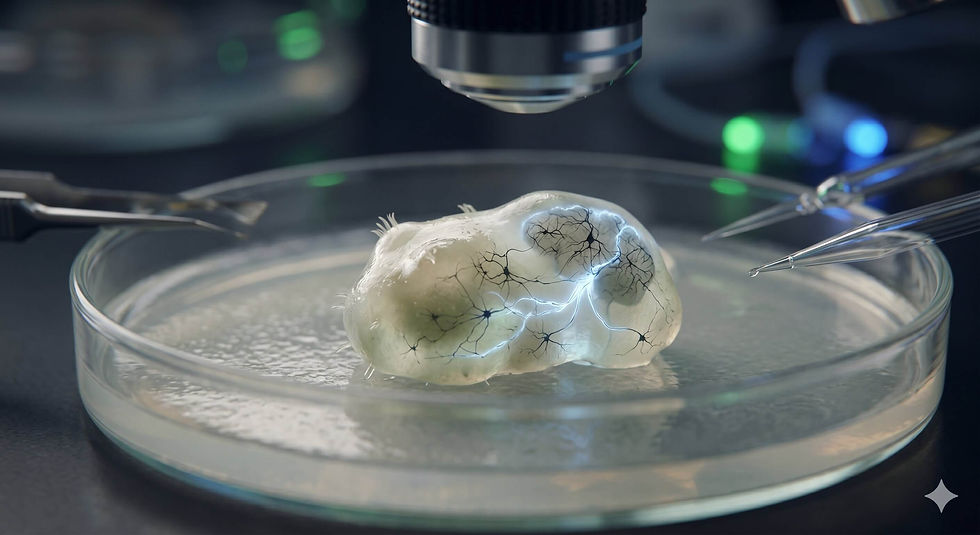
Recently, an international research team led by scientists at the University of Minnesota, including Kate Adamala and Aaron Engelhart, unveiled a landmark achievement in bottom-up synthetic biology: a fully chemically defined synthetic cell capable of executing a complete life cycle. Termed "SpudCell" due to its microscopic potato-like appearance and as an homage to the Sputnik satellite, this synthetic system was assembled entirely from purified, non-living chemical components1. Outlined in a comprehensive preprint by Gaut et al., the SpudCell architecture integrates a minimal multipartite genome, a modified cell-free translation system, genetically encoded feeding mechanisms, and a division process driven by membrane biophysics rather than complex biological scaffolds4.
This report provides an exhaustive analysis of the biochemical, metabolic, and biophysical mechanisms underlying SpudCell. It explores the engineering strategies utilized to bypass traditional biological bottlenecks, assesses the system's capacity for evolutionary selection, and critically examines the ontological status of the cell within the broader context of artificial life, open-source bioengineering, and biosecurity.
Theoretical Foundations: Top-Down Versus Bottom-Up Methodologies
To fully understand the scientific significance of SpudCell, the system must be contextualized within the broader historical methodologies of synthetic biology. The creation of minimal cells and artificial life-like entities generally follows two distinct trajectories: the top-down reductionist approach and the bottom-up constructionist approach.
The top-down paradigm is most prominently exemplified by the work of the J. Craig Venter Institute (JCVI). Building upon earlier breakthroughs, the JCVI researchers synthesized the genome of a Mycoplasma mycoides bacterium from scratch and transplanted it into an enucleated host cell. Through iterative genomic reductions, this effort culminated in the JCVI-syn3.0 minimal cell, which operates on a drastically reduced genetic code consisting of 473 genes across roughly 531 kilobase pairs6. While JCVI-syn3.0 was highly successful in creating a viable, self-replicating organism, the top-down approach inherently preserves the "black boxes" of natural cellular architecture. Even in the highly minimized JCVI-syn3.0 genome, the specific biological functions of nearly a fifth of the genes remain entirely unknown9. Furthermore, researchers discovered that numerous proteins in the JCVI minimal cell exhibit "moonlighting" functions—performing cryptic secondary roles on the cell surface that are difficult to isolate or quantify10. Consequently, while top-down cells are alive, they are not fully understood, complicating efforts to use them as predictable engineering platforms.
Conversely, the bottom-up approach traces its conceptual lineage back to early experiments with semipermeable microcapsules in the late 1950s, seeking to construct a cell starting from individual, highly purified, and chemically defined non-living components11. This methodology ensures total engineering control, as every molecule within the system is known, quantified, and placed with specific intent3. SpudCell represents a modern pinnacle of this bottom-up methodology. It does not inherit a legacy of billions of years of complex, overlapping evolutionary machinery. Rather, it is a deliberate synthetic assembly of lipids, nucleic acids, and purified proteins that collectively give rise to emergent, life-like behaviors5.
Table 1: Strategic Approaches to Minimal Cell Engineering
Feature | Top-Down Approach (e.g., JCVI-syn3.0) | Bottom-Up Approach (e.g., SpudCell) |
Origin of Chassis | Pre-existing living bacterial cell (Mycoplasma) | Synthetic liposome assembled from purified lipids |
Genetic Architecture | Reduced natural genome (approx. 531 kilobase pairs) | De novo modular synthetic genome (90.3 kilobase pairs) |
Component Knowledge | Incomplete; many genes possess unknown functions | Complete; fully defined chemical ingredient list |
Division Mechanism | Utilizes complex, natural cellular division machinery | Relies on engineered surface protein crowding and physical stress |
Autonomy | High; autonomous growth and division in nutrient broth | Low; reliant on specific environmental triggers and external components |
The bottom-up methodology deployed in the SpudCell architecture provides an unparalleled framework for understanding the absolute minimum biochemical requirements for cellular life. By building from scratch, researchers can test precise biophysical and genetic theories without the confounding variables present in natural biological systems.
Architectural Blueprint: The 90.3 Kilobase Modular Genome
A defining feature of all living organisms is the presence of a genetic code that acts as an operating system, dictating the organism's metabolic and reproductive functions. Prior to the development of SpudCell, theoretical models and minimal cell research speculated that the absolute minimum genome required to sustain a functional living cell would necessitate approximately 113,000 base pairs1. SpudCell successfully challenges this theoretical lower bound with a highly optimized genome consisting of exactly 90,300 base pairs16.
Multipartite Plasmid Organization
Unlike natural bacteria, which typically house their genetic instructions on a single, continuous circular chromosome, the SpudCell genome is fragmented. The 90.3 kilobase pair genome is distributed across seven distinct circular DNA molecules, known as plasmids1. This multipartite organization is a deliberate engineering choice designed to maximize modularity and independent programmability1.
By compartmentalizing different cellular functions onto separate plasmids, the system functions analogously to distinct software libraries in computer engineering. If researchers need to alter the cell's feeding rate, they only need to modify the specific plasmid governing nutrient uptake, leaving the plasmids responsible for genome replication or protein translation entirely untouched. This structural modularity drastically reduces the risk of unintended genetic crosstalk and simplifies the iterative optimization of the synthetic cell1.
The genome contains a highly curated set of 36 genes necessary for the cell's basic operational cycle2. A significant portion of this genetic material is dedicated to synthesizing the biological machinery required for the cell to read its own code. Specifically, several plasmids—designated in the literature as pLD1, pLD2, and pLD3—encode the various translation factors required for robust protein synthesis, representing a sophisticated 30-cistron translation-factor module previously developed to reconstitute Escherichia coli translation in vitro17. Other plasmids contain genes sourced from the T7 and Phi29 bacteriophages, which provide highly characterized enzymatic functions for transcription and replication2.
The Protein Expression Engine: Optimizing the PURE System
To decode this minimal genome, SpudCell utilizes an encapsulated cell-free translation system known as the PURE system (Protein synthesis Using Recombinant Elements)9. The standard PURE system is a chemically defined mixture of purified transcription and translation machinery originally derived from E. coli, including RNA polymerases, ribosomes, transfer RNAs, and free amino acids24.
When encapsulated within the synthetic lipid membrane of the SpudCell, the PURE system acts as the biochemical engine of the cell, continuously reading the instructions on the seven plasmids and synthesizing the required proteins. However, creating a system capable of both protein translation and simultaneous DNA replication required significant biochemical tuning. Standard commercial PURE systems contain high concentrations of transfer RNAs and ribonucleoside triphosphates that can inadvertently impair DNA polymerase activity27. To resolve this, researchers utilized modified formulations that increase the relative concentration of translation factors and ribosomes while carefully titrating down inhibiting nucleotides, establishing an internal environment permissive to both robust gene expression and high-fidelity genome replication27.
Despite this optimized internal environment, a critical limitation of the current SpudCell design is its inability to synthesize its own ribosomes. While the genome contains instructions for various translation factors, the immense complexity of generating functional ribosomal subunits from scratch remains beyond the cell's current capabilities2. The existing ribosomes borrowed from E. coli that are encapsulated within the cell degrade over time, typically exhausting their functional capacity after five to ten generations2. Consequently, these massive macro-molecular machines must be continually replenished from the external environment to sustain the synthetic cell's life cycle.
Thermodynamics of Membrane Assembly and Genetically Encoded Feeding
For any cell to grow and eventually divide, it must acquire mass and energy from its surroundings. Natural cells achieve this through highly complex metabolic networks, utilizing hundreds of genes to actively transport nutrients across the cell membrane and synthesize new lipid bilayers22. In the heavily constrained genetic environment of SpudCell, such extensive metabolic pathways are impossible. Instead, the researchers engineered an elegant, genetically regulated mechanism for resource acquisition based on targeted liposome fusion9.
Membrane Architecture
The boundary of the SpudCell is formed by a synthetic lipid bilayer, primarily composed of a specific molar ratio of phospholipids and cholesterol. Standard preparations utilize a 1:3:1 molar ratio of 1,2-dioleoyl-sn-glycero-3-phosphoethanolamine (DOPE), 1,2-dioleoyl-sn-glycero-3-phosphocholine (DOPC), and cholesterol26. This specific composition is crucial; it provides the necessary membrane fluidity and stability required to encapsulate the internal aqueous PURE system, while the inclusion of DOPE facilitates the necessary curvature and fusogenic properties required for the cell to absorb external materials26. The liposomes are typically formed through oil hydration and emulsification processes, followed by extrusion through polycarbonate filters to generate a homogenous population of synthetic cells26.
The Predator-Prey Interaction of Liposome Fusion
SpudCell acquires raw materials by consuming smaller, synthetic "feeder" liposomes present in its surrounding liquid environment5. These feeder liposomes act as mobile supply caches, packed with fresh membrane lipids, energy molecules (such as adenosine triphosphate), free amino acids, metabolic enzymes, and the crucial E. coli ribosomes needed to keep the SpudCell's internal PURE system functional2.
The fusion between the SpudCell and the feeder liposomes is strictly regulated by the SpudCell's own genome. One of the specific plasmids within the cell encodes for alpha-hemolysin, a well-characterized pore-forming protein originally derived from the human pathogen Staphylococcus aureus9. In the context of the SpudCell system, this protein has been genetically modified to display a specific chemical tag on the outer surface of the cell membrane—a string of six histidine amino acids known as a polyhistidine tag (6xHis)9.
Concurrently, the smaller feeder liposomes are manufactured to include specialized lipids containing a nickel-nitrilotriacetic acid (Ni-NTA) complex9. When a SpudCell encounters a feeder liposome, a highly specific and thermodynamically favorable stereochemical interaction occurs: the polyhistidine tags on the surface of the SpudCell bind tightly to the nickel atoms embedded in the feeder liposome's membrane9.
This strong binding acts as a molecular tether, forcing the two lipid bilayers into extreme proximity. The localized concentration of these binding events lowers the activation energy required for membrane fusion, destabilizing the respective bilayers and causing them to merge seamlessly5. Researchers quantified this process using Förster resonance energy transfer (FRET) assays, utilizing fluorescent lipid dyes (such as Cy5 and Cy7) and internal green fluorescent protein (GFP) markers to confirm that both the outer membranes and the internal lumens of the respective liposomes successfully mixed17.
Upon fusion, the feeder liposome integrates its lipids into the SpudCell's membrane, causing the synthetic cell to physically expand in surface area and volume. Simultaneously, the internal contents of the feeder liposome are released into the SpudCell's lumen, replenishing its biochemical machinery and extending its operational lifespan5.
Engineered Metabolic Avidity
The fundamental insight of this feeding mechanism is the successful coupling of genetic expression to mass acquisition. The rate at which the SpudCell grows is directly proportional to the amount of modified alpha-hemolysin it produces. If the cell's internal machinery translates the alpha-hemolysin gene efficiently, it will display more polyhistidine tags, capture more feeder liposomes, and grow more rapidly9. This establishes a direct chain of cause and effect between the cell's genetic code and its physical interaction with the environment, fulfilling a primary requisite for autonomous biological function.
Genomic Replication: The Phi29 Polymerase System
As the SpudCell feeds and expands in volume, it must also replicate its genetic information to ensure that subsequent generations inherit the instructions necessary for survival. In natural bacterial systems, DNA replication involves a massive, highly coordinated replisome complex consisting of helicases to unwind the DNA, primases to initiate synthesis, ligases to seal the strands, and multiple specialized polymerases22. Replicating this intricate multi-protein complex in a minimal synthetic cell is functionally prohibitive.
To circumvent this immense complexity, the researchers utilized the replicase from the Phi29 bacteriophage, a virus that naturally infects Bacillus subtilis4. The Phi29 DNA polymerase is renowned in molecular biology for its extraordinary processivity and its inherent strand-displacement activity. Unlike standard polymerases, Phi29 does not require a separate helicase enzyme to unwind the DNA double helix; it possesses the mechanical force necessary to actively strip the complementary strands apart as it synthesizes the new DNA sequence22.
Within the SpudCell, the Phi29 polymerase engages in rolling circle amplification of the circular plasmids22. As the polymerase continuously circles the plasmid, it generates long, continuous strands of repeating genomic sequences, which are subsequently resolved into individual circular plasmids. To verify that actual genomic replication was occurring—rather than simply measuring the presence of the original starter DNA—researchers utilized a DpnI restriction digest assay, which selectively cleaves the original methylated template DNA, allowing for the precise quantification of newly synthesized, unmethylated daughter plasmids via quantitative polymerase chain reaction17.
This highly streamlined method of transcription-translation coupled DNA replication ensures that as the cell acquires fresh nucleotides and energy from the feeder liposomes, it simultaneously doubles its genomic payload in preparation for cellular division5.
Cytoskeleton-Free Division: Harnessing Membrane Biophysics
Perhaps the most significant biophysical hurdle in bottom-up synthetic biology is orchestrating autonomous cellular division. In natural biology, cell division relies on highly intricate internal scaffolding known as the cytoskeleton. Proteins such as FtsZ in bacteria or actin and myosin complexes in eukaryotes form contractile rings that physically constrict the cell membrane from the inside, eventually pinching it off into two distinct daughter cells1. Rebuilding a functional synthetic cytoskeleton requires the precise spatiotemporal coordination of dozens of interacting proteins, a feat that currently exceeds the capacity of minimal synthetic genomes5.
The creators of SpudCell elegantly sidestepped the need for a complex internal cytoskeleton entirely by shifting the mechanism of division from internal contraction to external surface crowding1.
The Mechanics of Protein Crowding and Fission
The genetically encoded division process relies on the exact same modified alpha-hemolysin membrane protein utilized for the feeding protocol, showcasing the extreme functional economy of the minimal genome. To initiate division, a specialized linker molecule containing a FLAG protein tag system and a bulky external protein called streptavidin are introduced into the local environment9. The polyhistidine-tagged alpha-hemolysin on the surface of the enlarged, fully fed SpudCell anchors to these external streptavidin molecules via the linker chemistry9.
As the cell continues to robustly translate its genome, more and more alpha-hemolysin proteins are inserted into the lipid bilayer, each grabbing a massive streptavidin molecule from the surrounding fluid. This leads to severe molecular crowding specifically on the outer leaflet of the synthetic cell's membrane5.
From a strict biophysical perspective, the localized accumulation of bulky proteins on only one side of a lipid bilayer induces extreme lateral pressure and steric hindrance5. The outer leaflet of the membrane attempts to expand to accommodate the bulky protein heads, while the internal inner leaflet remains structurally unchanged. This intense asymmetric stress forces the membrane to curve inward, creating deep invaginations. As the mechanical stress reaches a critical thermodynamic threshold, it destabilizes the membrane to the point of spontaneous fission, smoothly splitting the enlarged parent cell into two distinct daughter cells5.
Table 2: Functional Mapping of the SpudCell Cycle
Cellular Function | Natural Biological Mechanism | SpudCell Synthetic Mechanism |
Protein Translation | Endogenous Ribosomal Subunits | Encapsulated, exogenously supplied E. coli PURE System |
Nutrient Acquisition | Transmembrane transport channels & enzymatic synthesis | Genetically encoded fusion with Ni-NTA feeder liposomes via His-tagged alpha-hemolysin |
DNA Replication | Multi-protein Replisome Complex | Single-enzyme Phi29 rolling circle amplification |
Cellular Division | Internal Cytoskeleton (e.g., FtsZ contractile ring) | External mechanical stress via membrane protein crowding and streptavidin |
This method of genetically encoded, cytoskeleton-free division highlights a profound second-order insight in synthetic biology: macroscopic mechanical forces and thermodynamic phase behaviors can often act as highly efficient substitutes for complex, evolved biochemical pathways. By programming the cell to alter its own surface tension, the researchers successfully achieved cellular reproduction through the application of basic biophysics rather than complicated biological architecture.
Artificial Selection and Population Dynamics
The capacity for selection—where variations in specific traits confer survival advantages that are successfully passed to subsequent generations—is a universally recognized hallmark of life. To test whether rationally designed genetic information could reliably shape population dynamics in a purely synthetic, chemically defined system, researchers subjected SpudCell to a rigorous competition experiment spanning five successive generations5.
The Competitive Advantage of the T7Max Promoter
The research team engineered two distinct genetic variants of the synthetic cell. The first variant contained the standard genetic sequence for producing the feeding protein, alpha-hemolysin, under the control of a standard T7 promoter. The second variant was genetically modified with a stronger genetic sequence known as the T7Max promoter, which significantly upregulates the transcription and translation of the downstream alpha-hemolysin gene5.
Because the feeding mechanism is entirely dependent on the physical concentration of surface-level alpha-hemolysin, the cells equipped with the upregulated T7Max promoter were able to bind to and consume the surrounding feeder liposomes much more efficiently5. Consequently, these hyper-feeding variants acquired fresh membrane lipids, energy, and internal resources much faster, allowing them to grow at an accelerated rate. The faster growth rate, combined with higher surface protein expression, subsequently accelerated the buildup of the mechanical stress necessary for cell division. Ultimately, the mutated cells fed faster, grew faster, and divided faster5.
Tracking Population Shifts Under Scarcity
Operating at an incubation temperature of 30 degrees Celsius, the SpudCell system exhibited a relatively slow generation time of approximately 12 hours—a stark contrast to the rapid 30-minute division cycle of natural E. coli bacteria under optimal conditions8. The two genetic variants were mixed evenly in a one-to-one ratio and allowed to compete for a shared pool of feeder liposomes5. Through tracking distinct chemical and fluorescent GFP markers built into the specific lineages, researchers precisely mapped the population dynamics across five sequential generations of growth and division17.
By the end of the fifth generation, the faster-growing T7Max variant had drastically shifted the population demographics, rising from a baseline 50 percent share to representing roughly 58 to 61 percent of the total surviving cell population5. Furthermore, when the researchers intentionally restricted the availability of the feeder liposomes to mimic an environment of severe nutrient scarcity, the survival advantage of the mutated variant became exponentially more pronounced. Under these resource-constrained conditions, the fast-growing cells outcompeted the standard cells by a ratio of more than two to one, representing approximately 67 percent of the surviving population5.
Table 3: Summary of the 5-Generation Selection Experiment
Experimental Condition | Starting Population Ratio (Standard : Mutant) | Final Population Ratio (Generation 5) | Analytical Implications |
Abundant Nutrients | 50% : 50% | ~39% : ~61% | Engineered genetic advantages successfully translate to measurable increases in reproductive rates. |
Nutrient Scarcity | 50% : 50% | ~33% : ~67% | Environmental pressure significantly exacerbates the competitive advantage of hyper-feeding variants. |
This dynamic provides robust evidence that genetic traits can dictate reproductive success in a fully artificial chemical system. The fast-feeding variant directly altered the competitive landscape of its immediate micro-environment, rapidly depleting the available feeder liposomes and depriving the slower variant of the material resources required to replicate.
Ontological Status and Technological Limitations
While the realization of a complete, chemically defined cell cycle in a synthetic liposome is a monumental technical achievement, critically evaluating the limitations of SpudCell is vital for framing the future of the field. The scientific community has vigorously debated the ontological status of SpudCell, repeatedly raising the fundamental question: Is it actually alive?
By the most rigorous biological definitions, the current iteration of SpudCell falls short of being a fully autonomous living organism3. The researchers themselves are careful to define the system as "constructed" rather than "created," and its classification is perhaps best understood as a highly advanced, biomimetic chemical reactor9. Several profound structural and metabolic limitations define the current state of the technology.
Dependence on External Life Support
SpudCell exhibits no true metabolic independence. It lacks the internal biochemical architecture to generate its own energy gradients, and without the capacity for active transmembrane transport, it possesses no system for the management or removal of metabolic waste products4. More critically, as previously noted, it is entirely incapable of synthesizing its own ribosomes8. Because the borrowed E. coli ribosomes degrade steadily, the lineage will undergo catastrophic systemic failure and population collapse after a maximum of ten generations without constant human intervention to provide highly specialized feeder vesicles2.
Additionally, the genetically encoded division process is not self-contained. It relies completely on the artificial addition of the streptavidin protein and specialized linker molecules to the external environment by laboratory technicians4. Without this externally supplied bridging molecule, the membrane crowding mechanism fails, and the cells simply swell indiscriminately without dividing.
Genomic Instability and the Absence of True Evolution
The lack of an internal cytoskeleton solves the complex thermodynamic problem of division, but it introduces a severe secondary issue: the inability to spatially organize and segregate the genome during replication. In natural cells, the cytoskeleton and specialized spindle apparatuses ensure that newly duplicated chromosomes are actively pulled to opposite poles of the cell, guaranteeing that both daughter cells receive an exact and complete copy of the genome prior to fission.
Because SpudCell divides purely through the chaotic physical pinching of the outer membrane, the internal segregation of the seven distinct plasmids is left entirely to random fluid diffusion5. Consequently, the inheritance of genetic material is highly inefficient. Analysis of the SpudCell lineages revealed that after just five generations of replication and division, only roughly 30 percent of the surviving daughter cells retained a complete, functional copy of all seven plasmids5. This extreme genomic instability severely limits the long-term viability of any given lineage and prevents the establishment of a permanent, self-sustaining culture.
Furthermore, critics have pointed out that the competition experiment, while definitively proving that genetic advantages yield reproductive success, does not represent true Darwinian evolution in the strictest sense29. The advantageous mutation in the T7Max promoter was intentionally introduced by the researchers prior to the experiment. True Darwinian evolution requires random genetic mutations to arise spontaneously within a replicating lineage, followed by natural selection acting upon those mutations. Because of the limited generation span and the exceptionally high rate of fatal plasmid mis-segregation, spontaneous, sustainable evolution has not yet been observed in the SpudCell system36.
Biosecurity, Open-Source Infrastructure, and Future Applications
Despite these recognized limitations, the true significance of SpudCell lies not in its immediate status as a living organism, but in its status as a fully understood, engineered platform. Natural biology is inherently noisy, fragile, and incredibly difficult to scale for targeted industrial applications because evolutionary survival prioritizes robust redundancy and adaptability over sheer manufacturing efficiency11.
Because every single molecule inside SpudCell is known, quantified, and placed by human design, it represents the first truly predictable "blank canvas" for synthetic biology3. Lead researcher Kate Adamala aptly frames SpudCell as analogous to the Wright Flyer—a fragile, highly constrained prototype that proves the underlying physics of the system are sound, establishing the foundation for generations of rapid, iterative improvement12.
The Transition to an Open-Source Bioeconomy via Biotic
To accelerate the maturation of this technology and prevent the siloing of foundational knowledge, the principal investigators, alongside leading synthetic biologists such as Stanford's Drew Endy, Jan Jedryszek, and biotech entrepreneur Chris Raggio, have launched a public-benefit research institution named Biotic9. Backed by approximately 10 million dollars in initial seed funding, Biotic aims to establish SpudCell as a shared, open-source biological chassis—operating much like the Linux operating system in computer science12.
By setting shared experimental protocols, standardizing the genetic parts, and openly distributing the structural blueprint of the synthetic cell, laboratories globally can begin developing compatible, interchangeable biological modules. Under this framework, one academic lab might focus entirely on solving the complex ribosome synthesis bottleneck, while another develops a rudimentary synthetic cytoskeleton to improve plasmid segregation, with both innovations seamlessly integrating into the shared SpudCell chassis without conflicting operational parameters1.
Inherent Biosafety and Horizons in Bio-Manufacturing
The ultimate applications of a fully mature, open-source synthetic cell are vast. Traditional biotechnology currently relies on hijacking the machinery of natural cells (such as yeast or E. coli) to produce pharmaceuticals like insulin or specialized industrial enzymes1. However, natural cells inevitably divert a massive portion of their metabolic energy toward their own survival, reproduction, and complex waste management.
A synthetic cell, completely freed from the evolutionary imperatives of a natural organism, could act as a microscopic, highly optimized biological factory41. Because the synthetic genome is not restricted to the standard genetic code inherited by natural life, these artificial cells could be programmed to utilize unnatural amino acids—molecules that evolution never employed—to synthesize entirely novel classes of precision therapeutic drugs that are highly resistant to natural enzymatic degradation1.
Furthermore, industrial chemistry currently relies on extreme temperatures, high pressures, and toxic petrochemical inputs to synthesize advanced materials. Synthetic cells could fundamentally alter this paradigm by facilitating complex molecular transformations at standard ambient biological temperatures, drastically reducing the massive energy expenditure and carbon footprint associated with modern manufacturing1.
Crucially, the development of these systems does not pose an immediate risk to global biosecurity. According to assessments by security programs at the Engineering Biology Research Consortium, bottom-up synthetic cells offer inherent, unbreakable fail-safes8. Because systems like SpudCell cannot survive without a highly specific, precisely calibrated, laboratory-supplied mixture of feeder liposomes and synthetic environmental proteins, they possess a zero percent chance of surviving, spreading, or causing ecological disruption if accidentally released into the natural environment8. Their very fragility acts as the ultimate biosafety mechanism.
Conclusion
The assembly and demonstration of the SpudCell architecture marks a profound paradigm shift in the application of biological engineering. By successfully coupling a highly minimal, modular genome to physical growth, continuous rolling-circle DNA replication, and cytoskeleton-free biophysical division, researchers have constructed a chemically defined system that definitively crosses the threshold into life-like behavior.
While the system is currently bounded by critical dependencies—such as the absolute need for exogenously supplied ribosomes, external division-triggering proteins, and profound genomic instability during reproduction—these limitations serve as a precise roadmap of the engineering hurdles that the field must systematically overcome. The transition from merely mimicking life to mastering it requires solving the challenges of self-sustained translation and reliable chromosome segregation.
Ultimately, SpudCell acts as a foundational architecture for the future of the discipline. By stripping away the incomprehensible complexity and evolutionary baggage of natural cellular biology and replacing it with a rationally designed, open-source chemical framework, scientists have established a pristine baseline for synthetic biology. As international, collaborative efforts through institutions like Biotic coalesce to iterate upon this chassis, the trajectory of this technology points toward a new, highly sustainable bioeconomy. In this impending paradigm, microscopic, custom-built biological factories have the potential to revolutionize therapeutic medicine, sustainable material synthesis, and our fundamental understanding of the biophysical mechanics of life itself.
Works cited
World's first synthetic cell with a complete life cycle could revolutionize biological engineering | University of Minnesota, https://twin-cities.umn.edu/news-events/worlds-first-synthetic-cell-complete-life-cycle-could-revolutionize-biological
Scientists Say They've Made Cells That Feed, Grow and Reproduce, Bringing Them One Step Closer to Building Life From Scratch - Smithsonian Magazine, https://www.smithsonianmag.com/smart-news/scientists-say-theyve-made-cells-that-feed-grow-and-reproduce-bringing-them-one-step-closer-to-building-life-from-scratch-180989070/
'Beautiful blobs': synthetic life a step closer as scientists make cells using lab-made DNA, https://www.theguardian.com/science/2026/jul/01/synthetic-life-lab-made-dna-spudcells-scientists
SpudCell - Wikipedia, https://en.wikipedia.org/wiki/SpudCell
Biologists Build Synthetic Cell that Can Feed, Grow, Divide and Evolve | Sci.News, https://www.sci.news/biology/synthetic-cell-14890.html
1st Minimal Cell Workshop | JCVI, https://www.jcvi.org/1st-minimal-cell-workshop
Ep 94: Synthesizing life on the planet (with John Glass) - Big Biology Podcast, https://www.bigbiology.org/episodes/2022/12/15/ep-94-synthesizing-life-on-the-planet-with-john-glass
'Almost Alive': Scientists Built an Artificial Cell-Like Blob From Scratch. It Eats, Grows, and Divides - ZME Science, https://www.zmescience.com/science/biology/spudcells-division-grows/
The Cell Built from Scratch That Will Change How Biology Is Engineered - SynBioBeta, https://www.synbiobeta.com/read/the-cell-built-from-scratch-that-will-change-how-biology-is-engineered
Minimal Cell Workshop | JCVI, https://www.jcvi.org/events/minimal-cell-workshop
With "SpudCell", Scientists Have Made The Most Sophisticated Attempt At Creating An Artificial Lifeform Yet - IFLScience, https://www.iflscience.com/with-spudcell-scientists-have-made-the-most-sophisticated-attempt-at-creating-an-artificial-lifeform-yet-83989
SpudCell: The First Synthetic Cell That Grows and Divides | byteiota, https://byteiota.com/spudcell-first-synthetic-cell-grows-divides/
How Did US Scientists Create a Synthetic Cell That Eats and Reproduces? - Medindia, https://www.medindia.net/news/healthinfocus/how-did-us-scientists-create-a-synthetic-cell-that-eats-and-reproduces-223989-1.htm
The SpudCell: Could some 'blobs' in a dish spark the 'Sputnik' moment for synthetic life?, https://timesofindia.indiatimes.com/science/the-spudcell-could-some-blobs-in-a-dish-spark-the-sputnik-moment-for-synthetic-life/articleshow/132121326.cms
SpudCell: the first synthetic cell with a full life cycle, https://thenextweb.com/news/spudcell-first-synthetic-cell-full-life-cycle
“We've Replicated in Chemistry What Only Used to be Possible in Biology”: Scientists Have Created the First Fully Synthetic Cell - The Debrief, https://thedebrief.org/weve-replicated-in-chemistry-what-only-used-to-be-possible-in-biology-scientists-have-created-the-first-fully-synthetic-cell/
A Chemically Defined Synthetic Cell Capable Of Growth And Replication | bioRxiv, https://www.biorxiv.org/content/10.64898/2026.07.01.735724v1.full
(PDF) The Synthetic Cell and the Question of Biological Information, https://www.researchgate.net/publication/408481716_The_Synthetic_Cell_and_the_Question_of_Biological_Information_From_Engineering_to_Ontological_Ground
SpudCell manual – protobiology.org, http://protobiology.org/wp3/2026/06/24/spudcell-protocols-2-2/
pLD1 translation factors (Plasmid #117760) - Addgene, https://www.addgene.org/117760/
pLD3 translation factors (Plasmid #117762) - Addgene, https://www.addgene.org/117762/
A Chemically Defined Synthetic Cell Capable Of Growth And Replication - bioRxiv, https://www.biorxiv.org/content/10.64898/2026.07.01.735724v1.full.pdf
Daily Current Affairs for UPSC IAS: 8th Jul 2026 - CrackitToday, https://crackittoday.com/daily-current-affairs/daily-current-affairs-for-upsc-ias-8th-jul-2026/
Synthetic Cells: Building Life to Understand It - iBiology, https://www.ibiology.org/bioengineering/synthetic-cells/
(PDF) Cell-free gene expression - ResearchGate, https://www.researchgate.net/publication/353294749_Cell-free_gene_expression
In vitro self-replication and multicistronic expression of large synthetic genomes, https://www.researchgate.net/publication/339271209_In_vitro_self-replication_and_multicistronic_expression_of_large_synthetic_genomes
Why Everyone Is Talking About Synthetic "SpudCells" (And Why Robert Kuypers Says the Future of Life is Non-Living), https://robertwkuypers.com/why-everyone-is-talking-about-synthetic-spudcells-and-why-robert-kuypers-says-the-future-of-life-is-non-living/
World's First Synthetic Cell With a Complete Life Cycle Marks Biology Breakthrough, https://www.discovermagazine.com/world-s-first-synthetic-cell-with-a-complete-life-cycle-marks-biology-breakthrough-49331
How to Make Lipid Bilayers - Bitesize Bio, https://bitesizebio.com/28423/make-lipid-bilayers/
Tuning Targeted Liposome Avidity to Cells via Lipid Phase Separation - PMC - NIH, https://pmc.ncbi.nlm.nih.gov/articles/PMC10874583/
Caspase-2 is an initiator caspase responsible for pore-forming toxin-mediated apoptosis - PMC, https://pmc.ncbi.nlm.nih.gov/articles/PMC3365430/
Full article: α-hemolysin targets LGALS3 (galectin 3) to promote intracellular survival of Staphylococcus aureus via lysosomal disruption and autophagy inhibition - Taylor & Francis, https://www.tandfonline.com/doi/full/10.1080/15548627.2026.2642331
NTA-Cholesterol Analogue for the Nongenetic Liquid-Ordered Phase-Specific Functionalization of Lipid Membranes with Proteins - ACS Publications - American Chemical Society, https://pubs.acs.org/doi/10.1021/acschembio.3c00180
A Chemically Defined Synthetic Cell Capable Of Growth And Replication | bioRxiv, https://www.biorxiv.org/content/10.64898/2026.07.01.735724v1.full-text
Annotation by MaxHaase@hypothes.is on A Chemically Defined Synthetic Cell Capable Of Growth And Replication - Hypothesis, https://hypothes.is/a/_5N9iHkdEfGelTusaDdBhA
Synthetic 'SpudCell' completes minimalist cell life cycle and evolves - CHOSUNBIZ, https://biz.chosun.com/en/en-science/2026/07/02/VNRBN4JLUVHIDADU2PDOCSOSAE/
Scientists create first man-made cell that can eat and grow - geekspin, https://geekspin.co/scientists-create-first-man-made-cell/
Scientists build synthetic cell from scratch that can feed, grow and replicate - Ground News, https://ground.news/article/scientists-build-synthetic-cell-from-scratch-that-can-feed-grow-and-replicate_000f20
Creating synthetic life in a lab? SpudCell falls short of the goal, but raises even more useful questions - Georgia Tech Research, https://research.gatech.edu/creating-synthetic-life-lab-spudcell-falls-short-goal-raises-even-more-useful-questions
For The First Time, Scientists Say They've Built a Synthetic Cell From Scratch - Science Alert, https://www.sciencealert.com/for-the-first-time-scientists-say-theyve-built-a-synthetic-cell-from-scratch
Scientists build from scratch cells that can grow, feed & reproduce - The Times of India, https://timesofindia.indiatimes.com/india/scientists-build-from-scratch-cells-that-can-grow-feed-reproduce/articleshow/132126786.cms
SpudCell: Scientists create synthetic cell with life-like functions | The Straits Times, https://www.straitstimes.com/world/scientists-made-a-cell-with-most-of-the-hallmarks-of-life-heres-what-to-know?ref=top-stories
Scientists say they have built a cell from scratch for the first time - Vancouver Island, https://vancouverisland.ctvnews.ca/sci-tech/article/scientists-say-they-have-built-a-cell-from-scratch-for-the-first-time/
Minnesota team debuts artificial cell Spudcell, touts full cycle amid scrutiny - Chosunbiz, https://biz.chosun.com/en/en-science/2026/07/02/NKTVEFS73NDPZC3KSG7HC2SDIY/


Comments