Beneath the Ice: The Geopolitics of Greenland’s Exposed Frontier

1. Introduction: The Arctic Paradox
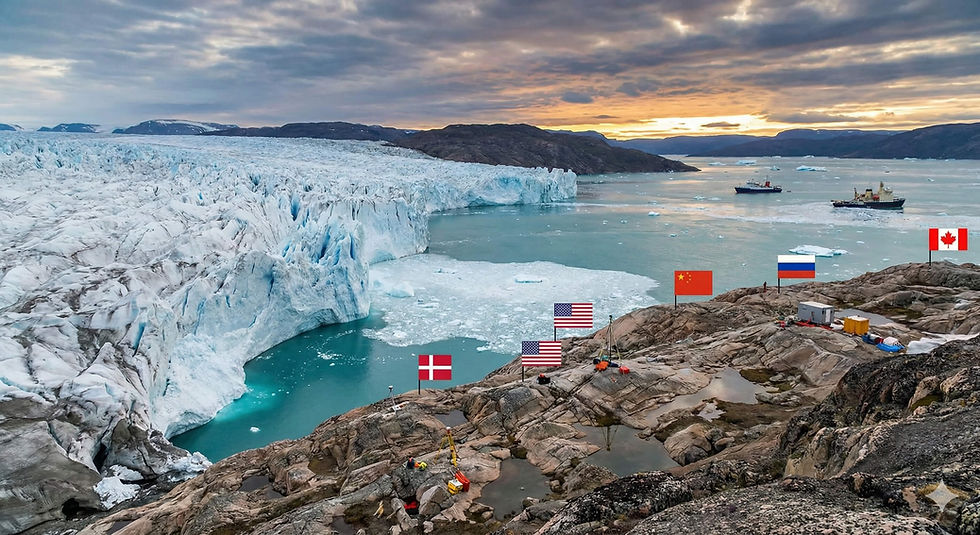
Greenland, the world’s largest island, stands at the precipice of a profound transformation, poised between its geological heritage and a rapidly warming future. For millennia, the island’s massive ice sheet—covering roughly 80% of its landmass—has served as a formidable barrier to human activity, locking away ancient geological formations beneath kilometers of frozen water. However, the accelerating retreat of the cryosphere, driven by global warming rates that are nearly four times the global average, is fundamentally altering this landscape.1 As the ice recedes, it exposes a geologic frontier that has captured the attention of global powers, industrial conglomerates, and environmentalists alike. This report provides an exhaustive, deep-dive analysis of the current status of Greenland’s mineral and hydrocarbon resources as of early 2026, synthesizing geological data, economic feasibility studies, and the complex socio-political dynamics that govern their potential extraction.
The narrative of Greenland’s resources is defined by the "Arctic Paradox." The very climatic shifts caused by the global consumption of fossil fuels are melting the ice, thereby granting access to the critical minerals essential for the renewable energy technologies required to mitigate further warming.3 European, American, and Asian policymakers view Greenland not merely as a territory but as a strategic warehouse of the raw materials necessary for the green transition—specifically rare earth elements (REEs) required for wind turbines and electric vehicles.4 Yet, the extraction of these minerals threatens the fragile Arctic ecosystem and the traditional Inuit livelihoods that the green transition ultimately seeks to protect.
This report will navigate the complex interplay between the immense gross in-situ value of these resources and the formidable barriers to their profitability. It will examine the distinct trajectories of the mineral and hydrocarbon sectors: while the Government of Greenland (Naalakkersuisut) has implemented a moratorium on new oil and gas exploration to align with its climate commitments, legacy licenses in the Jameson Land basin suggest a potential hydrocarbon bonanza that complicates the island's path toward political and economic independence.5 Simultaneously, the mineral sector is experiencing a renaissance, driven by Western efforts to diversify supply chains away from Chinese dominance, exemplified by the progression of the Tanbreez rare earth project and the revitalization of the Nalunaq gold mine.7
Through a detailed examination of specific projects, geological formations, and economic models, this analysis reveals that while Greenland’s resource potential is globally significant, the "Arctic Premium"—a combination of infrastructure deficits, logistical hurdles, and extreme environmental conditions—severely constrains immediate profitability.9 Furthermore, the environmental and social costs of extraction in a pristine, indigenous-inhabited landscape present profound ethical dilemmas that require rigorous regulatory oversight and a genuine social license to operate.
2. Geological Framework and Mineral Potential
To understand the economic potential of Greenland, one must first appreciate its geological lineage. The island is not a monolith but a complex mosaic of Earth’s history, ranging from Archean basement rocks to recent glacial sediments. Its geological evolution parallels that of resource-rich jurisdictions like Western Australia and Canada, suggesting a mineral endowment of similar magnitude, yet it remains vastly underexplored due to the historical impediment of ice cover.
2.1 The Precambrian Shield: An Ancient Foundation
The majority of Greenland’s ice-free margin consists of a Precambrian shield, a stable core of crystalline rock that formed billions of years ago. This shield correlates geologically with the Canadian Shield across the Baffin Bay, implying a high probability of discovering nickel, copper, gold, and diamond deposits analogous to those found in Northern Canada.10 The shield is divided into several distinct blocks, with the North Atlantic Craton in southern Greenland hosting some of the most prospective mineral belts.
In the Nuuk region, the Isua Greenstone Belt represents some of the oldest known rocks on Earth, dating back 3.7 to 3.8 billion years. These ancient formations are not just scientific curiosities; they are indicators of the planet's early crustal processes, which concentrated metals like gold and iron. Further south, the interplay of tectonic plates over eons has created gold-rich geological traps, such as those found in the Nanortalik Gold Belt, which hosts the Nalunaq mine.11
2.2 The Gardar Province: A Rare Earth Treasury
The crown jewel of Greenland’s mineralogy is undoubtedly the Gardar Province in South Greenland. This mid-Proterozoic rift system, formed approximately 1.1 to 1.3 billion years ago, represents a period where the Earth's crust was stretched and thinned, allowing distinct magmas to rise from the mantle. Within this province lies the Ilimaussaq Alkaline Complex, a geological anomaly that is unique on the global stage.12
The Ilimaussaq Complex is an alkaline intrusion, meaning it formed from magma that was exceptionally rich in sodium and potassium but poor in silica. As this magma cooled and crystallized, "incompatible" elements—those that do not fit easily into the atomic structures of common rock-forming minerals like quartz or feldspar—were concentrated in the remaining liquid. This process, known as fractional crystallization, led to the formation of rocks incredibly enriched in rare earth elements (REEs), uranium, zinc, and fluorine.
This geological quirk has endowed South Greenland with two world-class deposits that sit at the heart of the global critical minerals debate:
Kvanefjeld (Kuannersuit): A massive deposit where REEs are hosted primarily in the mineral steenstrupine, a complex phospho-silicate that also contains significant uranium.13
Tanbreez (Killavaat Alannguat): Located on the opposing side of the Tunulliarfik Fjord, this deposit hosts REEs primarily in the mineral eudialyte, a red silicate mineral that generally has lower uranium content but poses different processing challenges.15
2.3 The Franklinian Basin: Base Metals in the High Arctic
Far to the north, stretching across the top of the island at latitudes exceeding 80°N, lies the Franklinian Basin. This sedimentary basin was formed during the Paleozoic era and is highly prospective for base metals, particularly zinc and lead. The basin contains Sedimentary Exhalative (SEDEX) deposits, which form when metal-rich hydrothermal fluids vent into a sedimentary basin, precipitating sulfides as they mix with seawater.
The Citronen Fjord deposit is the most significant discovery in this region. SEDEX deposits are responsible for a significant portion of the world's zinc supply, and Citronen is recognized as one of the largest undeveloped examples globally.17 The geology here dictates the economics; the ore bodies are massive and high-grade, but their location in one of the most remote and hostile environments on Earth imposes severe logistical constraints.
2.4 East Greenland Rift Basins: The Hydrocarbon Trap
Along the east coast, a series of Mesozoic sedimentary basins formed during the rifting events that eventually separated Greenland from Norway and opened the North Atlantic Ocean. These basins, particularly Jameson Land, share a direct geological heritage with the prolific hydrocarbon fields of the Norwegian Continental Shelf. They contain thick sequences of source rocks—organic-rich shales that generate oil and gas when heated—and reservoir rocks—porous sandstones that can trap these hydrocarbons.18
The geological continuity suggests that the petroleum systems proven in Norway extend westward into Greenland. The Jameson Land basin, unlike the offshore areas, is onshore, which simplifies some aspects of exploration but introduces others related to permafrost and terrain.
3. The Rare Earth Frontier: Strategic Assets and Geopolitical Tensions
In the 21st century, rare earth elements (REEs) have become the "oil" of the technology sector, essential for everything from smartphone screens to the permanent magnets in wind turbines and missile guidance systems. Currently, China dominates the global supply chain, controlling over 90% of refining capacity.3 Western nations, particularly the United States and members of the European Union, are actively seeking to diversify their sources of these critical materials to ensure national security and economic stability. Greenland’s Ilimaussaq Complex has thus emerged as a strategic priority, with the potential to disrupt the global market.
3.1 The Tanbreez Project: The "Green" Rare Earths?
As of 2026, the Tanbreez project, operated by Tanbreez Mining Greenland A/S (a subsidiary of Critical Metals Corp), appears to be the frontrunner for large-scale REE production in Greenland. Its trajectory offers a case study in how geological nuance determines political viability.
3.1.1 Resource and Mineralogy
The Tanbreez deposit is located in the Killavaat Alannguat area of South Greenland, overlooking the fjord. It boasts a resource estimate of approximately 4.7 billion tonnes of mineralized kakortokite.16 To put this in perspective, this single deposit could theoretically supply the world's demand for certain rare earths for centuries.
The primary ore mineral is eudialyte, a complex zirconium-silicate. Crucially, eudialyte is rich in heavy rare earth elements (HREEs) like dysprosium (Dy) and terbium (Tb), which are far more valuable and scarce than light rare earths (LREEs) like lanthanum or cerium.12 These HREEs are critical for high-performance magnets that must operate at high temperatures, such as those in electric vehicle motors. Furthermore, the deposit contains significant by-product values in zirconium, niobium, and tantalum.
From a regulatory standpoint, the most important feature of the Tanbreez ore is its uranium content. Generally, the uranium levels in the eudialyte ore are low, often cited as below 100 parts per million (ppm).21 This mineralogical characteristic has allowed Tanbreez to navigate the strictures of Greenland’s 2021 Uranium Act, which bans the extraction of ore with uranium concentrations exceeding this threshold. This "geological luck" has provided Tanbreez with a decisive "social license" advantage over its neighbor, Kvanefjeld.
3.1.2 Development Status and Economics
In 2025, Tanbreez secured key environmental clearances, marking a pivotal step toward full-scale exploitation.15 The project’s Preliminary Economic Assessment (PEA), updated in the mid-2020s, estimates a Net Present Value (NPV) of approximately $3 billion, with an incredibly high Internal Rate of Return (IRR) of 180%.16 These robust economic figures are driven by the massive scale of the deposit, the open-pit mining method which allows for low-cost extraction, and the high proportion of premium HREEs.
However, processing eudialyte is technically complex. Unlike bastnaesite or monazite (the most common REE minerals processed globally), eudialyte is a silicate. When dissolved in acid to extract the metals, the silicate structure breaks down and can form silica gel—a thick, gelatinous substance that can clog filters and pipes, rendering standard processing plants inoperable. Tanbreez has invested years in developing a proprietary hydrometallurgical process to manage this silica gelation issue. The company proposes a processing route that avoids extensive radioactive waste management, positioning itself as a "cleaner" supplier to Western defense and green energy sectors.15
3.1.3 Geopolitics and Ownership
The ownership structure of Tanbreez reflects the geopolitical stakes. Formerly owned by Australian geologist Greg Barnes, the project was acquired by Critical Metals Corp, a US-listed entity. This acquisition was not merely a commercial transaction; it was a strategic alignment. The project has been actively courted by U.S. and EU officials as a strategic asset for NATO, explicitly framed as a means to reduce reliance on Chinese supply chains.7 In 2025, financing discussions involved the U.S. Export-Import Bank, highlighting the direct involvement of state actors in facilitating this project to ensure it reaches production.25
3.2 The Kvanefjeld (Kuannersuit) Standoff: A Study in Conflict
In stark contrast to Tanbreez, the Kvanefjeld project represents the volatile intersection of geology, politics, and environmental ethics. Located just a few kilometers away near the town of Narsaq, Kvanefjeld illustrates how a world-class resource can become stranded by social and legal opposition.
3.2.1 Resource Magnitude
Geologically, Kvanefjeld is arguably the largest undeveloped REE deposit in the world. It contains over 1 billion tonnes of mineral resources, including significant quantities of neodymium, praseodymium, terbium, and dysprosium.14 However, the ore mineral steenstrupine is inextricably linked with uranium and thorium. The resource estimate includes over 590 million pounds of uranium oxide (U3O8).27 For the developers, Energy Transition Minerals (formerly Greenland Minerals Ltd), the uranium was seen as a valuable co-product that would boost project economics. For the local community and the current government, it was a deal-breaker.
3.2.2 The Uranium Ban and Legal Arbitration
The political landscape shifted dramatically following the 2021 Greenlandic general election. The Inuit Ataqatigiit (IA) party campaigned on a platform opposing the Kvanefjeld mine, citing environmental risks. Upon taking power, the new government passed Act No. 20 of 2021, which banned the prospecting, exploration, and exploitation of uranium with a concentration higher than 100 ppm.28
This legislation effectively killed the Kvanefjeld project in its proposed form, as the extraction of REEs from steenstrupine would necessarily produce uranium as a by-product well above the legal limit. As of 2026, Energy Transition Minerals (ETM) is engaged in a high-stakes arbitration battle against the Governments of Greenland and Denmark. The company is seeking approximately $11.5 billion in compensation, arguing that the ban constitutes an "expropriation" of their license rights since they had met all previous regulatory requirements under the earlier legal framework.26 ETM contends that the ban was a retroactive political move designed specifically to target their project. This legal dispute has cast a long shadow over Greenland’s investment climate, signaling to other international investors that regulatory goalposts can shift dramatically with political cycles.
3.2.3 Environmental Concerns and Social Impact
The opposition to Kvanefjeld was not merely an abstract political maneuver; it was deeply rooted in local environmental concerns. The proposed open-pit mine sits atop a mountain directly overlooking Narsaq, a town of approximately 1,500 people. Narsaq is unique in Greenland as a center for agriculture; the surrounding valleys support sheep farming and hay production. Residents and environmental groups feared that radioactive dust containing thorium and uranium would drift down from the mine into the valley, contaminating the hay used for sheep and the water in the fjords.31
Furthermore, the project proposed storing mine tailings in Lake Taseq, a natural lake atop the plateau. The risk of a tailings dam failure, or the seepage of chemically active water into the river systems that feed the fjord, was a critical flashpoint.29 The potential impact on the Arctic char population—a fish species vital for local subsistence and tourism—was a major point of contention in the Environmental Impact Assessment (EIA) hearings.34 The "Zero Tolerance" policy reinstated by the government reflects a precautionary principle: the environmental risks of radioactive dust and tailings management in a sub-Arctic fjord environment were deemed too high to justify the economic returns.
4. Precious and Base Metals: Gold, Zinc, and Beyond
While rare earths dominate the geopolitical headlines, conventional precious and base metals provide the most immediate commercial activity in Greenland’s mining sector. These projects often face fewer regulatory hurdles regarding radioactivity but must contend with the same brutal logistical challenges.
4.1 Nalunaq Gold Mine: A Renaissance in the South
The Nalunaq gold mine, located in the Nanortalik district of South Greenland, is the island's first modern gold mine to return to production. Operated by Amaroq Minerals (formerly AEX Gold), Nalunaq is a high-grade, narrow-vein operation that illustrates the potential for smaller-scale, high-value mining.
Geology and Mineralization: The gold at Nalunaq is hosted in quartz veins within the Paleoproterozoic amphibolites of the Nanortalik Gold Belt. The "Main Vein" is a shear-zone-hosted structure that can be traced for kilometers. The ore is exceptionally high grade, often exceeding 15 grams per tonne (g/t) gold, and is "free-milling," meaning the gold can be recovered using simple gravity separation methods rather than complex chemical leaching.11
Operational Status (2024-2026): After a period of care and maintenance, Amaroq revitalized the project, achieving its first gold pour in late 2024.8 The company has adopted a "hub and spoke" strategy, intending to use the infrastructure at Nalunaq—including the processing plant and port facility—as a base to explore and develop other nearby gold and strategic metal targets in the region.
Economics and Outlook: The 2024 financial results for Amaroq showed increased operating costs associated with the ramp-up, with significant working capital tied up in prepaid contractors ($10.2 million) and site development.35 However, exploration success in 2025 led to a 51% increase in the resource estimate, extending the potential mine life to over 10 years.36 The high grade of the Nalunaq ore is the critical economic factor; it allows the mine to remain profitable despite the high logistical costs of operating in a remote fjord where all power must be generated on-site and all supplies shipped in.
4.2 Citronen Zinc-Lead Project: The High Arctic Giant
Located at 83°N in the Franklinian Basin of North Greenland, the Citronen project is one of the world’s most northerly mining projects. It represents a massive resource of base metals but serves as a stark reminder of the "tyranny of distance."
Resource and Geology: Citronen hosts a world-class SEDEX zinc-lead resource, estimated at 85 million tonnes grading 4.7% zinc.17 The deposit consists of multiple sulfide lenses hosted in black mudstones. SEDEX deposits are attractive targets because they typically form large, continuous ore bodies that support long-life mines.
Logistical Challenges: The location is extreme, even by Greenlandic standards. The fjord is ice-locked for 10–11 months of the year. This allows for a shipping window of only a few weeks in late summer to import a year's worth of fuel and supplies and to export the zinc concentrate. This necessitates massive on-site storage facilities for fuel and concentrate, significantly inflating the initial capital expenditure (CAPEX).9 The operation would require ice-breaking support to ensure vessels can reach the site, adding to the operational expenditure (OPEX).
Corporate Turbulence: The project’s long-time owner, Ironbark Zinc, struggled for years to secure the >$600 million financing required to build the mine. In late 2024 and 2025, the project (held under the subsidiary Skylark Minerals) faced a failed divestment attempt to Almeera Ventures.39 As of 2026, the project remains 100% owned by Skylark, which is seeking new pathways for development amidst a buoyant zinc market.
Strategic Outlook: Citronen represents the classic Greenlandic dilemma: a Tier-1 resource stranded by Tier-3 logistics. Its development likely requires state-backed financing—possibly from a Chinese entity seeking raw materials or a Western Export Credit Agency (ECA) willing to underwrite the infrastructure risks to secure zinc supply.
4.3 Other Strategic Prospects
Beyond gold and zinc, Greenland hosts several other advanced projects:
Graphite: The Amitsoq project, operated by GreenRoc Strategic Materials in Southern Greenland, is one of the highest-grade graphite deposits globally. Graphite is a key component of the anode in lithium-ion batteries. In 2024, GreenRoc reported promising test results for the suitability of Amitsoq graphite in battery applications, and the project has received letters of interest for financing from US institutions.41
Anorthosite: The White Mountain (Qaqortorsuaq) mine is one of the few active operations in Greenland. It produces anorthosite, a calcium-rich feldspar rock used as a feedstock for fiberglass and aluminum production, as well as a filler material for paints and polymers. This project demonstrates that non-metallic industrial minerals can be viable in Greenland if they are located near tidewater.42
Titanium: The Dundas Titanium project on the northwest coast targets high-grade ilmenite beach sands. While the resource is high quality, the project faces extreme logistical challenges due to its high latitude and the short shipping season, similar to Citronen.43
5. Hydrocarbons: Twilight of an Industry or a New Dawn?
The trajectory of oil and gas in Greenland has been tumultuous, oscillating between periods of extreme optimism and regulatory prohibition. The island’s offshore basins were once viewed as the next North Sea, but environmental concerns and dry wells have dampened enthusiasm.
5.1 The 2021 Ban and its Exceptions
In 2021, the Naalakkersuisut suspended all new oil and gas exploration, citing the incompatibility of fossil fuel extraction with Greenland’s commitment to combating climate change.5 The government stated that "the price of oil extraction is too high" when factoring in environmental risks and the global shift away from hydrocarbons. This was widely interpreted as the end of the Greenlandic oil dream. However, the ban did not retroactively revoke existing licenses that were valid and in good standing at the time of the legislation.
5.2 Jameson Land: The 13 Billion Barrel Prospect
The most significant exception to the ban is the onshore Jameson Land basin in East Greenland. Held by 80 Mile Plc (formerly associated with other entities) and its partner March GL, this basin is geologically analogous to the petroleum systems of the Norwegian Continental Shelf.
Geology and Resource Potential: The basin contains thick sequences of Permian and Jurassic source rocks that have been buried to depths sufficient to generate oil and gas. Independent assessments conducted in 2025 by Sproule ERCE estimated a staggering 13.03 billion barrels of un-risked prospective oil resources in the basin.45 If proven, this would be a world-class field comparable in scale to Prudhoe Bay in Alaska.
Operational Activity: Despite the government's general anti-oil stance, the legal rights of the license holders have allowed them to proceed. In 2025, heavy equipment was transported to the site, with drilling operations scheduled for the second half of 2026.45
Conflict and Contradiction: This project creates a massive cognitive dissonance in Greenlandic policy. If 80 Mile Plc discovers commercial oil, the potential revenue—billions of dollars annually in taxes and royalties—would dwarf the Danish block grant. This would offer an immediate financial path to independence but would force the government to choose between its climate credibility and its sovereignty goals.
5.3 Offshore Potential and Risks
The USGS previously estimated that the East Greenland Rift Basins could hold over 31 billion barrels of oil equivalent, with significant potential also identified off the west coast.18 However, offshore drilling faces existential risks from icebergs and pack ice. The containment of an oil spill in ice-covered waters is technologically unproven; oil gets trapped under the ice, making mechanical recovery impossible.50 Consequently, while the onshore Jameson Land project proceeds, offshore exploration remains effectively dormant under the current administration, with major players like Chevron and Shell having relinquished their licenses in the preceding years.
6. Economic Feasibility: The "Arctic Premium"
The mere presence of minerals does not equate to a mine. Greenland is one of the most expensive jurisdictions in the world for mineral exploration and development. This cost differential is known in the industry as the "Arctic Premium."
6.1 Infrastructure Deficit
Unlike established mining jurisdictions like the Pilbara in Australia or the Abitibi in Canada, Greenland has virtually no supporting infrastructure outside of its small towns. There is no national power grid, no roads connecting settlements, and limited port infrastructure capable of handling industrial cargo.51
Power Generation: Mines must generate their own power, typically using imported diesel, which is expensive and carbon-intensive. While hydroelectric potential exists (e.g., near Nuuk and Sisimiut), harnessing it for remote mine sites requires massive upfront capital investment in dams and transmission lines.52
Transportation: There are no railways. All heavy equipment must be shipped in, and all ore concentrate shipped out via sea. For inland projects like Kvanefjeld or Citronen, this requires building dedicated haul roads or airstrips over permafrost terrain, which is technically challenging and expensive.53
6.2 CAPEX and OPEX Analysis
Feasibility studies indicate that capital costs (CAPEX) for building a mine in Greenland are 30-50% higher than in temperate regions.9
Construction Season: Construction activities are often compressed into the short summer window. Winter construction is possible but requires heated shelters and lighting, which drastically reduces productivity and increases costs.
Logistics Costs: Shipping costs are inflated by the need for ice-class vessels. These ships have reinforced hulls and cost 15-25% more to build than standard bulk carriers. Furthermore, insurance premiums for navigating Arctic waters can be significantly higher.54
Operating Costs (OPEX): The high cost of heating, de-icing equipment, and maintaining a Fly-In/Fly-Out (FIFO) workforce drives OPEX up. Labor costs are high due to the need to import skilled workers and provide accommodation and food in remote camps.
Table 1: Comparative Mining Cost Factors (Greenland vs. Western Australia)
Cost Category | Greenland | Western Australia | Impact Factor |
Exploration Access | Helicopter-dependent; seasonal (3-4 months) | 4WD access; year-round | 2x - 3x higher in Greenland |
Infrastructure | Must build ports, power, airstrips, roads from scratch | Often plugs into existing rail/grid networks | Massive CAPEX burden in Greenland |
Labor | High reliance on expatriates; FIFO accommodation required | Local skilled workforce; drive-in/drive-out possible | Premium for Arctic hardship + travel |
Shipping | Seasonal windows; Ice-class vessels required | Year-round; Standard bulk carriers | Higher freight rates & inventory holding costs |
Taxation | Royalties + Corp Tax (25%); Free carry often debated | Royalties + Corp Tax (30%) | Competitive, but offset by operating costs |
6.3 The Climate Factor: Shipping Seasons
Climate change acts as a double-edged sword for the economic feasibility of Greenlandic projects.
Benefit: The retreat of sea ice is extending the shipping season. In Southwest Greenland (near Nalunaq and Tanbreez), waters are increasingly ice-free year-round.56 In the north (Citronen), the navigable window is widening from weeks to months, potentially improving project economics.57
Risk: However, warming leads to melting permafrost, which destabilizes foundations for roads, buildings, and tailings dams. Increased iceberg discharge from accelerating glaciers (e.g., Jakobshavn) creates new navigation hazards in fjords, threatening shipping lanes.2
7. Regulatory and Legal Landscape
Greenland’s journey toward resource development is governed by a framework designed to balance attraction of investment with sovereign control.
7.1 The Self-Government Act and Mineral Rights
Under the Self-Government Act of 2009, Greenland assumed full authority over its mineral and hydrocarbon resources. This was a critical step in the devolution of power from Denmark. While Denmark retains control over foreign affairs and defense, the Naalakkersuisut controls the licensing, regulation, and taxation of the extractive sector.60
7.2 The Mineral Resources Act
The central piece of legislation is the Mineral Resources Act. It establishes the "one-door" policy, where the Mineral License and Safety Authority (MLSA) acts as the single point of contact for all licenses, aiming to streamline the bureaucracy. The Act mandates that all exploration and exploitation activities must benefit Greenlandic society.
A key component of the Act is the requirement for an Impact Benefit Agreement (IBA) for any major project. An IBA is a contract between the mining company, the municipality, and the Government of Greenland. It sets legally binding targets for the employment of Greenlandic workers and the use of Greenlandic businesses as suppliers.42
7.3 Taxation and Royalties
Greenland employs a tax and royalty model designed to be competitive. The corporate tax rate is generally 25%. Royalties vary by mineral commodity but are typically around 2.5% to 5.5% of the gross value of minerals. The government has also explored models involving state equity participation (free carry), though this is negotiated on a project-by-project basis.63
8. Environmental and Social Dimensions
The extraction of resources in Greenland occurs in a pristine environment characterized by slow biological recovery rates. Damage done to the tundra can last for centuries, and the social fabric of small, close-knit communities is easily disrupted by large industrial influxes.
8.1 Key Environmental Risks
Tailings Management: The disposal of mine waste is the most critical environmental risk. At Kvanefjeld, the plan to store tailings in Lake Taseq raised fears of chemically active water seeping into the fjord systems.33 In the Arctic, freeze-thaw cycles can degrade containment liners and dams over time, leading to leaks.
Dust and Radiation: In dry, windy Arctic conditions, dust suppression is difficult. For uranium-bearing deposits like Kvanefjeld, this dust poses a radiological hazard to local flora (lichen) and fauna. Lichen is particularly susceptible to absorbing heavy metals and radiation, which then bioaccumulates in reindeer (caribou) and sheep that graze on it.31
Biodiversity: The Narsaq valley is home to Arctic char, a key species for local subsistence fishing. Acid mine drainage or heavy metal leaching could devastate these populations, which are adapted to very specific water qualities.33
8.2 Socio-Economic Impact: Jobs vs. Culture
The Labor Paradox: Greenland has a small population (~56,000) with virtually zero unemployment in major towns. There is a shortage of specialized mining engineers, geologists, and heavy machinery operators. While the Greenland School of Minerals and Petroleum (KTI) in Sisimiut is working to train locals—graduating around 40 students per year in trades like drilling and blasting—this is insufficient for a major mining boom.64
Foreign Workforce: Large mines like Citronen or Tanbreez would require hundreds of workers during construction and operation. Since the local labor pool is tapped out, companies must import labor (often from Canada, Australia, or the Philippines). This leads to a "Fly-In/Fly-Out" (FIFO) culture. While this limits the strain on local housing, it also limits the "trickle-down" economic benefits, as foreign workers spend their wages in their home countries.66
Social License: The contrast between Tanbreez and Kvanefjeld illustrates the power of Social License to Operate (SLO). Tanbreez, located further from the town and without the uranium stigma, secured an IBA and general acceptance.15 Kvanefjeld faced mass protests, dividing families and leading to the collapse of the previous government coalition.29 For future projects, early and genuine engagement with local Inuit communities—respecting traditional land use for hunting and lambing—is the single most critical success factor.
8.3 Climate Feedback Loops
Mining in Greenland is not just affected by climate change; it contributes to it. The "Arctic Paradox" is stark here: extracting minerals to build green technology requires heavy machinery and shipping that emit carbon and black carbon (soot). Black carbon settling on ice darkens the surface, reducing its albedo (reflectivity) and accelerating melt. Thus, the industry must balance the global benefit of the minerals against the local cost of increased emissions in a sensitive cryosphere.31
9. Conclusion
As of 2026, Greenland’s mineral and oil sector is characterized by high potential, high stakes, and high barriers to entry. The island is not merely a geological treasure chest waiting to be opened; it is a sovereign territory navigating the complex trade-offs between modernization, independence, and preservation.
Value: The in-situ value of Greenland’s resources is measured in the trillions of dollars. The Tanbreez rare earth project and the Jameson Land oil basin alone possess the geological scale to fundamentally alter the island's economic trajectory and reduce its dependence on Denmark.
Prospects: The outlook is bifurcated. The mineral sector, particularly for non-radioactive critical minerals (Tanbreez REEs, Amitsoq Graphite) and precious metals (Nalunaq Gold), is positive, buoyed by Western geopolitical support and high commodity prices. The hydrocarbon sector is largely dormant due to political opposition, with the notable exception of the Jameson Land onshore project, which remains a "wildcard" for the island's future.
Profitability: Profitability remains marginal for all but the highest-grade deposits due to the "Arctic Premium." Projects require higher commodity prices to break even compared to their competitors in Australia or Canada. State-backed financing or strategic partnerships (offtake agreements) are often essential to de-risk the massive infrastructure costs.
Environmental Impact: The government has drawn a clear line in the sand regarding uranium, prioritizing environmental health and traditional livelihoods over potential revenue. However, even "clean" mining carries significant risks in the Arctic’s slow-recovering ecosystems. The challenge for the next decade will be to manage these risks through rigorous enforcement of EIAs and IBAs.
Ultimately, the development of Greenland's resources will not be determined by geology alone. It will be shaped by the ability of companies to solve the logistical puzzle of the Arctic, the willingness of global powers to invest in strategic supply chains, and, most importantly, the democratic will of the Greenlandic people to accept the profound changes that industrialization brings to their land and culture.
Works cited
Melting and Mining in Greenland: Understanding Arctic Climate Change Through Dialogue with Locals - Georgetown Journal of International Affairs, accessed January 8, 2026, https://gjia.georgetown.edu/2020/05/29/greenland-understanding-climatechange-through-localdialogue/
OMG, Greenland's glaciers are melting from below - WWF Arctic, accessed January 8, 2026, https://www.arcticwwf.org/the-circle/stories/omg-greenlands-glaciers-are-melting-from-below/
Just the Facts | Greenland and the race for critical materials - European Movement Ireland, accessed January 8, 2026, https://www.europeanmovement.ie/just-the-facts-greenland-and-the-race-for-critical-materials/
A-Comparative-Analysis-of-Canada-and-Greenland's-Rare-Earth-Development-Strategies.pdf - NAADSN, accessed January 8, 2026, https://www.naadsn.ca/wp-content/uploads/2023/08/A-Comparative-Analysis-of-Canada-and-Greenland%E2%80%99s-Rare-Earth-Development-Strategies.pdf
As Trump Eyes Greenland, What Could That Mean for Island's Mineral Wealth and Environment? - Inside Climate News, accessed January 8, 2026, https://insideclimatenews.org/news/07012026/trump-greenland-oil-minerals/
British firm eyes major Greenlandic oil project despite government opposition - ArcticToday, accessed January 8, 2026, https://www.arctictoday.com/british-firm-eyes-major-greenlandic-oil-project-despite-government-opposition/
Tanbreez rare earths project in Greenland boasts hits of 'strategic value' - US Critical Materials, accessed January 8, 2026, https://uscriticalmaterials.com/tanbreez-rare-earths-project-in-greenland-boasts-hits-of-strategic-value/
Amaroq Minerals Ltd. ANNUAL REPORT AND FINANCIAL STATEMENTS 2024 - AWS, accessed January 8, 2026, https://wp-amaroq-minerals-2024.s3.eu-west-2.amazonaws.com/media/2025/05/6.-Annual-Report-2024.pdf
Greenland Rare Earth Minerals: Arctic Mining Economics - Discovery Alert, accessed January 8, 2026, https://discoveryalert.com.au/arctic-resource-economics-greenland-mineral-cost-2026/
Geology and Ore 36, 2024, accessed January 8, 2026, https://eng.geus.dk/products-services-facilities/publications/minerals-in-greenland/geology-and-ore/geology-and-ore-36
Nalunaq Gold Project - Naalakkersuisut.gl, accessed January 8, 2026, https://naalakkersuisut.gl/-/media/horinger/2024/01/0501_nalunaq_guldmineprojekt/6-vvm-eng.pdf
European Lithium and Tanbreez Project in Greenland Boosts REE - Discovery Alert, accessed January 8, 2026, https://discoveryalert.com.au/tanbreez-project-promising-ree-deposit-greenland/
Uranium from Rare Earth Deposits - World Nuclear Association, accessed January 8, 2026, https://world-nuclear.org/information-library/nuclear-fuel-cycle/uranium-resources/uranium-from-rare-earths-deposits
Kvanefjeld - Wikipedia, accessed January 8, 2026, https://en.wikipedia.org/wiki/Kvanefjeld
SMM Flash: Critical Metals' Greenland Rare Earth Project Receives, accessed January 8, 2026, https://news.metal.com/newscontent/103615486/smm-flash-greenlands-tanbreez-rare-earth-project-clears-major-regulatory-hurdle-with-environmental-permit-approval
Critical Metals secures environmental approvals for Greenland rare earth mine, accessed January 8, 2026, https://www.mining.com/critical-metals-closer-to-mining-greenland-rare-earths-following-key-environmental-approvals/
Citronen mine - Wikipedia, accessed January 8, 2026, https://en.wikipedia.org/wiki/Citronen_mine
Assessment of Undiscovered Oil and Gas Resources of the East Greenland Rift Basins Province - USGS.gov, accessed January 8, 2026, https://pubs.usgs.gov/fs/2007/3077/pdf/FS07-3077_508.pdf
Greenland's New Frontier: Oil and Gas Licenses Issued, Though Development Likely Years Off | The Arctic Institute, accessed January 8, 2026, https://www.thearcticinstitute.org/greenland-new-frontier-oil-gas/
Critical Metals Corp.'s Tanbreez Valued at $3 Billion With IRR of 180% and Significant Additional Upside Potential, accessed January 8, 2026, https://www.criticalmetalscorp.com/critical-metals-corp-s-tanbreez-valued-at-3-billion-with-irr-of-180-and-significant-additional-upside-potential/
Technical Report Summary” dated 12 March 2025, on the Tanbreez Rare Earth Project in Greenland, prepared by Agricola Mining Consultants Pty Ltd. - SEC.gov, accessed January 8, 2026, https://www.sec.gov/Archives/edgar/data/1951089/000121390025023337/ea023391301ex96-1_critical.htm
Critical Metals Corp Secures Key Environmental Clearance for Tanbreez Project, accessed January 8, 2026, https://www.theassay.com/news/critical-metals-corp-secures-key-environmental-clearance-for-tanbreez-project/
Tanbreez rare earths project in Greenland boasts hits of 'strategic value' - MINING.COM, accessed January 8, 2026, https://www.mining.com/tanbreez-rare-earths-project-in-greenland-boasts-hits-of-strategic-value/
Critical Metals Corp. to Acquire Tanbreez, One of the World's Largest Known Rare Earths Assets, accessed January 8, 2026, https://tanbreez.com/critical-metals-corp-to-acquire-tanbreez-one-of-the-worlds-largest-known-rare-earths-assets/
Developing Rare Earth Processing Hubs: An Analytical Approach - CSIS, accessed January 8, 2026, https://www.csis.org/analysis/developing-rare-earth-processing-hubs-analytical-approach
Kvanefjeld Project - Energy Transition Minerals, accessed January 8, 2026, https://etransmin.com/kvanefjeld-project/
Success for Kvanefjeld refinery pilot plant - World Nuclear News, accessed January 8, 2026, https://www.world-nuclear-news.org/Articles/Success-for-Kvanefjeld-refinery-pilot-plant
Balancing Environmental Protection with Economic Development: The Greenland Mining Dilemma, accessed January 8, 2026, https://vjel.vermontlaw.edu/news/2025/04/balancing-environmental-protection-with-economic-development-the-greenland-mining-dilemma/
Transition Minerals: A Cautionary Tale from Greenland - EJIL: Talk!, accessed January 8, 2026, https://www.ejiltalk.org/transition-minerals-a-cautionary-tale-from-greenland/
Fearing toxic waste, Greenland ended uranium mining. Now, they could be forced to restart - or pay $11bn, accessed January 8, 2026, https://www.theguardian.com/environment/2025/mar/05/greenland-mining-energy-transition-minerals-environmental-laws-uranium-rare-earth-toxic-waste-investor-state-dispute-settlement-isds-aoe
Kvanefjeld Project - NOAH, accessed January 8, 2026, https://noah.dk/sites/default/files/2017-03/EIA%20Kvanefjeld%20Draft%20October%20%202015_0.pdf
'Red-carded' Australian miner signals intention to play on in Greenland - Mongabay, accessed January 8, 2026, https://news.mongabay.com/2021/07/red-carded-australian-miner-signals-intention-to-play-on-in-greenland/
Greenland Minerals & Energy A/S - NOAH, accessed January 8, 2026, https://noah.dk/sites/default/files/inline-files/EIA%20GML%202019%20%5BEN%5D%200.pdf
SOUTH GREENLAND – REGIONAL ENVIRONMENTAL BASELINE ASSESSMENT FOR MINING ACTIVITIES - Aarhus Universitet, accessed January 8, 2026, https://dce2.au.dk/pub/SR482.pdf
2024 Full Year Financial Results - 07:00:00 28 Mar 2025 - AMRQ News article | London Stock Exchange, accessed January 8, 2026, https://www.londonstockexchange.com/news-article/AMRQ/2024-full-year-financial-results/16962683
Amaroq Minerals hails sharp increase in Greenland resource estimate - AJ Bell, accessed January 8, 2026, https://www.ajbell.co.uk/news/articles/amaroq-minerals-hails-sharp-increase-greenland-resource-estimate
Citronen Project - Strategy Update - Skylark Minerals Limited (ASX:SKM) - Listcorp., accessed January 8, 2026, https://www.listcorp.com/asx/skm/skylark-minerals-limited/news/citronen-project-strategy-update-3080416.html
Environmental Impact Assessment of the Citronen Zinc project, North Greenland - Naalakkersuisut.gl, accessed January 8, 2026, https://naalakkersuisut.gl/-/media/horinger/2015/2309_ironbark_sia_eia_nsi/materiale/4-citronen-eia-ikke-teknisk-resume_eng.pdf
IRONBARK ZINC TO DIVEST CITRONEN PROJECT, accessed January 8, 2026, https://minedocs.com/27/Ironbark-Zinc-renamed-Skylark-PR-12172024.pdf
Skylark terminates Citronen project sale agreement - Mining Weekly, accessed January 8, 2026, https://www.miningweekly.com/article/skylark-terminates-citronen-project-sale-agreement-2025-09-09
Final Results - 07:00:11 23 Apr 2025 - GROC News article | London Stock Exchange, accessed January 8, 2026, https://www.londonstockexchange.com/news-article/GROC/final-results/17002734
Impact Benefit Agreement (IBA) | Mineral Resources Authority - Naalakkersuisut - Greenland, accessed January 8, 2026, https://govmin.gl/exploitation/get-an-exploitation-licence/impact-benefit-agreement-iba/
Exploitation licence (§16) | Mineral Resources Authority - Naalakkersuisut - Greenland, accessed January 8, 2026, https://govmin.gl/exploitation/get-an-exploitation-licence/exploitation-licence-%C2%A716/
Greenland: Government bans all future oil exploration citing climate concerns, accessed January 8, 2026, https://www.business-humanrights.org/en/latest-news/greenland-bans-all-future-oil-exploration-citing-climate-concerns/
13 Billion Barrel Potential Identified at Jameson - 07:00:10 29 Oct 2025 - 80M News article | London Stock Exchange, accessed January 8, 2026, https://www.londonstockexchange.com/news-article/80M/13-billion-barrel-potential-identified-at-jameson/17300236
13 Billion Barrel Potential Identified at Jameson - 80 Mile plc, accessed January 8, 2026, https://www.80mile.com/regulatory-news/83955
Jameson Land Basin | 80 Mile plc, accessed January 8, 2026, https://www.80mile.com/jameson-land-basin
80 Mile Receives U$500000 from JV Partner, accessed January 8, 2026, https://www.80mile.com/regulatory-news/84133
Geology and assessment of undiscovered oil and gas resources of the East Greenland Rift Basins Province, 2008 - USGS.gov, accessed January 8, 2026, https://www.usgs.gov/publications/geology-and-assessment-undiscovered-oil-and-gas-resources-east-greenland-rift-basins
greenland sea – an updated strategic environmental impact assessment of petroleum activities - Aarhus Universitet, accessed January 8, 2026, https://dce2.au.dk/pub/SR375.pdf
Is Greenland economically viable as an independent nation? How would it sustain itself as an independent nation? : r/geography - Reddit, accessed January 8, 2026, https://www.reddit.com/r/geography/comments/1i38t9q/is_greenland_economically_viable_as_an/
Greenland Rare Earth Mining Potential & Development - Discovery Alert, accessed January 8, 2026, https://discoveryalert.com.au/arctic-critical-mineral-development-2025-strategic-implications/
Study on Arctic Mining in Greenland, accessed January 8, 2026, https://julkaisut.valtioneuvosto.fi/bitstream/handle/10024/162528/TEM_2020_57_J.pdf?sequence=1&isAllowed=y
Leveraging U.S. Arctic Supply Chain Diversification for Strategic Advantage - Discovery Alert, accessed January 8, 2026, https://discoveryalert.com.au/us-leverage-arctic-supply-chain-diversification-2026/
(PDF) On the cost of ice: estimating the premium of Ice Class container vessels, accessed January 8, 2026, https://www.researchgate.net/publication/316709496_On_the_cost_of_ice_estimating_the_premium_of_Ice_Class_container_vessels
Greenland Mining Challenges: Untapped Resources at Risk - Discovery Alert, accessed January 8, 2026, https://discoveryalert.com.au/greenland-mining-frontier-challenges-opportunities-2025/
Greenland: Caught in the Arctic geopolitical contest - European Parliament, accessed January 8, 2026, https://www.europarl.europa.eu/RegData/etudes/BRIE/2025/769527/EPRS_BRI(2025)769527_EN.pdf
The First Ice-Free Day in the Arctic Ocean Could Occur Before 2030, Says Researchers, accessed January 8, 2026, https://www.highnorthnews.com/en/first-ice-free-day-arctic-ocean-could-occur-2030-says-researchers
NASA Study: More Greenland Ice Lost Than Previously Estimated, accessed January 8, 2026, https://www.jpl.nasa.gov/news/nasa-study-more-greenland-ice-lost-than-previously-estimated/
Explainer: The Geopolitical Significance of Greenland - Belfer Center, accessed January 8, 2026, https://www.belfercenter.org/research-analysis/explainer-geopolitical-significance-greenland
“Don't Buy Greenland, Buy Its Minerals” | Internationale Politik Quarterly, accessed January 8, 2026, https://ip-quarterly.com/en/dont-buy-greenland-buy-its-minerals
Social Licence Comes to Greenland's Mining Sector: Will Communities be Empowered? - University of Calgary Journal Hosting, accessed January 8, 2026, https://journalhosting.ucalgary.ca/index.php/arctic/article/download/74038/55357/224037
GREENLAND MINERAL RESOURCES STRATEGY 2025-2029 - Naalakkersuisut.gl, accessed January 8, 2026, https://naalakkersuisut.gl/-/media/nyheder/2025/01/3101_ny_raastofstrategi/eng_greenland-mineral-resources-strategy-2025-2029.pdf
Greenland Minerals A/S Kvanefjeld Project Social Impact Assessment Non-technical summary - Naalakkersuisut.gl, accessed January 8, 2026, https://naalakkersuisut.gl/-/media/horinger/2020/12/1812_kuannersuit/materiale/sia-non-technical-summary-eng.pdf
Greenland Minerals A/S Kvanefjeld Project Social Impact Assessment, accessed January 8, 2026, https://etransmin.com/wp-content/uploads/Kvanefjeld-SIA-Dec-2020.pdf
5. greenland - Strategies to Address Nordic Rural Labour Shortage - Nordregio, accessed January 8, 2026, https://pub.nordregio.org/r-2024-23-rural-labour-shortage/greenland.html
Fly-in/Fly-out workers - ID (Informed Decisions), accessed January 8, 2026, https://www.id.com.au/insights/articles/fly-infly-out-workers/


Comments