Fossilized Embryo Reveals How Early Mammal Ancestors Survived the Permian Extinction

Introduction to Mammalian Evolution
The Permian-Triassic extinction event, which occurred approximately 252 million years ago, represents the most severe biotic crisis in the Phanerozoic history of the Earth. Driven primarily by massive volcanic eruptions in the Siberian Traps, this event precipitated extreme global warming, severe ocean acidification, and widespread terrestrial aridification. The environmental alterations were so profound that an estimated eighty to ninety-five percent of marine and terrestrial species were eradicated. The sudden collapse of complex Late Permian ecosystems left a vastly simplified biological landscape in the Early Triassic, characterized by a lack of functional diversity and highly unpredictable climatic conditions.
Amidst this widespread ecological collapse, a genus of herbivorous dicynodont therapsids known as Lystrosaurus demonstrated an unusual capacity for survival. While countless other lineages perished, Lystrosaurus persisted across the extinction boundary and subsequently radiated to dominate Early Triassic terrestrial ecosystems. Fossil evidence suggests that at its peak, this genus accounted for a vast majority of the terrestrial vertebrate biomass across the supercontinent of Pangaea. The pronounced success of this specific lineage has long served as a focal point for paleontological studies aiming to understand the biological and ecological variables that facilitate survival during periods of extreme environmental stress.
Concurrently, a separate but equally significant evolutionary question has persisted within the study of the Synapsida, the major amniote clade that encompasses modern mammals and their extinct ancestors. Based on comparative phylogenetic analyses involving modern monotremes, such as the platypus and echidna, evolutionary biologists have long hypothesized that the plesiomorphic, or ancestral, reproductive condition for early non-mammalian synapsids was oviparity, or egg-laying. However, despite more than two centuries of extensive paleontological excavation, no definitive fossil evidence of late Paleozoic or early Mesozoic synapsid eggs had ever been recovered. The complete absence of fossilized eggs or embryos led some researchers to question the foundational assumption that early synapsids laid eggs at all.
Recent technological advancements in high-resolution imaging have provided a resolution to this long-standing mystery. The analysis of a 250-million-year-old fossil from the Karoo Basin of South Africa has yielded the first definitive physical evidence of a non-mammalian synapsid embryo preserved inside its egg. This discovery not only confirms the oviparous nature of early mammal ancestors but also provides critical, highly detailed insights into a precocial reproductive strategy. By reconstructing the physical parameters of the egg and assessing the developmental stage of the embryo, researchers have articulated a cohesive physiological model explaining how the specific reproductive biology of Lystrosaurus acted as a primary mechanism for its resilience during the Earth's most severe mass extinction.
The Permian-Triassic Biotic Crisis and Paleoenvironmental Context
To contextualize the evolutionary pressures that shaped the life history of early synapsids, it is necessary to examine the specific environmental parameters defining the Permian-Triassic boundary. The extinction event was largely initiated by the emplacement of the Siberian igneous province, a massive geological event that involved the eruption of flood basalts over an extended period. These eruptions released tens of thousands of gigatons of noxious carbon dioxide and methane into the atmosphere. The sudden influx of greenhouse gases initiated a period of intense, rapid global warming.
In addition to the fossil record, scientists construct models of these ancient environments utilizing naturally occurring geochemical markers. Isotopic data provides information regarding ancient ocean oxygen levels and temperature conditions. By applying data from physiological experiments on modern marine invertebrates, researchers have populated climate models indicating that the ancient oceans suffered from severe oxygen depletion and extreme acidification, which combined to drive the marine biosphere toward collapse.1
The terrestrial effects were equally pronounced. Global warming initiated extreme weather conditions across the Pangaean supercontinent. Previously stable, humid, and rainy regions experienced rapid aridification, while established desert regions were subjected to uncharacteristic precipitation.2 The emission of carbon dioxide was likely compounded by the burning of vast oil and coal deposits ignited by the magma, as well as the potential gasification of methane clathrates.3 Furthermore, localized events such as the collapse of the subtropical Cathaysian gigantopterid rainforests in South China provide localized evidence of the global trend. In these regions, floral extinction was associated with extensive soil erosion resulting from plant die-offs, followed by bacterial blooms in nearby lacustrine ecosystems and increased wildfire frequency.3
Stratigraphic Framework of the Karoo Basin
The most comprehensive terrestrial record of this transition is preserved within the sedimentary rock layers of the Karoo Basin in present-day South Africa. The basin's stratigraphy provides an uninterrupted sequence of rock that documents the shift from the Late Permian to the Early Triassic. Specifically, the transition is captured between the upper Daptocephalus Assemblage Zone and the overlying Lystrosaurus Assemblage Zone, encompassing the Balfour and Katberg formations.4
The Balfour Formation represents a fully fluvial succession that accumulated in the foredeep of the basin during an overfilled phase of the foreland system.6 The stratigraphy of the Balfour is composed of multiple fluvial depositional sequences separated by subaerial unconformities, with sedimentation solely controlled by tectonic cycles of loading and unloading rather than eustatic sea-level changes.6 The average duration of these stratigraphic cycles was approximately 0.66 million years, recording a long-term climatic background of temperate to humid conditions during the Late Permian.6
However, as the stratigraphy moves upward into the Palingkloof Member of the Balfour Formation and subsequently into the Katberg Formation of the Early Triassic, the sedimentary profile shifts significantly.7 The Katberg Formation, which can reach up to one thousand meters in thickness, is characterized primarily by sandstone and mudstone with calcareous concretions.7 The depositional environment transitions from meandering river systems to higher-energy, braided stream networks, indicative of a landscape experiencing significant vegetation loss, increased surface runoff, and a transition to a highly arid, unpredictable climate.5 The glossopterid-dominated megafloras that previously anchored the soils collapsed, leaving an environment highly susceptible to erosion and extreme seasonal fluctuations.5 It was within this destabilized, aridifying landscape that Lystrosaurus was forced to adapt or perish.
Stratigraphic Unit | Geological Epoch | Dominant Lithology | Fluvial Style | Paleoclimate Indication |
Lower Balfour Formation | Late Permian | Mudstone, fine sandstone | Meandering rivers | Temperate to humid; stable vegetation 6 |
Palingkloof Member | Permo-Triassic Boundary | Siltstone, mudstone | Transitional | Increasing aridity; initiating floral collapse 5 |
Katberg Formation | Early Triassic | Coarse sandstone, concretions | Braided streams | Arid, unpredictable; severe erosion 7 |
Morphology and Taxonomy of a Post-Extinction Survivor
Lystrosaurus belonged to the Dicynodontia, a specialized clade of non-mammalian synapsids. Morphologically, the genus was heavily built and dog-to-pig-sized, characterized by a highly modified skull.9 As dicynodonts, they possessed only two teeth—a pair of large, tusk-like maxillary canines—and utilized a robust, horny beak structurally similar to that of a modern turtle to sheer and bite off pieces of coarse vegetation.9 The postcranial skeleton featured a semi-sprawling gait, with forelimbs that were notably more robust than the hindlimbs.9 This specialized forelimb morphology suggests that Lystrosaurus was a powerful digger.9
The capacity for excavation is corroborated by the abundant trace fossils discovered in the Karoo Basin. Researchers have identified numerous large, subhorizontal cylindrical structures interpreted as vertebrate burrows, often designated as the ichnogenus Katbergia.4 Several articulated Lystrosaurus skeletons have been found directly within these scratch-digger burrows in Triassic-aged strata.4 Burrowing behavior likely served as a critical preadaptation for survival, allowing these animals to construct subterranean microclimates that buffered them against the extreme surface heat, aridity, and thermal fluctuations that characterized the post-extinction environment.5
The genus exhibited a widespread geographic distribution across Pangaea. Fossil remains have been recovered from terrestrial deposits in present-day Antarctica, India, China, Mongolia, European Russia, and South Africa.9 In the specific context of the South African Karoo Basin, paleontologists currently recognize four valid species of Lystrosaurus, which demonstrate a distinct evolutionary and demographic shift corresponding with the mass extinction boundary.9
The two earliest species, Lystrosaurus maccaigi and Lystrosaurus curvatus, are primarily associated with the Late Permian. L. maccaigi was a large-bodied species that did not survive the extinction event and is utilized by biostratigraphers as a marker for the latest Permian strata.15 L. curvatus is also large-bodied but functions as a transitional taxon, appearing just below the boundary and persisting briefly into the earliest Triassic.15
In contrast, Lystrosaurus murrayi and Lystrosaurus declivis are purely Triassic species. Their stratigraphic ranges begin in the Lower Triassic portion of the Palingkloof Member and extend extensively upward into the Katberg Formation.4 These two species achieved unprecedented population densities in the post-extinction landscape.15 Notably, L. murrayi and L. declivis are characterized by significantly smaller average body sizes compared to their Permian predecessors.14
This reduction in physical size across the extinction boundary is a recognized paleobiological phenomenon termed the Lilliput Effect.3 The Lilliput Effect describes a pervasive pattern wherein surviving lineages exhibit a marked, persistent decrease in body size during and immediately following a mass extinction event.3 While the effect has been thoroughly documented in marine invertebrates such as foraminifera, brachiopods, and gastropods, Lystrosaurus provides a premier example of the phenomenon occurring within terrestrial vertebrate populations.3
Species Designation | Stratigraphic Distribution | Body Size Trend | Extinction Status |
Lystrosaurus maccaigi | Late Permian | Large | Victim; restricted to Permian strata 15 |
Lystrosaurus curvatus | Permo-Triassic Boundary | Large | Survivor; biostratigraphic boundary indicator 15 |
Lystrosaurus murrayi | Early Triassic (Katberg) | Small (Lilliput Effect) | Radiator; highly abundant in post-extinction 4 |
Lystrosaurus declivis | Early Triassic (Katberg) | Small (Lilliput Effect) | Radiator; highly abundant in post-extinction 4 |
Osteohistology and Life History Modifications
The observed reduction in body size was not merely the result of environmental stunting or malnutrition, but rather indicative of a fundamental shift in the life history and growth dynamics of the genus. To understand the mechanistic underpinnings of this evolutionary response, researchers have employed geometric morphometric analyses of skull shapes and detailed osteohistological examinations of Lystrosaurus limb bones across the extinction boundary.18
Osteohistology involves the sectioning of fossilized long bones, such as the femur, tibia, and humerus, and examining the thin sections under polarized light microscopy to analyze the preserved bone tissue structure. The primary indicators of growth rates in extinct tetrapods are the specific types of bone tissue deposited and the presence or absence of Lines of Arrested Growth. Lines of Arrested Growth represent brief, periodic cessations in osteogenesis, usually correlated with annual environmental stress, such as seasonal droughts, or specific developmental transitions.
In the large, Permian-originating species, particularly L. maccaigi, histological sections reveal a thick cortex surrounding a small medullary cavity.19 The bone tissue transitions from highly vascularized primary bone in early ontogeny to slower-forming, parallel-fibered bone tissue in the outer cortex as the animal approached maturity.14 Lines of Arrested Growth are common and consistently spaced in L. maccaigi and L. curvatus, indicating a relatively prolonged, multi-year maturation process typical of large, stable vertebrate populations.14
Conversely, the purely Triassic species (L. murrayi and L. declivis) display vastly different osteohistological profiles. Their cortices consist predominantly of fibrolamellar bone tissue characterized by extensive, large vascular channels and high cortical porosity.21 Fibrolamellar bone is deposited highly rapidly, indicating that the Early Triassic Lystrosaurus species experienced accelerated metabolic rates and explosive growth during early to mid-ontogeny.14 Furthermore, Lines of Arrested Growth are rare and highly inconsistent in the limb bones of L. murrayi and L. declivis.14 Even the largest individuals of these Triassic taxa lack the slow-forming parallel-fibered bone or outer circumferential lamellae that typically mark the attainment of full skeletal maturity.14
Statistical models and demographic analyses utilizing these histological parameters suggest that Triassic Lystrosaurus populations altered their growth patterns in response to environmental cues.14 In the highly unpredictable, resource-scarce post-extinction environment, individuals that grew rapidly, reached reproductive maturity early, and reproduced frequently held a distinct selective advantage over those requiring years to mature.18 This shift to a strategy of rapid early ontogeny resulted in increased mortality at small sizes, as evidenced by the overwhelming abundance of small juvenile skulls recovered from the Karoo Basin.18
By adopting a physiological policy of living fast and reproducing early, Lystrosaurus populations were capable of sustaining themselves in highly erratic environments despite facing elevated adult mortality rates.23 Researchers estimate that this demographic shift alone could have increased the survivability of the genus by up to forty percent during the crisis interval.23
Histological Feature | Permian Species (L. maccaigi) | Triassic Species (L. murrayi, L. declivis) |
Primary Bone Tissue | Mixed; transitions to parallel-fibered bone 14 | Predominantly fibrolamellar bone 14 |
Vascularization | Moderate to low in later ontogeny 19 | High cortical porosity; large channels 21 |
Lines of Arrested Growth | Common, consistently spaced 14 | Rare, highly inconsistent 14 |
Maturation Profile | Prolonged, multi-year growth 14 | Rapid, truncated growth; high early mortality 14 |
The Synapsid Reproductive Enigma and the NMQR 3636 Discovery
While osteohistology provides a comprehensive understanding of Lystrosaurus growth dynamics from the juvenile stage onward, the earliest phases of its life history—specifically reproduction and embryonic development—remained entirely unknown. The fundamental assumption within evolutionary biology has been that the ancestral condition for all synapsids was oviparity. This hypothesis relies heavily on comparative biology; because modern monotremes represent the most basal extant branch of the mammalian lineage and lay eggs, it is logically inferred that the extinct non-mammalian synapsids from which they derived must have utilized a similar reproductive strategy.25
However, the empirical fossil record failed to support this hypothesis. Despite nearly two centuries of continuous and extensive paleontological exploration in fossil-rich areas such as the Karoo Basin, no definitive fossil eggs attributed to late Paleozoic or early Mesozoic synapsids had ever been discovered.25 The complete lack of physical evidence generated significant debate. In the mid-twentieth century, prominent South African paleontologist James Kitching formally questioned whether Permo-Triassic synapsids were egg-layers at all.25 Kitching noted that the Karoo strata preserve thousands of perfectly articulated therapsid skeletons, including highly fragile perinate individuals, yet exhibit a complete absence of eggshells.25 He argued that if these animals laid eggs in the quantities necessary to sustain their massive populations, there should be no geological bias preventing the preservation of at least some eggshell fragments.25
This absence of evidence presented a profound challenge to established evolutionary models regarding the origins of mammalian traits, particularly the evolution of lactation. The prevailing evolutionary hypothesis proposes that mammary glands initially evolved from ancestral apocrine-like skin glands.27 These early glandular structures are thought to have secreted moisture and antimicrobial proteins specifically to protect permeable, soft-shelled eggs from desiccation and soil-borne pathogens during incubation.25 If early synapsids did not lay eggs, this foundational model explaining the preliminary function of milk secretions would be invalidated.25
The resolution to this paradigm-threatening gap in the fossil record was initiated by the re-examination of a small nodule of bone. Discovered in 2008 by fossil preparator John Nyaphuli during a field excursion at the Rheeboksfontein 5 farm in the Free State Province of South Africa, the specimen was designated NMQR 3636.25 Stratigraphically, the fossil originates from the Induan age, placing it firmly in the earliest stages of the Triassic period following the mass extinction.25
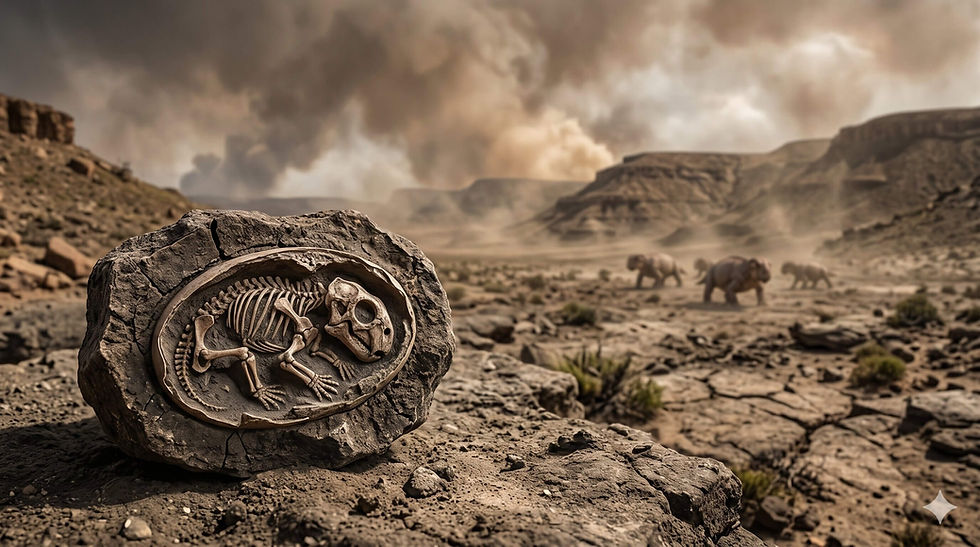
Initial physical preparation of the nodule revealed the tightly packed, articulated skeleton of an extremely small Lystrosaurus.29 Although it was suspected to represent an unhatched individual due to its size and posture, the technological limitations of the time prevented definitive confirmation, as mechanically removing the surrounding rock matrix would have destroyed the delicate bones.29
Recently, an international research team applied advanced imaging techniques to overcome this limitation. The specimen was transported to the European Synchrotron Radiation Facility in Grenoble, France, where it was subjected to high-resolution synchrotron radiation X-ray computed tomography scanning.25 By utilizing an intense X-ray beam, the researchers were able to penetrate the dense rock matrix and image the internal fossil structures with a microscopic voxel size of 17.27 micrometers.25 The resulting scan data was digitally processed using manual segmentation software to separate the fossilized bone from the surrounding rock, allowing for a highly detailed, three-dimensional digital reconstruction of the skeleton without physically altering the specimen.25
Morphological Validation of the Embryonic State
To accurately determine the developmental stage of NMQR 3636, the digital reconstruction was subjected to a rigorous comparative morphological analysis against the two other smallest known Lystrosaurus specimens on record: BP/1/4011 and BP/1/9332.25 BP/1/4011 is an isolated, highly immature skull with a basal length of 43.0 millimeters, while BP/1/9332 is an almost complete, articulated skeleton of an early juvenile possessing a basal skull length of 44.0 millimeters.25 In contrast, the skull of NMQR 3636 measures only 34.5 millimeters in basal length, identifying it as the smallest Lystrosaurus specimen ever documented.25
Beyond simple metrics, the internal anatomy of NMQR 3636 provides definitive, multifaceted proof that the individual perished before it could hatch from its egg. The first major diagnostic feature is the specific posture in which the skeleton is preserved. The digital reconstruction reveals that the appendicular skeleton is tightly folded and packed into the internal space delineated by the vertebral column.25 The vertebrae curl uniformly along a smooth, oval trajectory, suggesting that the animal was physically constrained by the interior boundary of a flexible eggshell at the time of its death.25 This tightly curled position contrasts sharply with the preservation of BP/1/9332, which was found in a splayed-out position typical of post-hatching individuals that possessed the ability to move freely across the substrate before succumbing to mortality.25
The most critical osteological evidence defining the embryonic state of the specimen resides in its cranial development. In NMQR 3636, the lower jaw symphysis—the anterior junction where the left and right halves of the mandible meet—remains completely unfused.25 The tomographic scans show a distinct and complete symphyseal gap separating the dentary and splenial bones.25 In the comparative developmental biology of modern amniotes, a completely unfused mandibular symphysis is a highly specific developmental trait observed exclusively in the pre-hatching embryos of modern birds and turtles.25
By contrast, the cross-sectional scans of the slightly larger perinate specimens (BP/1/4011 and BP/1/9332) demonstrate that their mandibular symphyses had already closed, leaving only an incipient, partially fused suture line.25 This fusion indicates that the older perinates possessed mandibles rigid enough to process the hard, fibrous plant material of the Triassic environment.25 If NMQR 3636 had been a hatched, free-living individual, its unfused, partially cartilaginous lower jaw would have lacked the structural integrity required for feeding, rendering survival entirely impossible.25
Additional indicators of extreme developmental immaturity are present throughout the skeleton. The embryo completely lacks the large, characteristic tusks that define the genus; the maxillary alveolae, or tooth sockets, are entirely empty.25 In comparison, both BP/1/4011 and BP/1/9332 possess small, unerupted tusk buds actively forming within their alveolae.25 Furthermore, NMQR 3636 exhibits exceptionally weak ossification of the limb bones and the pelvic girdle.25 The mesethmoid bone, a medial structure in the skull roof, is entirely unossified and presumably consisted only of cartilage, whereas it is fully ossified in the two comparative perinates.25 The occipital and basicranial bones at the base of the skull are loose and displaced, indicating that the cranium was highly malleable and structurally incomplete at the time of death.25 Curiously, none of the three specimens preserve a caruncle, or egg tooth, suggesting the structure was either lost during preparation or inherently unmineralized.25
Morphological Feature | NMQR 3636 (In Ovo Embryo) | BP/1/9332 (Post-Hatching Perinate) | BP/1/4011 (Post-Hatching Skull) |
Basal Skull Length | 34.5 millimeters 25 | 44.0 millimeters 25 | 43.0 millimeters 25 |
Skeletal Posture | Tightly curled; constrained 25 | Splayed-out; free-moving 25 | Not applicable (isolated skull) |
Mandibular Symphysis | Unfused; distinct gap 25 | Closed; incipient suture present 25 | Closed; incipient suture present 25 |
Maxillary Dentition | Empty alveolae; no tusks 25 | Unerupted tusk buds present 25 | Unerupted tusk buds present 25 |
Mesethmoid Bone | Unossified (cartilaginous) 25 | Fully ossified 25 | Fully ossified 25 |
Postcranial Ossification | Weak; bones displaced 25 | Moderate to strong; articulated 25 | Not applicable 25 |
These meticulously quantified morphological data points provide absolute, irrefutable evidence that NMQR 3636 represents a pre-hatching individual. This discovery decisively answers the long-standing paleobiological question: early, non-mammalian synapsids did, in fact, reproduce by laying eggs.25
Reconstructing the Leathery Egg and Precocial Development
Despite the pristine, high-resolution preservation of the embryonic skeleton, the tomographic data revealed a complete absence of any calcified or mineralized eggshell material surrounding the fossil.25 This structural absence aligns seamlessly with the theoretical framework suggesting that basal amniotes, including early synapsids, did not lay hard, mineralized eggs like those of derived dinosaurs or modern birds. Instead, they produced soft, parchment-like, leathery eggs, structurally analogous to the eggs produced by modern squamates, turtles, and monotremes.25
The physical nature of soft-shelled eggs provides a logical resolution to the mystery of the missing fossil record.29 Unlike rigid, heavily calcified shells that readily maintain their structural integrity and undergo mineralization in sedimentary environments, soft, uncalcified organic membranes decompose rapidly in the soil.25 Consequently, synapsid eggs rarely, if ever, survive the fossilization process, explaining why Kitching and subsequent paleontologists failed to recover eggshells in the Karoo Basin despite the immense abundance of skeletal material.26
Although the physical shell degraded, the spatial confinement of the curled skeleton allowed researchers to mathematically reconstruct the physical dimensions of the original egg. By establishing the maximum length and width of the folded skeletal mass, researchers treated the occupied space as a standard three-dimensional ellipsoid. Applying geometric principles, they calculated the internal volume of the reconstructed egg to be approximately 115 cubic centimeters.25 Assuming that the internal density of the embryonic fluid and tissue was roughly equivalent to the density of water, this estimated volume translates directly to an estimated physical mass of approximately 115 grams.25
It is important to note that this reconstruction represents a highly conservative baseline estimate.25 Over the course of 250 million years of geological burial, the skeleton of NMQR 3636 was subjected to immense lithostatic pressure, resulting in physical compression.25 Furthermore, the living egg would not have been entirely occupied by the embryo; it would have required significant additional internal volume to house the large yolk mass necessary to sustain developmental metabolism prior to hatching.25 Even utilizing this conservative baseline, the reconstructed ratio indicates that Lystrosaurus produced notably large eggs relative to the estimated body mass of the adult animal, which ranged widely from 8.8 kilograms to 50 kilograms depending on the specific Triassic species.25
The physical volume of the egg and its high ratio relative to adult body mass provide profound insights into the developmental strategy of this basal synapsid. In the comparative study of modern amniote reproduction, there is a direct physiological correlation between the total volume of an egg, the quantity of yolk it contains, and the degree of developmental maturity the offspring achieves prior to hatching.25
The substantial size of the reconstructed Lystrosaurus egg strongly points to a precocial developmental strategy.25 In a precocial reproductive model, the parent invests massive initial energetic resources into producing large, nutrient-dense eggs.31 Because the extensive yolk reserves are sufficient to sustain a prolonged period of in ovo development, the hatchlings emerge at a highly advanced stage of physical and neurological maturity.31 These precocial neonates are highly self-sufficient immediately upon leaving the shell; they are capable of coordinated locomotion, evading localized predators, and, critically, independent foraging.31 This strategy operates entirely independently of post-hatching parental feeding.25 Because Lystrosaurus occupies a basal position deep within the synapsid phylogenetic tree, preceding the derived cynodonts, its large egg size anchors the plesiomorphic condition: early mammal ancestors invested heavily in large eggs yielding independent young, and did not utilize lactation.12
The Evolutionary Trajectory of Lactation
The significance of the Lystrosaurus precocial strategy is most clearly illuminated when contrasted with the reproductive biology of later, more highly derived mammal ancestors, specifically the cynodonts.25 A primary point of evolutionary comparison is Kayentatherium wellesi, an extinct genus of tritylodontid cynodont that inhabited terrestrial ecosystems during the Early Jurassic period.25
Fossil evidence related to Kayentatherium demonstrates a radically different reproductive approach. Discoveries have revealed that this derived mammal relative produced massive, highly concentrated clutches of offspring, with one remarkable fossil preserving an adult female alongside 38 associated neonates.26 However, morphometric analyses of these remains demonstrate that Kayentatherium produced incredibly tiny eggs relative to its adult body size.12 This yields an exceptionally low egg-mass-to-body-mass ratio that aligns closely with the diminutive eggs produced by modern monotremes.12
Because small eggs possess insufficient internal volume to hold the yolk reserves necessary for complete pre-hatching development, the resulting offspring are obligately altricial.12 Altricial neonates hatch in a highly underdeveloped, vulnerable state and are entirely dependent on continuous postpartum parental care for survival.12 To compensate for the severe limitation of in ovo yolk, the parent must provide an external source of nutrition—specifically, lactation. The diminutive egg size, combined with anatomical features such as the presence of epipubic bones and limited tooth replacement in these advanced cynodonts, strongly implies that primitive lactation and intensive maternal care had evolved near the root of the Mammaliamorpha clade.25
This physiological shift highlights a massive evolutionary trade-off.35 The prevailing model for the origin of mammalian lactation suggests that primitive milk did not initially evolve as a primary food source. Instead, it likely originated from ancestral, apocrine-like skin glands that developed to secrete moisture and specific antimicrobial proteins onto the surface of permeable, leathery eggs.25 Because soft-shelled eggs are highly susceptible to desiccation and infection from soil-borne fungi and bacteria, these glandular secretions provided a critical protective mechanism during incubation.25
Over tens of millions of years of evolutionary radiation, as early synapsids transitioned into derived cynodonts, the chemical composition of these skin secretions became increasingly complex and nutrient-dense.35 As the secretions became capable of providing supplemental nutrition to newly hatched young, the cynodont lineage was able to progressively reduce the physical size of their eggs and the corresponding yolk mass.35 The primary energetic burden of reproduction gradually shifted from pre-hatching yolk provisioning (oviparity) to post-hatching milk provisioning (lactation).25
The discovery of the Lystrosaurus embryo provides the crucial validation for this theoretical timeline. By proving that basal synapsids laid large, non-lactation-dependent eggs prior to the cynodont radiation, the NMQR 3636 fossil confirms the necessary ancestral state upon which the complex evolution of mammalian lactation was built.25
Evolutionary Grade | Representative Taxon | Egg-to-Body Mass Ratio | Developmental Strategy | Primary Offspring Nutrition |
Basal Synapsid | Lystrosaurus (Triassic) | High (Estimated 115g egg) | Precocial (Advanced) | Independent foraging; no milk 25 |
Derived Cynodont | Kayentatherium (Jurassic) | Very Low (Tiny egg) | Altricial (Underdeveloped) | Primitive lactation / maternal care 25 |
Basal Mammal | Monotremes (Modern) | Very Low (Tiny egg) | Altricial (Underdeveloped) | Advanced lactation via milk patches 12 |
Synthesis: Precocial Oviparity as a Survival Mechanism
Beyond resolving a two-century-old anatomical mystery regarding synapsid reproductive physiology, the large, leathery eggs of Lystrosaurus provide a compelling biological mechanism explaining its status as the ultimate disaster taxon following the Great Dying.25
The End-Permian mass extinction devastated global vegetation networks, resulting in an erratic, resource-poor environment defined by intense atmospheric heat, severe soil erosion, and prolonged, unpredictable drought.29 In such an ecologically shattered landscape, an evolutionary reliance on prolonged postpartum parental care would have constituted a severe physiological liability. If adult Lystrosaurus females had been biologically required to continuously forage for scarce environmental calories to convert into milk for altricial young, the increased energetic stress would have driven maternal mortality rates significantly higher, likely resulting in total brood failure and species collapse.25
Instead, Lystrosaurus employed a reproductive strategy uniquely preadapted for survival in disaster scenarios. By front-loading reproductive investment into the production of large, nutrient-dense, soft-shelled eggs, the maternal obligation effectively terminated at the moment of oviposition.31 Furthermore, the large physical volume of the 115-gram egg inherently possessed a highly favorable surface-area-to-volume ratio.31 This ratio maximized internal moisture retention, providing a critical physical advantage for soft-shelled eggs incubating in the arid, drought-prone soils of the Triassic Karoo Basin.31
Upon hatching from these resilient eggs, the precocial neonates emerged fully capable of interacting with the harsh environment.31 Because their mandibular symphyses fused rapidly during the immediate post-hatching phase—as evidenced by the incipient sutures present in the slightly larger BP/1/4011 and BP/1/9332 perinate specimens—the young were immediately capable of processing the tough, fibrous vegetation that characterized the recovering Triassic flora.25
Additionally, the advanced musculoskeletal development inherent to precociality would have allowed neonates to immediately engage in the specialized digging behaviors characteristic of the genus.9 The capacity for newly hatched individuals to construct or retreat into subterranean burrows would have shielded them from lethal surface temperatures, rapid atmospheric fluctuations, and specialized predators seeking vulnerable prey.4
This high degree of reproductive independence synergizes flawlessly with the demographic data derived from the osteohistological analysis of the Early Triassic Lilliput Effect.14 In an environment where adult mortality was inherently high due to systemic instability, the overarching biological imperative was to reproduce as efficiently and quickly as possible. The Lystrosaurus strategy integrated highly vascularized fibrolamellar bone growth, early achievement of reproductive maturity, and the deposition of large, self-sufficient eggs into a singular, highly effective adaptive suite.14 This specific combination of behavioral and physiological traits allowed the genus to maintain extraordinary population densities, repopulating decimated terrestrial zones at a rate that vastly outpaced competing lineages.23
The high-resolution tomographic analysis of the NMQR 3636 embryo has provided an unprecedented glimpse into the developmental biology of early mammal ancestors. The un-ossified cranial anatomy, unfused mandibular symphysis, and tightly curled posture of the fossil definitively capture a synapsid frozen in the final stages of in ovo development, confirming the foundational assumption of synapsid oviparity.25 The subsequent reconstruction of a large, soft-shelled egg establishes the vital physiological baseline from which the complex mammalian traits of altriciality and lactation eventually evolved.25 Ultimately, the reproductive biology derived from this highly detailed analysis demonstrates that the leathery eggs of Lystrosaurus were not merely a primitive trait, but a highly specialized biological mechanism that ensured the survival of the early mammalian lineage through the most severe biotic crisis in planetary history.25
Works cited
How survivors spanned the globe after Earth's biggest mass extinction, accessed May 23, 2026, https://sustainability.stanford.edu/news/how-survivors-spanned-globe-after-earths-biggest-mass-extinction
Permian–Triassic extinction event ("Great Dying") | Geology | Research Starters - EBSCO, accessed May 23, 2026, https://www.ebsco.com/research-starters/geology/permian-triassic-extinction-event-great-dying
Permian–Triassic extinction event - Wikipedia, accessed May 23, 2026, https://en.wikipedia.org/wiki/Permian%E2%80%93Triassic_extinction_event
Lystrosaurus species composition across the Permo–Triassic boundary in the Karoo Basin of South Africa - Scandinavian University Press, accessed May 23, 2026, https://www.scup.com/doi/10.1111/j.1502-3931.2007.00011.x
PALEONTOLOGY OF THE BLAAUWATER 67 AND 65 FARMS, SOUTH AFRICA: TESTING THE DAPTOCEPHALUS/LYSTROSAURUS BIOZONE BOUNDARY IN A STRAT, accessed May 23, 2026, https://web.colby.edu/ragastal/files/2023/07/2017_GastaldoEtAl_PALAIOS.pdf
Tectonic control on fluvial styles: the Balfour Formation of the Karoo Basin, South Africa - Earth and Atmospheric Sciences, accessed May 23, 2026, https://www.eas.ualberta.ca/catuneanu/files/Papers_PDF%20files/2001_Catuneanu%20and%20Elango_Balfour_Sedimentary%20Geology.pdf
Katberg Formation - Wikipedia, accessed May 23, 2026, https://en.wikipedia.org/wiki/Katberg_Formation
THE PERMO–TRIASSIC BOUNDARY IN THE KAROO BASIN - The Colby College Community Web, accessed May 23, 2026, https://web.colby.edu/ragastal/files/2023/07/2016_Neveling_etal_IGC_Field-Guide.pdf
Lystrosaurus - Wikipedia, accessed May 23, 2026, https://en.wikipedia.org/wiki/Lystrosaurus
Lystrosaurus: The Most Humble Badass of the Triassic | National Geographic, accessed May 23, 2026, https://www.nationalgeographic.com/science/article/lystrosaurus-the-most-humble-badass-of-the-triassic
accessed May 23, 2026, https://earthsky.org/earth/ancestors-of-mammals-laid-eggs-fossil-evidence/#:~:text=A%20250%2Dmillion%2Dyear%2D,end%20of%20the%20Permian%20Epoch.
The first non-mammalian synapsid embryo from the Triassic of South Africa - Reddit, accessed May 23, 2026, https://www.reddit.com/r/Paleontology/comments/1shv3me/the_first_nonmammalian_synapsid_embryo_from_the/
Lystrosaurus | Jurassic Park Institute Wiki | Fandom, accessed May 23, 2026, https://jurassic-park-institute.fandom.com/wiki/Lystrosaurus
The paleobiology and paleoecology of South African Lystrosaurus - PubMed, accessed May 23, 2026, https://pubmed.ncbi.nlm.nih.gov/33282563/
Lystrosaurus species composition across the Permo–Triassic boundary in the Karoo Basin of South Africa - Scandinavian University Press, accessed May 23, 2026, https://www.scup.com/doi/full/10.1111/j.1502-3931.2007.00011.x
The paleobiology and paleoecology of South African Lystrosaurus - PMC - NIH, accessed May 23, 2026, https://pmc.ncbi.nlm.nih.gov/articles/PMC7694564/
the importance of ontogeny and phylogeny in evaluating body size change in the fossil record: a case study of lystrosaurus (therapsida, anomodontia) in the karoo basin, south africa, accessed May 23, 2026, https://gsa.confex.com/gsa/2022AM/webprogram/Paper382767.html
Living fast in the Triassic: New data on life history in Lystrosaurus (Therapsida: Dicynodontia) from northeastern Pangea - PMC, accessed May 23, 2026, https://pmc.ncbi.nlm.nih.gov/articles/PMC8570511/
The paleobiology and paleoecology of South African Lystrosaurus - PeerJ, accessed May 23, 2026, https://peerj.com/articles/10408/
Botha-Brink-and-Smith-2012.pdf - National Museum | Bloemfontein, accessed May 23, 2026, https://nationalmuseum.co.za/wp-content/uploads/2019/01/Botha-Brink-and-Smith-2012.pdf
Preliminary bone histological analysis of Lystrosaurus (Therapsida: Dicynodontia) from the Lower Triassic of North China, and its implication for lifestyle and environments after the end-Permian extinction | PLOS One, accessed May 23, 2026, https://journals.plos.org/plosone/article?id=10.1371/journal.pone.0248681
Preliminary bone histological analysis of Lystrosaurus (Therapsida: Dicynodontia) from the Lower Triassic of North China, and its implication for lifestyle and environments after the end-Permian extinction - PMC, accessed May 23, 2026, https://pmc.ncbi.nlm.nih.gov/articles/PMC7971864/
How to Beat Extinction: Live Fast, Die Young - Field Museum, accessed May 23, 2026, https://www.fieldmuseum.org/blog/how-beat-extinction-live-fast-die-young
Two Strategies for Surviving the Coming Mass Extinction - VICE, accessed May 23, 2026, https://www.vice.com/en/article/two-strategies-to-surviving-the-coming-mass-extinction-lystrosaurus/
The first non-mammalian synapsid embryo from the Triassic of South Africa | PLOS One, accessed May 23, 2026, https://journals.plos.org/plosone/article?id=10.1371/journal.pone.0345016
Clutch size of Kayentatherium and other amniotes, and phylogenetic... - ResearchGate, accessed May 23, 2026, https://www.researchgate.net/figure/Clutch-size-of-Kayentatherium-and-other-amniotes-and-phylogenetic-position-of_fig11_327287648
The Mammary Gland and Its Origin During Synapsid Evolution - Smithsonian Research Online, accessed May 23, 2026, https://repository.si.edu/server/api/core/bitstreams/de56838b-8a00-448c-93ee-653aab8fae49/content
Where did milk come from? The mysterious origin of lactation in mammals. | Earthling Nature, accessed May 23, 2026, https://earthlingnature.wordpress.com/2013/01/25/where-did-milk-come-from-the-mysterious-origin-of-lactation-in-mammals/
Ancient survivor reveals its secret: First-ever egg of a mammal ancestor discovered, accessed May 23, 2026, https://www.eurekalert.org/news-releases/1123310
The first non-mammalian synapsid embryo from the Triassic of South Africa - Research journals - PLOS, accessed May 23, 2026, https://journals.plos.org/plosone/article/file?id=10.1371/journal.pone.0345016&type=printable
First Fossilized Egg From a Mammal Ancestor Confirmed After 250 Million Years, accessed May 23, 2026, https://www.discovermagazine.com/first-fossilized-egg-from-a-mammal-ancestor-confirmed-after-250-million-years-48935
First-ever egg of a mammal ancestor discovered - European Synchrotron Radiation Facility (ESRF), accessed May 23, 2026, https://www.esrf.fr/home/news/general/content-news/general/first-ever-egg-of-a-mammal-ancestor-discovered.html
250-million-year-old fossil proves mammal ancestors laid eggs - Reddit, accessed May 23, 2026, https://www.reddit.com/r/evolution/comments/1smazrd/250millionyearold_fossil_proves_mammal_ancestors/
250-million-year-old fossil proves that mammal ancestors laid eggs - The Brighter Side of News, accessed May 23, 2026, https://www.thebrighterside.news/post/250-million-year-old-fossil-proves-that-mammal-ancestors-laid-eggs/
Synapsida - Wikipedia, accessed May 23, 2026, https://en.wikipedia.org/wiki/Synapsida
The first non-mammalian synapsid embryo from the Triassic of South Africa - ResearchGate, accessed May 23, 2026, https://www.researchgate.net/publication/403661647_The_first_non-mammalian_synapsid_embryo_from_the_Triassic_of_South_Africa
2026-04 - Ancient survivor reveals its secret - Wits University, accessed May 23, 2026, https://www.wits.ac.za/news/latest-news/research-news/2026/2026-04/ancient-survivor-reveals-its-secret.html
Mammal Forerunner that Reproduced Like a Reptile Sheds Light on Brain Evolution, accessed May 23, 2026, https://news.utexas.edu/2018/08/29/mammal-forerunner-sheds-light-on-brain-evolution/
The mammary gland and its origin during synapsid evolution - PubMed, accessed May 23, 2026, https://pubmed.ncbi.nlm.nih.gov/12751889/
The origin of lactation as a water source for parchment-shelled eggs - PubMed, accessed May 23, 2026, https://pubmed.ncbi.nlm.nih.gov/12751890/
The first non-mammalian synapsid embryo from the Triassic of South Africa - PubMed, accessed May 23, 2026, https://pubmed.ncbi.nlm.nih.gov/41955224
Living fast in the Triassic: New data on life history in Lystrosaurus (Therapsida: Dicynodontia) from northeastern Pangea | PLOS One, accessed May 23, 2026, https://journals.plos.org/plosone/article?id=10.1371/journal.pone.0259369


Comments