The Tequendama Genome: How Ancient DNA is Rewriting the History of Syphilis

Introduction: A Paradigm Shift in the Andes
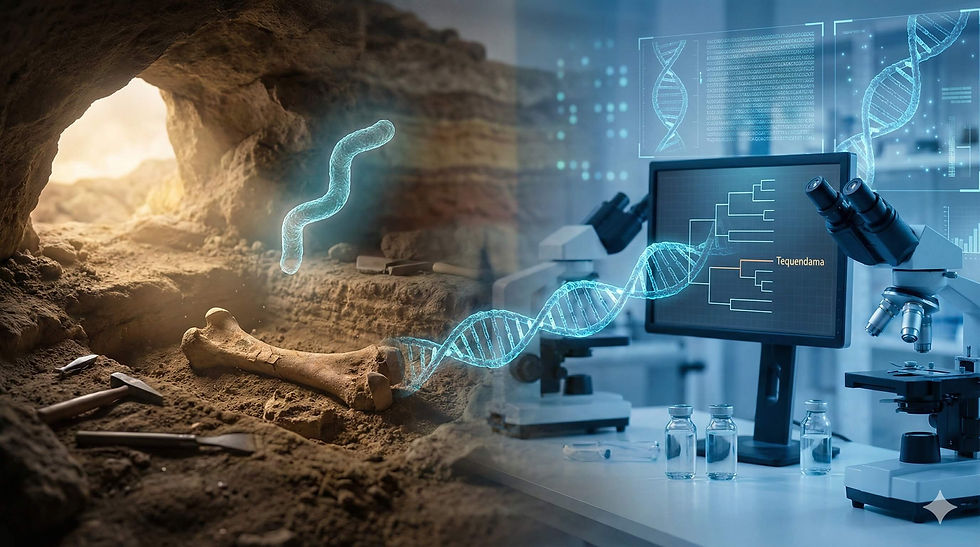
In the high-altitude savanna of the Colombian Andes, the history of one of humanity's most infamous scourges has been rewritten. For over five centuries, the origins of syphilis and its related treponemal diseases have been shrouded in a fog of historical accusation, fragmentary skeletal evidence, and scientific conjecture. The debate, often characterized by the "Columbian Hypothesis"—which posits that Christopher Columbus and his crew transported the pathogen from the New World to the Old in 1493—has stood as one of the most enduring controversies in the history of medicine. In January 2026, however, the fog began to lift, not through the discovery of a new historical chronicle or a lesion-scarred skull, but through the microscopic reconstruction of an ancient genome recovered from a 5,500-year-old leg bone.1
The study, published in the journal Science by an international consortium of researchers led by Davide Bozzi of the University of Lausanne and the Swiss Institute of Bioinformatics, alongside colleagues from the University of California, Santa Cruz, and various Colombian institutions, presents the first incontrovertible molecular evidence of Treponema pallidum in the pre-Columbian Americas.1 The genome, extracted from the remains of a hunter-gatherer buried in the Tequendama I rock shelter, dates to the Middle Holocene—millennia before the first European ships touched the Caribbean shores.4
This discovery does not merely adjust a date on a timeline; it fundamentally restructures our understanding of host-pathogen co-evolution. The strain, designated TE1-3, represents a previously unknown, extinct lineage that sits at the very base of the Treponema pallidum family tree.4 Its existence proves that the Americas were a hotbed of treponemal (syphilis, et al.) diversity long before the rise of the Aztec or Inca empires, and certainly long before the Renaissance epidemic that ravaged Europe. Furthermore, the recovery of this pathogen from an individual who showed no outward signs of the disease challenges the traditional methods of bioarchaeology, suggesting that the true burden of ancient disease has been largely invisible to the naked eye.5
This report offers an exhaustive analysis of the Tequendama discovery. It will traverse the geological and cultural history of the Bogotá Savanna, dissect the biological intricacies of the spirochete bacterium, detail the cutting-edge genomic methodologies that made this reconstruction possible, and explore the profound historical and ethical implications of finding the "spirochete in the stone."
Part I: The Historical Burden and the Great Debate
To understand the magnitude of the discovery at Tequendama I, one must first appreciate the weight of the historical controversy it addresses. Syphilis has never been just a disease; it has been a cultural phenomenon, a stigma, and a historical puzzle.
The Great Pox of 1495
The modern history of syphilis began with a bang. In 1495, the armies of King Charles VIII of France were besieging Naples. Among the mercenaries and soldiers, a terrifying new plague erupted. Unlike the mild treponematoses known in antiquity, this disease was violent and rapid. It caused foul, green pustules to cover the body from head to knees; flesh fell from people's faces, and death often followed within months.7
The disease spread with the disbanding armies, sweeping across Europe with devastating speed. Because it appeared shortly after the return of Columbus from his first voyages (1493), and because it was unknown to European physicians of the time, the connection was made almost immediately. It was dubbed the "French Disease" by the Italians, the "Neapolitan Disease" by the French, and eventually, the "Great Pox" to distinguish it from smallpox.9 The stigma of a sexually transmitted plague led to a blame game that spanned the continent, but the ultimate blame settled on the New World.
The Three Hypotheses
Over the subsequent centuries, scholars crystallized the debate into three primary hypotheses regarding the origins of the disease.
1. The Columbian Hypothesis
This is the classic view. It asserts that Treponema pallidum was a New World pathogen. It existed in the Americas in a mild or different form (perhaps similar to modern yaws) and was brought back to Europe by Columbus's crew. Upon entering a "naive" European population with no prior immunity, the bacterium exploded into the virulent "venereal syphilis" observed in 1495.2
Evidence: The lack of clear descriptions of syphilis in pre-1492 European texts and the abundance of skeletal lesions in pre-contact American remains.8
Critique: Critics argued that the timing was coincidental and that transport across the Atlantic would have required the crew to remain infectious for a long voyage.7
2. The Pre-Columbian Hypothesis
This theory argues that syphilis was present in the Old World (Europe, Asia, Africa) long before 1492 but was misdiagnosed. Proponents suggest that descriptions of "leprosy" in medieval texts often conflated Hansen's disease with syphilis. They argue that the 1495 epidemic was not a new introduction but a mutation of an existing European strain, or simply a change in the social recognition of the disease.7
Evidence: Ambiguous skeletal lesions found in medieval European cemeteries (e.g., Hull Friary in England).11
Critique: Most "pre-Columbian" syphilis skeletons in Europe have failed radiocarbon dating or DNA verification. The lesions are often non-specific.8
3. The Unitarian Hypothesis
Proposed prominently by E.H. Hudson in the 20th century, this hypothesis suggests that there is only one treponemal disease. Syphilis, yaws, bejel, and pinta are not caused by different species, but are environmental expressions of the same organism. In this view, the "syphilis" of Europe and the "yaws" of the tropics are the same bug, behaving differently based on climate and clothing (which prevents skin-to-skin transmission and forces the bug to rely on sexual transmission).7
Implication: If true, the "origin" debate is moot; the bug has been with humans everywhere since the Paleolithic.
The Genetic Stalemate
Until the advent of ancient DNA (aDNA), this debate was an impasse of osteology. Bones can only tell us so much. Treponemal diseases cause similar inflammation in the periosteum (the sheath surrounding bones), leading to "periostitis" or "osteomyelitis." Distinguishing venereal syphilis from yaws based on a pitted skull is notoriously difficult, if not impossible.8
The 2026 study breaks this stalemate. By recovering the genetic code of the pathogen from a secure, pre-contact context, the researchers have bypassed the ambiguity of bone lesions. They have provided the first "hard" data point in a 500-year-old argument.
Part II: The Biology of the Invisible Enemy
To understand the significance of the TE1-3 genome, one must understand the organism itself. Treponema pallidum is a biological marvel of reduction and adaptation.
Morphology and Motility
The bacterium is a spirochete, defined by its helical, corkscrew shape. Unlike many bacteria that rely on external flagella to swim, Treponema possesses "endoflagella" located in the periplasmic space between its inner and outer membranes.1 This unique structure allows the bacterium to move with a twisting motion, enabling it to corkscrew through viscous environments like mucus and connective tissue—barriers that stop other bacteria in their tracks.
Genomic Minimalism
Treponema pallidum has one of the smallest genomes of any pathogen, comprising only about 1.14 million base pairs and roughly 1,000 genes.2 This "genomic reduction" is the hallmark of an obligate parasite. Over millions of years of co-evolution with hosts, the bacterium has discarded the genes required for independent life.
Metabolic Crippling: It lacks the genes for the tricarboxylic acid (TCA) cycle and oxidative phosphorylation. It cannot burn oxygen to make energy.2
Scavenging: Instead, it relies on glycolysis (breaking down sugar) and must steal all its essential nutrients—amino acids, fatty acids, and nucleotides—directly from the host's tissue.12
This extreme dependency means that Treponema pallidum cannot survive outside the human body for more than a few minutes. It cannot be cultured in a petri dish, which has historically made it incredibly difficult to study.
The Modern Subspecies
Today, the Treponema pallidum species is divided into subspecies that are genetically 99.8% identical but clinically distinct. The differentiation of these subspecies is key to the 2026 study.
Subspecies | Common Name | Transmission | Primary Geography | Clinical Features |
T. p. pallidum | Syphilis | Venereal (Sexual) | Global | Genital chancres, systemic spread, neurosyphilis, congenital transmission. |
T. p. pertenue | Yaws | Skin-to-Skin | Humid Tropics | Raspberry-like skin lesions (frambesia), bone destruction. |
T. p. endemicum | Bejel | Mucosal/Saliva | Arid/Dry Regions | Oral lesions, gummas, bone inflammation. |
T. carateum | Pinta | Skin-to-Skin | Neotropics (Americas) | Skin lesions only (pigment changes). No bone involvement. |
Table 1: The modern classification of Treponematoses.
The TE1-3 genome found in Colombia does not fit neatly into any of these boxes. It represents a "ghost" lineage—a fifth column of the Treponema family that is now extinct, or at least undiscovered in modern times.
Part III: The Archaeological Context of Tequendama I
The discovery of the TE1-3 genome is inextricably linked to the site of its preservation: the Tequendama I rock shelter. This site is not merely a container for bones; it is an archive of human adaptation in the Northern Andes.
Geography and Paleoenvironment
The Sabana de Bogotá is a high plateau (Altiplano) in the Eastern Cordillera of the Colombian Andes, sitting at an elevation of approximately 2,600 meters (8,500 feet).13 During the Pleistocene, this region was dominated by a large paleolake. As the climate warmed and the lake receded, it left behind a fertile, marshy plain surrounded by Andean forests and paramo ecosystems.
The Tequendama I site is located near the spectacular Tequendama Falls (Salto del Tequendama), where the Bogotá River plunges off the plateau. The rock shelter itself provided natural protection from the elements, making it an attractive habitation site for millennia.13
Excavation History and Stratigraphy
The site was excavated in the late 1960s and 1970s by the pioneering team of Gonzalo Correal Urrego and Thomas van der Hammen.13 Their work established the chronological framework for the pre-ceramic period in Colombia.
The stratigraphy of Tequendama reveals a sequence of occupation spanning over 11,000 years:
Late Pleistocene (Zones I-II): The earliest occupants (Abriense culture) arrived as the glaciers were retreating. They hunted mastodons and horses, evidenced by remains at the nearby Tibitó site.16
Early Holocene (Zone III): As the climate warmed, the megafauna vanished. Populations adapted to hunting white-tailed deer (Odocoileus virginianus) and smaller mammals.
Middle Holocene (Zone IV - The TE1-3 Context): Around 5,500 years ago, the climate was stable and slightly warmer than today (the Holocene Thermal Maximum). This period saw established hunter-gatherer communities with complex burial rituals.15
The Hunter-Gatherer Lifestyle (5,500 BP)
The individual TE1-3 lived in a world of high mobility and broad-spectrum foraging. Isotopic analysis of remains from this period ( and ) indicates a diet rich in C3 plants (tubers, fruits) and animal protein.17
Diet: They consumed deer, guinea pigs (Cavia), armadillos, and large quantities of land snails (Neostrengeria macropa), which were likely gathered in the damp forests.15 There is no evidence of maize agriculture in this layer, distinguishing them from the later Muisca cultures.17
Technology: Their tool kit, known as the "Abriense" industry, consisted of edge-retouched flakes and simple scrapers made from local chert.16
Mobility: These groups likely moved seasonally between the rock shelters of the valley edge and open-air camps on the plateau (like the Aguazuque site).14
Burial Practices
The treatment of the dead at Tequendama I reflects a society with deep ritual concern. Burials were often primary (fleshed), with bodies placed in a crouched or flexed position, sometimes on their side.19 The TE1-3 individual was a middle-aged male, roughly 1.58 meters tall.20 His burial within the shelter, protected from the acidic soils of the open savanna, was crucial for the preservation of his DNA.
Part IV: The Science of Discovery – From Bone to Byte
How does one find a bacterium that has been dead for 5,000 years? The recovery of the TE1-3 genome is a triumph of modern paleogenomics.
The Challenge of Ancient DNA
When an organism dies, its DNA immediately begins to degrade. Enzymes (nucleases) break the long strands into short fragments. Bacteria and fungi from the soil invade the bone, swamping the endogenous DNA. Over thousands of years, water and oxygen chemically modify the remaining bases. In a typical ancient bone, 99.9% of the DNA recovered is environmental contamination; only a fraction is human, and an even smaller fraction is pathogenic.21
Metagenomic Screening
The researchers employed a "shotgun sequencing" approach. Instead of targeting a specific gene (like using a metal detector), they sequenced everything extracted from the bone (like sieving the entire beach). This generated approximately 1.5 billion snippets of genetic code.3
Using powerful bioinformatic algorithms (like the HOPS pipeline or Kraken), they screened these billions of reads against databases of known bacteria.22 It was finding a needle in a haystack. Among the billions of reads, a small subset matched the reference genome of Treponema pallidum.
Target Enrichment (Capture)
Once the pathogen was detected, the team used "hybridization capture." They created RNA "baits"—synthetic strands of DNA matching modern syphilis—and mixed them with the ancient DNA soup. The baits acted like magnets, pulling out the Treponema fragments while washing away the soil bacteria and human DNA. This allowed them to enrich the sample enough to reconstruct the genome at 1.7× coverage.23
Authentication: The "Smile" of Time
To prove the DNA was truly ancient and not a modern contaminant (from a researcher who might have syphilis), the team analyzed "deamination patterns."
Over time, the Cytosine (C) bases at the ends of ancient DNA fragments lose an amine group and turn into Uracil (U). Sequencing machines read Uracil as Thymine (T).
The Signal: Authentic ancient DNA shows a sharp increase in C-to-T substitutions at the 5' end of the molecule.25
The Result: The TE1-3 reads displayed this exact damage profile—a "smile plot" of cytosine degradation—confirming the bacteria died 5,500 years ago.27
Part V: Genomic Revelations and the TE1-3 Lineage
The reconstruction of the TE1-3 genome provided the data necessary to place this ancient hunter-gatherer's infection onto the tree of life.
Phylogenetic Placement: The Basal Sister
When the TE1-3 genome was compared to modern strains, it did not cluster with syphilis, yaws, or bejel. Instead, it fell at the very base of the tree.
Sister Lineage: TE1-3 is a "sister" to the common ancestor of all modern Treponema pallidum subspecies.4
Implication: This means TE1-3 is not the parent of modern syphilis, but an aunt. It represents a diverse lineage that evolved separately in the Americas.
The Molecular Clock
By counting the number of mutations between TE1-3 and modern strains, and knowing the mutation rate of the bacteria, researchers could estimate when they last shared a common ancestor.
Divergence Date: The analysis estimates the split occurred approximately 13,700 years ago (Late Pleistocene).2
Significance: This date is remarkably close to the generally accepted timing for the initial peopling of the Americas via the Bering Land Bridge. It suggests that when the first humans entered the New World, they may have brought a diverse assemblage of treponemes with them, or acquired them shortly after arrival.28
Virulence Factors: Was it Syphilis?
A key question is whether TE1-3 caused "syphilis" as we know it. The genome provides clues.
TprK Gene: TE1-3 possessed the TprK gene system, which allows the bacteria to constantly shuffle its surface proteins to evade the immune system.2 This confirms it was a chronic, persistent pathogen capable of long-term infection.
Virulence Conservation: It shared many virulence genes with modern strains, suggesting it was fully pathogenic.12
Differences: It contained specific mutations in chemotaxis genes (mcp2) and outer membrane factors (Tp0969) that are unique.2 These differences might explain why the individual had no bone lesions—perhaps this strain had a different "tissue tropism," preferring skin or soft tissue over bone.
Part VI: Synthesis and Implications
1. The Death of the "Syphilis-Free Americas" Myth
The discovery of TE1-3 drives a stake through the heart of any theory suggesting the Americas were free of treponemal disease before 1492. The Columbian hypothesis, in its strictest sense (that all treponemal disease came from the New World), is supported by the presence of the pathogen. However, the TE1-3 lineage is distinct from the 1495 European strain. This suggests a complex scenario:
The Americas harbored a high diversity of treponemal lineages for millennia.
Columbus's crew likely encountered a different American lineage (closer to the modern venereal strain) that was not TE1-3.
The "Great Pox" was the result of introducing a specific, highly virulent American lineage into Europe.2
2. The Pinta Connection
A fascinating possibility raised by the researchers is the connection to Pinta (Treponema carateum). Pinta is a mild, skin-only treponematosis found in the Americas. It leaves no bone lesions.
Hypothesis: TE1-3 might be an ancient relative or ancestor of Pinta.29
Evidence: The lack of skeletal lesions in the TE1-3 individual is consistent with Pinta. Since Pinta has never been sequenced (it cannot be cultured), TE1-3 might be our first genetic glimpse at this elusive disease. If Pinta is the "original" American treponematosis, it explains why so many pre-contact skeletons look healthy despite the pathogen's presence.29
3. The Osteological Paradox and the Invisible Load
This study serves as a stark warning to bioarchaeologists. The "Osteological Paradox" states that a skeleton with no lesions might represent a healthy individual, OR an individual who died of a disease before it could affect the bone.5 TE1-3 had the pathogen in his blood/bone marrow but no lesions. If not for genomic screening, he would have been classified as "healthy." This implies that the prevalence of infectious disease in the past has been vastly underestimated. Metagenomics allows us to see the "invisible load" of pathogens in ancient populations.6
4. Evolutionary Ecology of Pathogens
The presence of Treponema in a small, mobile hunter-gatherer group challenges the "crowd disease" model. Usually, pathogens need dense cities to survive. Treponema adapted to low density by becoming chronic and latent. By staying in the host for decades (latency), the bacteria could wait for the next social gathering or trade event to jump to a new host. The TE1-3 genome confirms that this strategy of "stealth" persistence is at least 5,500 years old.23
5. Ethical Engagement and Collaborative Science
Finally, the Bozzi et al. study sets a new standard for ethical aDNA research. The team engaged extensively with Colombian scholars, students, and indigenous communities.28 They recognized that these remains are not just biological specimens but ancestors with cultural significance. The research permits were obtained through transparent collaboration, ensuring that the narrative of "discovery" did not erase the local stewardship of the past. This "collaborative turn" is essential for the future of paleogenomics, particularly in post-colonial contexts.
Conclusion
The 5,500-year-old genome from Tequendama I is more than just a data point; it is a time capsule. It transports us back to a Middle Holocene rock shelter where a hunter-gatherer lived with a microscopic spirochete companion. It links the deep history of the Americas with the medical crises of Renaissance Europe.
The discovery definitively places the Treponema family in the New World millennia before Columbus, likely arriving with the first Paleoamericans. It reveals a lost lineage of bacteria that co-evolved with our ancestors, shaping their immune systems and their lives in ways we are only just beginning to understand. As we continue to apply the lens of genomics to the archaeological record, we will likely find that the history of humanity is, in large part, a history of our microbes.
Table 2: Chronological and Genomic Comparison of TE1-3
Feature | TE1-3 (Ancient) | Nichols Strain (Modern Syphilis) | Samoa D (Modern Yaws) |
Age | ~5,500 BP (Middle Holocene) | Modern (Isolated 1912) | Modern |
Location | Colombia (Andes) | Global | Oceania / Tropics |
Host Context | Hunter-Gatherer | Urban / Modern | Rural / Tropical |
Phylogeny | Basal Sister Lineage | T. p. pallidum Clade | T. p. pertenue Clade |
Genome Size | ~1.14 Mb (Estimated) | 1.14 Mb | 1.14 Mb |
TprK System | Present | Present | Present |
Bone Lesions | Absent | Common (Late Stage) | Common (Sabre Shin) |
Works cited
5500-year-old genome discovered for syphilis-related bacterium - SIB Swiss, accessed January 30, 2026, https://www.sib.swiss/news/5500-year-old-genome-discovered-for-syphilis-related-bacterium
Ancient DNA Reveals Twisted Roots of Syphilis Go Back 5,500 ..., accessed January 30, 2026, https://www.sciencealert.com/ancient-dna-reveals-twisted-roots-of-syphilis-go-back-5500-years
Ancient DNA Treponemal Disease-Causing Bacteria - SMU, accessed January 30, 2026, https://www.smu.edu/news/research/ancient-dna-treponemal-diseases
(PDF) A 5500-year-old Treponema pallidum genome from Sabana de Bogotá, Colombia, accessed January 30, 2026, https://www.researchgate.net/publication/399995913_A_5500-year-old_Treponema_pallidum_genome_from_Sabana_de_Bogota_Colombia
Syphilis May Have Originated in the Americas, Study Suggests - Archaeology Magazine, accessed January 30, 2026, https://archaeology.org/news/2026/01/26/syphilis-may-have-originated-in-the-americas-study-suggests/
5,500-year-old human remains in Colombia bear the oldest evidence of syphilis bacteria, millennia before the arrival of Europeans - La Brújula Verde, accessed January 30, 2026, https://www.labrujulaverde.com/en/2026/01/5500-year-old-human-remains-in-colombia-bear-the-oldest-evidence-of-syphilis-bacteria-millennia-before-the-arrival-of-europeans/
Syphilis - Its early history and Treatment until Penicillin and the Debate on its Origins, accessed January 30, 2026, https://jmvh.org/article/syphilis-its-early-history-and-treatment-until-penicillin-and-the-debate-on-its-origins/
The Origin and Antiquity of Syphilis Revisited: An Appraisal of Old World Pre-Columbian Evidence for Treponemal Infection. - University of Michigan, accessed January 30, 2026, https://sites.lsa.umich.edu/wp-content/uploads/sites/136/2014/08/Harper11.pdf
Brief History of Syphilis - PMC - PubMed Central, accessed January 30, 2026, https://pmc.ncbi.nlm.nih.gov/articles/PMC3956094/
Origin and spread of syphilis - ScholarWorks at University of Montana, accessed January 30, 2026, https://scholarworks.umt.edu/cgi/viewcontent.cgi?article=4166&context=etd
The Science behind Pre-Columbian Evidence of Syphilis in Europe: Research by Documentary - PMC - NIH, accessed January 30, 2026, https://pmc.ncbi.nlm.nih.gov/articles/PMC3413456/
Ancient DNA Rewrites the Origins of Syphilis - Technology Networks, accessed January 30, 2026, https://www.technologynetworks.com/genomics/news/ancient-dna-pushes-syphilis-lineage-back-5500-years-408819
Tequendama - Wikipedia, accessed January 30, 2026, https://en.wikipedia.org/wiki/Tequendama
Aguazuque - Wikipedia, accessed January 30, 2026, https://en.wikipedia.org/wiki/Aguazuque
A paleogenetic perspective of the Sabana de Bogotá (Northern South America) population history over the Holocene (9000 - SEDICI, accessed January 30, 2026, http://sedici.unlp.edu.ar/bitstream/handle/10915/125281/Documento.pdf?sequence=1
DNA Clarifies New World Arctic Prehistory of - Texas A&M College of Liberal Arts, accessed January 30, 2026, https://liberalarts.tamu.edu/wp-content/uploads/sites/14/2019/08/vol31_num2c.pdf
(PDF) Stable isotope evidence for dietary and cultural change over the Holocene at the Sabana de Bogotá region, Northern South America - ResearchGate, accessed January 30, 2026, https://www.researchgate.net/publication/308795111_Stable_isotope_evidence_for_dietary_and_cultural_change_over_the_Holocene_at_the_Sabana_de_Bogota_region_Northern_South_America
13Ccol plotted against δ13Cap for five chronological samples from the... | Download Scientific Diagram - ResearchGate, accessed January 30, 2026, https://www.researchgate.net/figure/Ccol-plotted-against-d13Cap-for-five-chronological-samples-from-the-Sabana-de-Bogota_fig4_308795111
Redalyc.SOCIO ECONOMIC TIES BETWEEN ARUBA AND LA GUAJIRA SINCE THE PRE-COLUMBIAN PERIOD, accessed January 30, 2026, https://www.redalyc.org/pdf/5880/588069650005.pdf
Syphilis: A Hunter, a Bacterium, and the Deep Origin of a Modern Disease, accessed January 30, 2026, https://translatingcuba.com/syphilis-a-hunter-a-bacterium-and-the-deep-origin-of-a-modern-disease/
The past, present and future of ancient bacterial DNA - PMC - PubMed Central, accessed January 30, 2026, https://pmc.ncbi.nlm.nih.gov/articles/PMC7478633/
(PDF) HOPS: automated detection and authentication of pathogen DNA in archaeological remains - ResearchGate, accessed January 30, 2026, https://www.researchgate.net/publication/337969689_HOPS_automated_detection_and_authentication_of_pathogen_DNA_in_archaeological_remains
A 5,500-year-old genome rewrites the origins of syphilis | EurekAlert!, accessed January 30, 2026, https://www.eurekalert.org/news-releases/1113010
ISBA11-abstract-book-27.8.pdf - ISBA 2025, accessed January 30, 2026, https://www.isba11.com/wp-content/uploads/2025/08/ISBA11-abstract-book-27.8.pdf
HOPS: Automated detection and authentication of pathogen DNA in archaeological remains, accessed January 30, 2026, https://www.biorxiv.org/content/10.1101/534198v2.full-text
Patterns of damage in genomic DNA sequences from a Neandertal - PNAS, accessed January 30, 2026, https://www.pnas.org/doi/10.1073/pnas.0704665104
Inferring patterns of recombination and divergence with ancient and modern treponemal genomes | bioRxiv, accessed January 30, 2026, https://www.biorxiv.org/content/10.1101/2023.02.08.526988v1.full-text
A lost disease emerges from 5,500-year-old human remains - ScienceDaily, accessed January 30, 2026, https://www.sciencedaily.com/releases/2026/01/260125083349.htm
5500-year-old human skeleton in Colombia reveals earliest evidence of syphilis in the Americas - Archaeology News, accessed January 30, 2026, https://archaeologymag.com/2026/01/earliest-evidence-of-syphilis-in-the-americas/



Comments