Decoding the New World Screwworm: From Life Cycle to Eradication

Introduction - New World Screwworm: Discovery, Spread, and Control
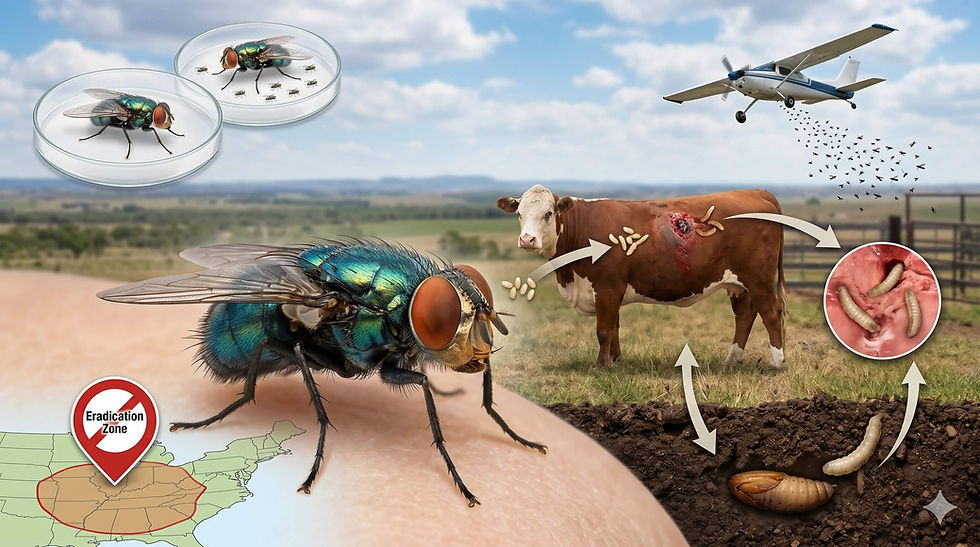
The New World screwworm, Cochliomyia hominivorax (Coquerel, 1858), is an obligate parasitic blowfly of profound medical, veterinary, and agricultural significance. Endemic to the tropical and subtropical regions of the Western Hemisphere, the larvae of this species feed exclusively on the living tissue of warm-blooded animals, causing a rapidly progressive and destructive condition known as traumatic myiasis1. The species was first formally described by the French naval surgeon and entomologist Charles Coquerel in 1858. Coquerel investigated severe, fatal human myiasis cases among prisoners at the Devil’s Island penal colony in French Guiana, where the larvae invaded the nasal cavities and sinuses of the afflicted4. Recognizing its distinct biological behavior, Coquerel named the fly using the Latin term hominivorax, translating to "man-eating"2.
Historically, the New World screwworm maintained a vast geographic distribution, ranging from the southern United States through Central America and the Caribbean, extending as far south as Uruguay and northern Argentina2. Before the implementation of large-scale eradication programs, the parasite imposed staggering economic burdens on the agricultural sector. In the mid-twentieth century, annual losses for the United States livestock industry were estimated between 50 million and 100 million dollars due to livestock mortality, reduced production, and the highly labor-intensive inspection and treatment protocols required to manage infestations7. Contemporary estimates suggest that a widespread re-establishment in the United States could inflict over 2.1 billion dollars in direct annual losses to the cattle industry and up to 9 billion dollars to the hunting and wildlife sectors in Texas alone10.
Through the pioneering development of the Sterile Insect Technique (SIT) in the 1950s, the United States successfully eradicated the screwworm by 19662. A progressive, multi-national eradication campaign subsequently cleared Mexico and Central America, establishing a permanent biological barrier in the Darien Gap of Panama by 200613. However, beginning in 2023, a significant breach of this quarantine line led to a rapid northward resurgence of the parasite, re-establishing populations across Central America and Mexico, and culminating in the detection of the fly in Texas in June 202616. This renewed epidemiological threat underscores the critical need for an exhaustive understanding of the insect's biology, reproductive ecology, climatic constraints, and the advanced methodologies utilized in its area-wide control.
Taxonomy, Genetics, and Population Dynamics
Phylogenetic Classification
Cochliomyia hominivorax belongs to the order Diptera (true flies), family Calliphoridae (blowflies), and subfamily Chrysomyinae1. The genus Cochliomyia, established in 1915, encompasses four species endemic to the Americas: C. hominivorax, C. macellaria, C. aldrichi, and C. minima22. Phylogenetically, the genus forms a monophyletic clade, with Compsomyiops acting as its sister genus22.
Among its congeners, C. hominivorax is unique as the only species obligately dependent on living vertebrate tissue for larval development2. The closely related C. macellaria (the secondary screwworm) is primarily a facultative necrophage that feeds on decaying organic matter as a decomposer, though it may opportunistically colonize necrotic wounds already established by primary parasites2.
Genomic Structure and Chromosomal Organization
The genetic architecture of C. hominivorax is characterized by a diploid chromosome number of 12, consisting of five pairs of metacentric autosomes and one pair of sex chromosomes24. The sex determination mechanism relies on male heterogamety, where females possess an XX chromosomal arrangement and males possess an XY arrangement24. The sex chromosomes are highly heterochromatic, and the Y chromosome contains the primary male-determining gene responsible for sex regulation within the species24.
Recent advancements in genomic sequencing, specifically the utilization of trio-binning approaches with high-fidelity long-read sequencing and chromatin conformation scaffolding, have produced highly accurate, haplotype-resolved genome assemblies27. The linear haploid reference assembly for C. hominivorax spans approximately 455.56 megabases, aligning closely with physiological flow cytometry estimates and correcting previous assemblies that artificially inflated the genome size to over 534 megabases due to residual heterozygosity27. This compact genome is smaller than those of many other calliphorid flies. The resolved X chromosome spans approximately 6.96 megabases, harboring ribosomal RNA genes at one terminal end, while the highly fragmented Y chromosome is represented by a 0.647 megabase contig27. Assembly completeness metrics demonstrate that over 98 percent of highly conserved single-copy orthologs are accurately represented, providing a robust foundation for identifying specific loci targeted for genetic suppression27.
Population Genetics and Evolutionary Adaptability
Population genetics studies analyzing natural and mass-reared populations indicate significant, dynamic genetic variability that facilitates high adaptability and wide geographic dispersal29. Early genetic studies utilized isozymes to track mutations and population shifts, identifying variations in key loci such as alpha-glycerophosphate dehydrogenase and phosphoglycerate mutase, which are crucial for energy production during sustained flight29.
Contemporary analyses across South American populations reveal an average of 6.9 alleles per locus, with heterozygosity rates indicating robust genetic diversity29. While some isolated populations, such as specific cohorts in Uruguay, demonstrate reduced heterozygosity indicative of genetic bottlenecks or localized selective pressures, widespread populations generally maintain linkage equilibrium and high genetic variance29. This broad genetic base presents challenges for control, as the species retains the evolutionary capacity to adapt to diverse thermal regimes and rapidly colonize new geographic ranges when containment barriers fail.
Anatomy and Morphological Identification
Accurate morphological identification is a cornerstone of screwworm surveillance, epidemiology, and clinical diagnosis. Misidentification with facultative myiasis-causing species can delay critical regulatory responses, leading to further geographic spread1.
Adult Morphology
Adult C. hominivorax are medium-sized blowflies measuring 8 to 10 millimeters in length, slightly larger than the common housefly22. The body exhibits a striking metallic blue-to-green sheen, complemented by an orange to reddish head and reddish-orange compound eyes22. The species exhibits pronounced sexual dimorphism in its visual organs: males possess holoptic eyes where the dorsal facets meet, optimizing their visual field for tracking females during aerial interception, whereas females have dichoptic eyes separated by a distinct frons22.
A defining diagnostic feature of the genus C. hominivorax is the presence of three dark longitudinal stripes, known as vittae, on the dorsal thorax22. To differentiate the primary screwworm from the secondary screwworm (C. macellaria), entomologists rely on specific micro-morphological traits. C. hominivorax features dark setulae on the fronto-orbital plate, possesses three postpronotal setae, and female specimens exhibit a dark brown-to-black basicosta. In contrast, C. macellaria exhibits pale setulae, only two postpronotal setae, a uniformly colored thorax lacking distinct stripes, and female specimens possess a yellowish basicosta22. Furthermore, wing geometric morphometry provides quantitative distinctions, as C. hominivorax wings present broader alar shapes with specific vein landmarks that differ significantly from those of C. macellaria22.
Larval Morphology
The larvae undergo three developmental instars, progressing from approximately 1 millimeter upon hatching to lengths of 15 to 17 millimeters at maturity20. The mature third-instar larva is distinctly muscidiform—tapering sharply at the anterior end to accommodate mouthparts and terminating bluntly at the posterior end to expose spiracles1. Each body segment is encircled by broad bands of prominent cuticular spines bearing one, two, or three points. These backward-facing spines resemble the threads of a wood screw, granting the insect its common name and providing crucial mechanical anchorage as the larva burrows deep into host tissue1.
Species confirmation in the laboratory relies heavily on the internal and external anatomy of the third-instar larva. The most critical diagnostic feature unique to C. hominivorax is the presence of darkly pigmented dorsal tracheal trunks. These internal breathing tubes extend from the posterior spiracular plates anteriorly across at least the ninth and tenth body segments and are pigmented dark brown to black, rendering them visible through the translucent posterior body wall1. The posterior spiracular plates possess three straight, parallel spiracular slits and an incomplete, darkly pigmented peritreme that does not fully enclose the spiracular button1.
Morphological/Ecological Trait | Cochliomyia hominivorax (Primary Screwworm) | Cochliomyia macellaria (Secondary Screwworm) |
Larval Dietary Requirement | Obligate parasite (consumes living, viable tissue) | Facultative necrophage (consumes dead/decaying tissue) |
Thoracic Stripes (Adult) | Three distinct dark longitudinal vittae present | Uniformly colored, stripes absent or highly indistinct |
Basicosta Color (Adult Female) | Dark brown to black | Yellowish |
Fronto-orbital Setulae (Adult) | Darkly pigmented setulae | Pale setulae |
Larval Tracheal Trunks | Darkly pigmented, faintly visible through body wall | Clear or translucent, not pigmented |
Larval Posterior Spiracles | Incomplete peritreme, indistinct button | Complete or distinct peritreme structures |
Table 1: Key morphological and ecological distinctions utilized in the laboratory identification of C. hominivorax and C. macellaria1.
Biology, Life Cycle, and Climatic Influences
Cochliomyia hominivorax is a holometabolous insect that progresses through egg, larval, pupal, and adult stages. The pace of this development is strictly governed by climatic variables, primarily ambient air temperature, soil temperature, and relative humidity. The species lacks a true physiological diapause mechanism, requiring continuous year-round reproduction to maintain localized populations4.
Thermal Thresholds and Developmental Modeling
Physiologically-based demographic models calculate the developmental rate of the screwworm as a function of temperature. Data indicates that the lower thermal threshold for embryonic and larval development is approximately 14.5 degrees Celsius, while the upper thermal limit approaches 43.5 degrees Celsius, beyond which physiological failure occurs4.
The life cycle relies heavily on accumulated degree-hours or degree-days. Under optimal environmental conditions near 29 degrees Celsius, the entire life cycle from oviposition to mature adult emergence is completed in approximately 18 days4. In cooler temperate conditions averaging 22 degrees Celsius, this cycle extends to roughly 24 days, and in marginal environments where temperatures hover near the developmental minimum, a single generation can require up to three months33.
Oviposition and Larval Development
Adult females become sexually receptive and capable of oviposition three to four days post-emergence23. Utilizing specialized plumose antennae and sensilla, females detect specific volatile organic compounds—such as ammonia and other serous degradation products—emanating from the wounds or natural orifices of warm-blooded animals over vast distances22. The presence of even superficial abrasions, tick bites, or the unhealed umbilical stumps of newborn livestock is sufficient to trigger an oviposition response2.
A single gravid female deposits tightly organized clutches of 200 to 500 eggs along the dry upper edges of a wound. Over an adult lifespan of 10 to 30 days, a female may lay subsequent batches at three-day intervals, totaling up to 3,000 eggs2. Within 12 to 24 hours of oviposition, depending inversely on temperature and humidity, the eggs hatch into first-instar larvae that immediately migrate head-downward into the wound bed22.
The larvae feed gregariously. Tearing at the flesh using sharp, non-retractile mouth hooks, they secrete a highly concentrated mixture of proteolytic enzymes, lipases, and ammonia33. This excretory-secretory profile liquefies the host's cellular proteins for external ingestion and creates a highly alkaline microenvironment22. Interestingly, while this biochemical mechanism destroys living host tissue, the ammonia and specific peptides function to suppress certain deleterious competing fungal and bacterial pathogens that might otherwise impair larval survival39. The larvae molt twice within the host, progressing through the second and third instars over a period of five to seven days before reaching maturity22.
Pupation and Overwintering Limitations
Upon reaching maturity, the engorged third-instar larvae cease feeding, exit the host, and drop to the ground1. They actively burrow into the upper layers of the soil or leaf litter, where the outer cuticle hardens and darkens to form a protective, barrel-shaped puparium23.
The pupal stage is highly sensitive to soil conditions and represents the most vulnerable point in the life cycle regarding cold exposure. Soil temperatures that remain below 7.7 degrees Celsius (46 degrees Fahrenheit) for several consecutive days, or any exposure to hard frost, are universally lethal to the pupae7. Adult flies also exhibit severely restricted mobility and mating activity at temperatures below 15 degrees Celsius7.
Consequently, the species cannot establish permanent, overwintering populations in regions that experience regular freezing temperatures or extended periods where the mean minimum temperature drops below 9 degrees Celsius4. Historically, prior to eradication, the insect operated as a seasonal migrant in the United States. It maintained permanent year-round reservoirs in the deep south (e.g., southern Texas and Florida) and dispersed hundreds of kilometers northward each summer during periods of favorable weather, only to be systematically eliminated by the subsequent winter frost43.
Chemical Ecology and Mating Systems
The mating system of C. hominivorax is defined by a distinct sexual asymmetry: females are monandrous, typically mating only once in their lifetime, while males are highly polygamous and capable of mating up to ten times2. Females retain the sperm from their single mating event in spermathecae for the duration of their reproductive lives2. This intrinsic biological bottleneck is the fundamental premise that makes the Sterile Insect Technique highly effective8.
Courtship and mate recognition in calliphorid flies rely on a complex interplay of visual and chemical cues. While male screwworms rely on their holoptic vision to intercept females in mid-air, species and sex recognition ultimately depend on contact pheromones known as cuticular hydrocarbons (CHCs)22. Upon tarsal contact, the male evaluates the female's specific cuticular lipid profile. If the chemical signature corresponds to a sexually mature, conspecific virgin female, copulation proceeds46.
Mathematical modeling of preferential mating systems indicates that C. hominivorax operates under a male-choice mating paradigm driven by these chemical cues46. This has significant implications for sterile release programs. Over extensive periods of laboratory colonization, the cuticular lipid profiles of mass-reared females can alter, resulting in reduced contact pheromone activity. In response, laboratory-adapted males may evolve an enhanced responsiveness to lower pheromone levels. When older laboratory strains are introduced into wild populations, this dynamic can lead to asymmetric mating isolation, where wild males discriminate against mass-reared females due to their altered CHC profiles46. Models dictate that overcoming the discrimination of wild males in a mixed-sex release system requires drastically increasing the overflooding ratio—often necessitating a doubling of the sterile male output compared to a male-only release strategy to achieve comparable population suppression46.
Pathology, Traumatic Myiasis, and Veterinary Interventions
The clinical condition caused by C. hominivorax larvae is categorized under the ecological classification of myiasis as specific or obligatory traumatic myiasis3. Because the larvae actively consume living, highly vascularized tissue rather than necrotic debris, the pathological consequences for the host are exceptionally severe1.
This destructive behavior sharply contrasts with facultative myiasis caused by related species such as the green-bottle fly, Lucilia sericata. In clinical medicine, sterile L. sericata larvae are utilized in Maggot Debridement Therapy (MDT) to safely consume necrotic tissue, disinfect wound beds via antimicrobial secretions, and stimulate healthy granulation tissue without harming living cells50. The obligate nature of C. hominivorax, which directly attacks viable cells, precludes any such therapeutic utility and mandates immediate aggressive intervention.
Veterinary Impact
In livestock, wildlife, and companion animals, infestations most commonly occur at the sites of routine husbandry procedures (e.g., castration, dehorning, shearing, branding), natural biological processes (e.g., the navels of neonates, the vulva post-parturition), or incidental trauma2. Once the larvae penetrate the tissue, they form a characteristic pocket-like lesion. Due to the pheromonal odors of the wound attracting subsequent gravid females, multiple clutches of eggs are often deposited, resulting in larval masses numbering in the thousands3. These larvae burrow deeply, sometimes reaching depths of 15 centimeters into the host's musculature38.
Clinical signs in animals include extreme discomfort, severe agitation or depression, separation from the herd, and rapid weight loss31. The physical destruction of tissue generates significant localized heat and an unmistakable, putrid odor of decay, which attracts secondary facultative flies that further exacerbate the myiasis3. Without intervention, mortality can occur within 7 to 10 days, primarily resulting from severe systemic toxicity, extensive hemorrhage, or secondary bacterial septicemia3.
Pharmacological Interventions
While area-wide eradication addresses the population macroeconomically, individual afflicted animals require immediate pharmacological intervention. Treatment focuses on the physical removal of larvae, immediate wound disinfection, and the application of long-lasting parasiticides36.
Historically, organophosphates such as coumaphos have been the standard treatment, applied topically as dusts or sprays to kill larvae on contact36. Modern veterinary medicine has expanded this pharmacological arsenal, leading to recent Emergency Use Authorizations (EUAs) to combat the northward spread of the pest.
Active Ingredient | Brand Name | Application Type | Target Species | Indication / Mechanism |
Ivermectin | Ivomec | Injectable Solution | Cattle | Systemic macrocyclic lactone; prevents myiasis when administered within 24 hours of birth or castration. |
Doramectin | Dectomax | Injectable Solution | Cattle, Swine, Sheep | Systemic prevention and treatment; provides persistent plasma concentrations to eliminate feeding larvae. |
Lotilaner | Credelio | Oral Chewable | Dogs, Cats | Systemic isoxazoline; rapidly enters bloodstream inducing 100% larval mortality within 24 hours. |
Afoxolaner | NexGard | Oral Chewable | Dogs | Systemic isoxazoline; highly effective treatment of established myiasis. |
Cypermethrin | F10 Antiseptic Spray/Ointment | Topical | Livestock, Horses, Birds | Synthetic pyrethroid combined with antiseptics for immediate contact mortality and wound disinfection. |
Coumaphos/Propoxur | Negasunt Powder | Topical | Livestock, Equids | Organophosphate powder applied directly to the wound bed to kill larvae and prevent reinfestation. |
Table 3: Summary of pharmacological interventions and recent Emergency Use Authorizations for the treatment and prevention of C. hominivorax myiasis49.
Human Myiasis
While primarily an animal pathogen, C. hominivorax readily infests humans, presenting a severe public health risk. Human cases frequently involve infestations of the nasal cavities, frontal sinuses, ears, eyes, oral cavity, and peripheral dermal wounds4. Individuals with limited access to healthcare, compromised mobility, or pre-existing ulcerative conditions are at the greatest risk5.
The clinical presentation in humans includes the physical sensation of movement within the tissue, intense localized pain, tissue swelling, and bloody, foul-smelling purulent discharge1. Because the larvae possess powerful non-retractile oral hooks, they easily penetrate cartilage and bone. Untreated facial or cranial infestations can result in severe permanent disfigurement, neurological compromise, and fatal outcomes4. Treatment requires the meticulous physical extraction of all larvae and thorough debridement of the necrotic margins1.
Control Methods: The Sterile Insect Technique (SIT)
Chemical control alone is highly insufficient for the eradication of C. hominivorax due to its vast geographic range, high mobility, and extensive presence in unmanaged wildlife populations59. The ultimate strategic weapon against the screwworm remains the Sterile Insect Technique (SIT).
Conceived in 1937 by USDA entomologists Edward F. Knipling and Raymond C. Bushland, SIT is an autocidal control tactic that disrupts the natural reproductive cycle of the pest8. Building upon H. J. Muller's 1928 discovery that X-rays could sterilize Drosophila, Knipling and Bushland realized that mass-rearing screwworms, sterilizing the males with ionizing radiation, and releasing them to overflood the wild population could drive the species to extinction62. Because wild females mate only once, copulation with a sterile male results in unfertilized, inviable eggs8.
Following a successful pilot test on the island of Curaçao in 1954, where releases of 155 sterile males per square kilometer per week achieved total eradication in mere months, SIT was aggressively deployed across the southern United States8. The United States was declared free of the pest by 1966. This monumental success was sequentially expanded southward, clearing Mexico in 1991, Guatemala and Belize in 1994, El Salvador in 1995, and advancing through Central America to establish a permanent biological barrier in Panama by 20062. The technique also proved its global efficacy when it was utilized to rapidly crush an unprecedented intercontinental outbreak in Libya between 1988 and 1991, dispensing 40 million flies per week to prevent the parasite from sweeping across the African continent6.
Mass Rearing and Artificial Diets
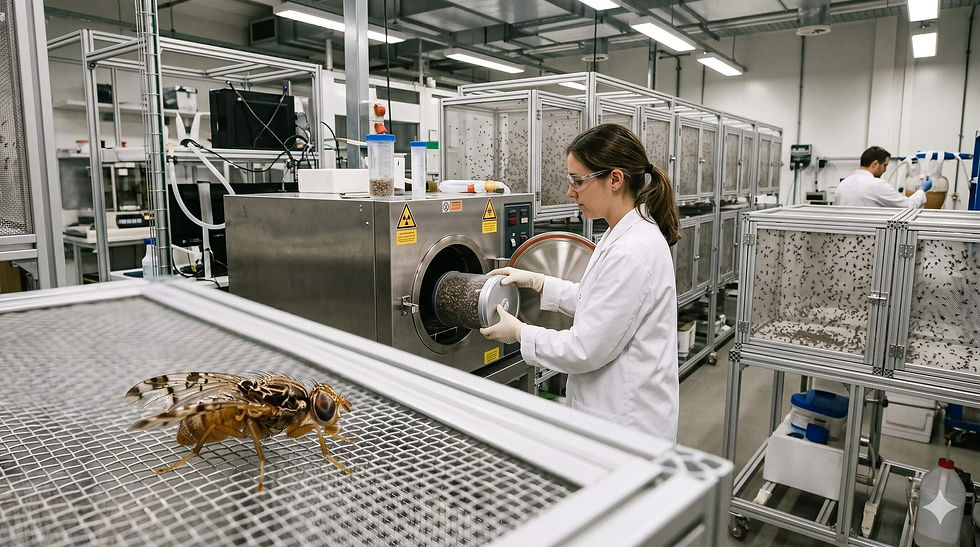
The success of SIT depends upon the continuous, industrial-scale production of high-quality competitive flies. A major early logistical hurdle was the development of an artificial diet, which eliminated the reliance on infesting live animals66.
In the 1930s, Melvin and Bushland developed an initial diet consisting of lean ground beef, bovine blood, water, and formaldehyde66. By the 1970s, to reduce the astronomical costs of procuring and refrigerating massive quantities of meat (which cost approximately $1.04 per pound), entomologists transitioned to a liquid vat diet utilizing spray-dried eggs (at $0.64 per pound) and dried bovine blood66. Modern rearing facilities, such as the Commission for the Eradication and Prevention of Screwworm (COPEG) plant in Pacora, Panama, utilize highly optimized gelled diets that incorporate a polyacrylate polymer gel or cellulose fiber. These advanced formulations reduce labor costs, emit fewer volatile odors, and maintain stable viscosity across a range of ambient humidities66.
The standard modern production diet relies on spray-dried bovine blood fractions. Because intact whole blood availability frequently fluctuates in the global market, the diet utilizes separated spray-dried red blood cells (hemoglobin) and spray-dried plasma, ideally mixed at an 80:20 ratio to maximize larval weight parameters70. Recent supply chain vulnerabilities—such as spikes in egg powder prices due to avian influenza—have prompted extensive research into alternative protein sources. Formulations replacing egg and milk powders with processed chicken viscera and feather by-products, or utilizing soy powder to accommodate transgenic strains, have demonstrated comparable efficacy in maintaining pupal size and adult flight propensity66.
Ingredient | Standard Production Diet (%) | Chicken By-Product Diet (%) | Soy Alternative Diet (%) |
Spray-dried RBCs | 3.60 | 3.60 | 3.60 |
Spray-dried Plasma | 0.90 | 2.40 | 0.90 |
Egg Powder | 5.00 | 0.00 | 5.00 |
Milk Powder | 4.50 | 0.00 | 0.00 |
Soy Powder | 0.00 | 0.00 | 4.50 |
Chicken By-products | 0.00 | 15.00 | 0.00 |
Cellulose Fiber | 5.50 | 5.00 | 5.50 |
Water | 80.44 | 73.94 | 80.47 |
Table 2: Chemical formulations of artificial larval diets utilized in mass rearing (expressed as a percentage of total mass). The chicken and soy diets represent recent innovations designed to improve supply chain resilience and cost-efficiency66.
Radiation and Sterilization
Sterilization is achieved by exposing mass-reared pupae to ionizing radiation, typically via Cobalt-60 gamma irradiators or high-energy X-ray sources62. Pupae are subjected to irradiation late in their development, specifically between 5.5 to 5.7 days of the pupal stage. This precise timing ensures that somatic cellular development is complete, while the actively dividing germline cells are selectively targeted by the radiation, inducing dominant lethal mutations in the hereditary material without destroying the insect's physical vigor64.
The exact radiation dose is critical: under-dosing allows residual wild fertility, while over-dosing severely impairs the mating competitiveness and longevity of the adult males. Experimental data dictates that an absorbed dose of 110 Gray (Gy) is the optimal sterilization threshold for both gamma and X-ray systems72. At 110 Gy, over 99 percent sterility is induced in the target insects without statistically significant degradations in adult emergence rates, flight propensity, mating latency, or relative mating indices compared to untreated control cohorts72.
Dispersal Logistics: Chilled Adult Release Systems
Historically, sterilized insects were transported and released via aircraft while still in the pupal stage, housed inside bio-degradable cardboard boxes that would mechanically open mid-air62. However, modern SIT logistics have increasingly transitioned to the highly efficient chilled adult release methodology.
In this protocol, pupae are allowed to emerge as adult flies within controlled facilities, where they are fed and allowed to physically mature8. Prior to release, the adult flies are immobilized by chilling them to approximately 4 to 6 degrees Celsius40. The dormant, chilled adults are then loaded into specialized automated release machines mounted in aircraft, drones, or ground vehicles.
Systems such as the Bruno Spreader Innovation (BSI™) utilize rotating mechanisms that drop specific quantities of flies uniformly across the target geographic area. Operating at low speeds (e.g., 0.6 revolutions per minute), these machines can consistently release approximately 60 flies per minute for low-density suppression targeting77. Advanced insect cassettes, such as the Birdview system, utilize microcontrollers and servomotors to retract transparent bottom sheets over individual cellular compartments, sequentially releasing specific clusters of flies based on programmed coordinates40.
System Component | Specifications & Details |
Operating Temperature | 4 to 6 degrees Celsius (induces and maintains immobilization) |
BSI™ Spreader Output | ~60 flies per minute at 0.6 rpm setting |
Birdview Cassette (Ver A.1) | 20 cells, 464 cubic cm volume, 11.5 minute controlled release runtime |
Birdview Cassette (Ver B) | 40 cells, 774 cubic cm volume, Wi-Fi enabled ESP8266 microcontroller |
Biological Impact | Chilling and mechanical release process shows no significant negative impact on male flight propensity, mating competitiveness, or insemination rates77. |
Table 3: Technical specifications and biological impacts of automated chilled adult release systems used in modern SIT dispersal operations40.
This methodology presents substantial advantages over pupal drops. Releasing mature, fed adult flies eliminates the predation and environmental mortality risks associated with pupae lying exposed on the ground. It also guarantees higher mating competitiveness immediately upon release and significantly reduces the volumetric weight of aerial payloads, as heavy cardboard packaging is no longer required74.
Epidemiology and the 2023–2026 Resurgence
The biological barrier established in the Darien Gap between Panama and Colombia was maintained successfully for nearly two decades through the continuous aerial dispersal of up to 50 million sterile flies per week from the COPEG facility2. However, beginning in mid-2023, the barrier failed to contain the pest, leading to an unprecedented epidemiological crisis across North America8.
Breach and Northward Expansion
The exact causes of the barrier failure are multifaceted. Epidemiological drivers include undocumented and illegal movement of infested cattle across porous borders, fluctuations in localized sterile fly production, climatic variations creating highly favorable breeding conditions, and gaps in regional veterinary surveillance4.
Once past the Darien Gap, the highly mobile nature of the adult fly—capable of dispersing up to 200 kilometers in a lifetime—facilitated a rapid northward sweep2. Through the remainder of 2023 and 2024, massive outbreaks were recorded in Costa Rica, Nicaragua, Honduras, El Salvador, Belize, and Guatemala16. By late 2024, the parasite had breached the southern border of Mexico, with infestations confirmed in Chiapas2. By May 2026, cases were documented in Coahuila, Mexico, mere miles from the United States border2.
The human toll of this resurgence has been severe. As the fly moved through Central America, thousands of human myiasis cases were documented, particularly in areas with dense livestock populations and urban settings lacking adequate wound care protocols. In Honduras alone, by early 2026, 76 human cases were reported in a short timeframe, including verified fatalities due to severe tissue necrosis and secondary infections caused by the larvae invading untreated wounds84. Furthermore, isolated travel-associated cases have been detected in the United States, including a Maryland resident returning from El Salvador, representing the first domestic human cases linked to the outbreak zone17.
The 2026 Texas Detection and Regulatory Response
Despite the suspension of live animal imports and the implementation of aggressive border inspections, the New World screwworm crossed into the United States. On June 3, 2026, the USDA Animal and Plant Health Inspection Service (APHIS) and the Texas Animal Health Commission (TAHC) confirmed an autochthonous case of C. hominivorax in a three-week-old calf in Zavala County, Texas, approximately 50 miles from the Mexican border16. Subsequent surveillance confirmed a secondary detection in the immediate vicinity shortly thereafter86.
The detection triggered a massive, pre-planned federal and state regulatory response under the frameworks of the National Veterinary Stockpile and the NWS Response Playbook. The TAHC immediately established "Infested Zone 01," a strict quarantine perimeter extending 20 kilometers around the detection sites encompassing areas of Zavala and Uvalde counties18. Under executive orders, the movement of all warm-blooded animals, hides, and carcasses out of the zone is strictly prohibited without mandatory veterinary inspection, prophylactic chemical treatment, and official movement certification18.
Simultaneously, the USDA expedited the deployment of intensive SIT operations. Utilizing the advanced chilled-adult release methodology, approximately 4 million sterile flies produced in Panama were rapidly dispersed over the infested zones in South Texas via fixed-wing aircraft, supplemented by localized ground-based release chambers85. Surveillance networks, utilizing specialized traps baited with synthetic attractants (e.g., Swormlure-4), were heavily intensified along the border to actively track the leading edge of the wild population20.
Conclusion
The biology and natural history of the New World screwworm present a unique convergence of evolutionary specialization and profound agricultural vulnerability. As an obligate consumer of living flesh, Cochliomyia hominivorax possesses anatomical and physiological adaptations—from sharp non-retractile mouth hooks to proteolytic excretions—that make it an exceptionally devastating parasite. However, its strict climatic limitations regarding cold intolerance, combined with the monandrous reproductive behavior of the females, provide the precise biological weaknesses necessary for large-scale human intervention.
The historical success of the Sterile Insect Technique remains one of the greatest achievements in modern entomological science. Through the continuous refinement of artificial larval diets, precision gamma and X-ray irradiation protocols operating at exactly 110 Gy, and the logistical advantages of chilled adult aerial dispersal utilizing automated micro-controlled cassettes, SIT provides an environmentally sustainable, species-specific weapon capable of collapsing wild populations.
Yet, the unprecedented 2023–2026 resurgence from Panama through Central America and Mexico, culminating in the 2026 Texas incursions, serves as a stark reminder of the parasite's explosive reproductive capacity and high mobility. The breakdown of the biological barrier highlights the inherent fragility of relying on localized containment zones without continuous, multi-national vigilance. Moving forward, the successful re-eradication and future containment of the New World screwworm will require the seamless integration of highly coordinated agricultural quarantines, the rapid deployment of advanced pharmacological treatments like systemic isoxazolines, and the relentless, scientifically optimized application of sterile insect releases across international borders.
Works cited
DPDx - New World Screwworm - CDC, https://www.cdc.gov/dpdx/newworldscrewwormmyiasis/index.html
Cochliomyia hominivorax - Wikipedia, https://en.wikipedia.org/wiki/Cochliomyia_hominivorax
Myiasis by Cochliomyia hominivorax (Coquerel, 1858): A Neglected Zoonosis in Brazil, https://www.scirp.org/journal/paperinformation?paperid=101131
Re-emergence of the New World Screwworm - Public Health Ontario, https://www.publichealthontario.ca/-/media/Documents/N/26/new-world-screwworm-focus.pdf?rev=538788ab30a34b26863677b8d178e0f6&sc_lang=en&hash=484BDD56E1D84BEE8996AF69223AB565
Myiasis During Adventure Sports Race - PMC, https://pmc.ncbi.nlm.nih.gov/articles/PMC3322748/
eradicating the screwworm - International Atomic Energy Agency, https://www.iaea.org/sites/default/files/21/07/nafa-ipc-technical-report-screwworm-eradication-africa-1992.pdf
Preparing Livestock Producers for New World Screwworm Reemergence in the United States | UA Cooperative Extension, https://extension.arizona.edu/publication/preparing-livestock-producers-new-world-screwworm-reemergence-united-states
W1338 Species Highlight: New World Screwworm - UT Institute of Agriculture, https://utia.tennessee.edu/publications/wp-content/uploads/sites/269/2025/08/W1338.pdf
Annotated bibliography of scientific research on new world screwworm (Cochliomyia hominivorax) myiasis in wildlife - USGS Publications Warehouse, https://pubs.usgs.gov/publication/ofr20261006/full
From Triumph to Threat - ArcGIS StoryMaps, https://storymaps.arcgis.com/stories/8e4617f337af41b1a083ab17deb95e2a
What is the New World screwworm, and why does it matter to Texas? - Texas A&M Stories, https://stories.tamu.edu/stories/what-is-the-new-world-screwworm-and-why-does-it-matter-to-texas/
Texas A&M AgriLife announces New World screwworm fact sheet, https://agrilifetoday.tamu.edu/2025/05/20/texas-am-agrilife-announces-new-world-screwworm-fact-sheet/
Back to the Frontlines: Renewed Battle Against the New World Screwworm – M3 AgTech, https://m3agtech.com/2025/06/08/back-to-the-frontlines-renewed-battle-against-the-new-world-screwworm/
Screwworm Program - U.S. Embassy in Costa Rica, https://cr.usembassy.gov/sections-offices/aphis/screwworm-program/
New World Screwworm: Rise, Fall and Resurgence - American Society for Microbiology, https://asm.org/articles/2025/september/new-word-screwworm-rise-fall-resurgence
New World Screwworm Outbreak - CDC, https://www.cdc.gov/new-world-screwworm/situation-summary/index.html
Cochliomyia hominivorax, New World Screwworm Fly (Diptera: Calliphoridae), https://www.lsuagcenter.com/articles/page1775058458668
New World Screwworms - Texas Animal Health Commission, https://www.tahc.texas.gov/emergency/nws.html
EXECUTIVE DIRECTOR ORDER DECLARING ANIMAL MOVEMENT RESTRICTIONS DUE TO NEWWORLD SCREWWORM IN UVALDE AND ZAVALA COUNTIES New Worl, https://www.tahc.texas.gov/regs/pdf/2026-06-3-NWS-Zone01.pdf
(PDF) New World screwworm (Cochliomyia hominivorax) and Old World screwworm (Chrysomya bezziana) - ResearchGate, https://www.researchgate.net/publication/285799662_New_World_screwworm_Cochliomyia_hominivorax_and_Old_World_screwworm_Chrysomya_bezziana
Blow flies of North America: Keys to the subfamilies and genera of Calliphoridae, and to the species of the subfamilies Calliphorinae, Luciliinae and Chrysomyinae, https://cjai.biologicalsurvey.ca/wp-content/uploads/2021/01/jwm_39.pdf
Cochliomyia - Grokipedia, https://grokipedia.com/page/Cochliomyia
Cochliomyia - Wikipedia, https://en.wikipedia.org/wiki/Cochliomyia
MOLECULAR CYTOGENETIC TESTING OF CHRYSOMYA BAZZIANA AND COCHLIOMYIA HOMINIVORAX (Diptera: Calliphoridae) IN AL-QADISSIYAH PROVI, https://repository.qu.edu.iq/wp-content/uploads/sites/31/2017/03/%D8%A7%D9%84%D8%A8%D8%AD%D8%AB2.pdf
https://www.researchgate.net/publication/24247706_Photographic_map_of_the_polytene_chromosomes_of_Cochliomyia_hominivorax#:~:text=Cochliomyia%20hominivorax%20has%20a%20diploid,(chromosomes%202%2D6).
Photographic map of the polytene chromosomes of Cochliomyia hominivorax | Request PDF, https://www.researchgate.net/publication/24247706_Photographic_map_of_the_polytene_chromosomes_of_Cochliomyia_hominivorax
https://academic.oup.com/g3journal/article/16/5/jkag053/8502022
Haplotype-resolved genome assemblies for the New World screwworm, Cochliomyia hominivorax (Diptera: Calliphoridae), using the tr - Oxford Academic, https://academic.oup.com/g3journal/advance-article-pdf/doi/10.1093/g3journal/jkag053/67168797/jkag053.pdf
Demographic and historical processes influencing Cochliomyia hominivorax (Diptera: Calliphoridae) population structure across South America - PMC, https://pmc.ncbi.nlm.nih.gov/articles/PMC11748309/
Lab Identification of New World Screwworm | CDC, https://www.cdc.gov/dpdx/resources/pdf/benchaids/NWS-Bench-Aid-2024-508.pdf
New World Screwworm Prevention for Animals - usda aphis, https://www.aphis.usda.gov/livestock-poultry-disease/cattle/ticks/screwworm
Characteristics of adult Cochliomyia hominivorax; note longitudinal... - ResearchGate, https://www.researchgate.net/figure/Characteristics-of-adult-Cochliomyia-hominivorax-note-longitudinal-thoracic-stripes-b_fig2_285799662
Chapter 3.1.14 New World screwworm (Cochliomyia hominivorax) and Old World screwworm (Chrysomya bezziana) - WOAH, https://www.woah.org/fileadmin/Home/eng/Health_standards/tahm/3.01.14_SCREWW.pdf
New World Screwworm Analysis - CASAS Global, https://www.casasglobal.org/new-world-screwworm-analysis/
(PDF) The new world screwworm: Prospective distribution and role of weather in eradication, https://www.researchgate.net/publication/260746169_The_new_world_screwworm_Prospective_distribution_and_role_of_weather_in_eradication
Rethinking Livestock Management to Consider Screwworm, https://agrilifeextension.tamu.edu/rethinking-livestock-management-to-consider-screwworm/
Clinical Overview of New World Screwworm - CDC, https://www.cdc.gov/new-world-screwworm/hcp/clinical-overview/index.html
Fact Sheet P13.02 - New World screwworm, Cochliomyia hominivorax (Coquerel), https://cdn.ymaws.com/www.eazwv.org/resource/resmgr/files/transmissible_diseases_handbook/5th_ed_transmissible_diseases_handbook/fact_sheets/p13.02_old_world_screwworm_5.pdf
Genetic analyses suggest that larval and adult stages of Lucilia cuprina employ different sensory systems | bioRxiv, https://www.biorxiv.org/content/10.1101/2024.12.20.629795v1.full
A 3D-printed adult release system compatible with a drone for aerial deployment of Aedes aegypti and Glossina palpalis gambiensis - PMC, https://pmc.ncbi.nlm.nih.gov/articles/PMC12763848/
New World Screwworm - The University of Arizona, https://acis.cals.arizona.edu/community-ipm/home-and-school-ipm-newsletters/ipm-newsletters/2025/10/30/new-world-screwworm
Fact Sheet P13.01 - New World screwworm, Cochliomyia hominivorax (Coquerel), https://cdn.ymaws.com/www.eazwv.org/resource/resmgr/files/transmissible_diseases_handbook/5th_ed_transmissible_diseases_handbook/fact_sheets/p13.01_new_world_screwworm_5.pdf
New world screwworm and its appearance in the eastern hemisphere, https://www.fao.org/4/t8600t/t8600T0j.htm
Introduction · STOP Screwworms: Selections from the Screwworm Eradication Collection · - National Agricultural Library, https://www.nal.usda.gov/exhibits/speccoll/exhibits/show/stop-screwworms--selections-fr/introduction
Body Odor and Sex: Do Cuticular Hydrocarbons Facilitate Sexual Attraction in the Small Hairy Maggot Blowfly? | Request PDF - ResearchGate, https://www.researchgate.net/publication/323773454_Body_Odor_and_Sex_Do_Cuticular_Hydrocarbons_Facilitate_Sexual_Attraction_in_the_Small_Hairy_Maggot_Blowfly
Modeling of Preferential Mating in Areawide Control Programs That Integrate the Release of Strains of Sterile Males Only or Both Sexes - Oxford Academic, https://academic.oup.com/aesa/article/99/3/607/78181
Mating Alters the Cuticular Hydrocarbons of Female Anopheles gambiae sensu stricto and Aedes aegypti (Diptera: Culicidae) | Journal of Medical Entomology | Oxford Academic, https://academic.oup.com/jme/article/39/3/545/836126
Myiasis - PMC - NIH, https://pmc.ncbi.nlm.nih.gov/articles/PMC3255963/
New World Screwworm: Re-Emergence in the Americas and Prevention Efforts, https://www.news-medical.net/health/New-World-Screwworm-Re-Emergence-in-the-Americas-and-Prevention-Efforts.aspx
MEDICINAL MAGGOTS: An Ancient Remedy for Some Contemporary Afflictions - Annual Reviews, https://www.annualreviews.org/doi/pdf/10.1146/annurev.ento.45.1.55
Mechanisms of Maggot-Induced Wound Healing: What Do We Know, and Where Do We Go from Here? - PMC, https://pmc.ncbi.nlm.nih.gov/articles/PMC3976885/
Maggot Therapy: The Science and Implication for CAM Part II—Maggots Combat Infection - PMC, https://pmc.ncbi.nlm.nih.gov/articles/PMC1513154/
The New World Screwworm in 2025: Current Situation, U.S. Response, and Veterinary Treatments, https://members.nafv.org/news/Details/the-new-world-screwworm-in-2025-current-situation-u-s-response-and-veterinary-treatments-297725
What Products are Available to Prevent and Treat New World Screwworm? - Drovers, https://www.drovers.com/news/what-products-are-available-prevent-and-treat-new-world-screwworm
Federal Regulatory Response to New World Screwworm and Implications for the Agricultural and Animal Health Industries - Duane Morris, https://www.duanemorris.com/alerts/federal_regulatory_response_new_world_screwworm_implications_agricultural_animal_health_0526.html
New World Screwworm: Information for Veterinarians - FDA, https://www.fda.gov/animal-veterinary/safety-health/new-world-screwworm-information-veterinarians
Enabling technologies to improve area-wide integrated pest management programmes for the control of screwworms - International Atomic Energy Agency, https://www.iaea.org/sites/default/files/21/05/nafa-ipc-d42009-final.pdf
Myiasis During Adventure Sports Race - Semantic Scholar, https://pdfs.semanticscholar.org/994d/3790e9c2f9f1e2c0cfcc92c118845db5fe86.pdf
The New World Screwworm in the United States: A Narrative Review Anchored to the 2025 Travel-Associated Human Case - PMC, https://pmc.ncbi.nlm.nih.gov/articles/PMC12591281/
Increased New World screwworm activity and potential for travel-associated cases - KDHE, http://www.kdhe.ks.gov/m/newsflash/Home/Detail/1688
New World screwworm fact sheet - Texas A&M AgriLife Extension Service, https://agrilifeextension.tamu.edu/new-world-screwworm-fact-sheet/
New World Screwworm Ready Reference Guide―Sterile Insect Response - usda aphis, https://www.aphis.usda.gov/sites/default/files/nws_rrg_sterileinsectresponse.pdf
The Sterile Insect Release Method and Other Genetic Control Strategies, https://ipmworld.umn.edu/bartlett
History of UT Entomology Part 4: Screwworms - Integrative Biology, https://integrativebio.utexas.edu/news/features/history-ut-entomology-part-4-screwworms
List of sterile insect technique trials - Wikipedia, https://en.wikipedia.org/wiki/List_of_sterile_insect_technique_trials
An alternative chicken-based diet for mass-rearing screwworm flies - Oxford Academic, https://academic.oup.com/jee/article/117/1/348/7451116
Squeezing Out Screwworm - AgResearch Magazine - USDA, https://agresearchmag.ars.usda.gov/2001/apr/worm/
Artificial Diet for Rearing Cochliomyia macellaria (Diptera: Calliphoridae) - Oxford Academic, https://academic.oup.com/jee/article/106/4/1927/809770
(PDF) An Artificial Diet for Rearing Cochliomyia macellaria (Diptera: Calliphoridae), https://www.researchgate.net/publication/256488377_An_Artificial_Diet_for_Rearing_Cochliomyia_macellaria_Diptera_Calliphoridae
https://pmc.ncbi.nlm.nih.gov/articles/PMC6007374/#:~:text=Spray%2Ddried%20powders%20of%20whole,Coquerel)%2C%20Diptera%3A%20Calliphoridae.
The Use of Dried Bovine Hemoglobin and Plasma for Mass Rearing New World Screwworm, https://pmc.ncbi.nlm.nih.gov/articles/PMC6007374/
X-rays are as effective as gamma-rays for the sterilization of Glossina palpalis gambiensis Vanderplank, 1911 (Diptera: Glossinidae) for use in the sterile insect technique - PMC, https://pmc.ncbi.nlm.nih.gov/articles/PMC10582188/
OOGENESIS AND RADIOSENSITIVITY IN COCHLIOMYIA HOMINIVORAX (DIPTERA: CALLIPHORIDAE) - The University of Chicago Press: Journals, https://www.journals.uchicago.edu/doi/pdfplus/10.2307/1539569
A new automated chilled adult release system for the aerial distribution of sterile male tsetse flies | PLOS One, https://journals.plos.org/plosone/article?id=10.1371/journal.pone.0232306
Cochliomyia hominivorax, https://vectorvbdwatch.tennessee.edu/cochliomyia-hominivorax/
Enhancing emergence and release methods of the sterile insect technique (SIT) to improve market access - AUSVEG, https://ausveg.com.au/app/data/technical-insights/docs/MT06049%20-%20Enhancing%20emergence%20and%20release%20methods%20of%20the%20sterile%20insect%20technique%20(SIT)%20to%20improve%20market%20access.pdf
A new automated chilled adult release system for the aerial distribution of sterile male tsetse flies - PMC, https://pmc.ncbi.nlm.nih.gov/articles/PMC7521752/
A new automated chilled adult release system for the aerial distribution of sterile male tsetse flies - ResearchGate, https://www.researchgate.net/publication/340649806_A_new_automated_chilled_adult_release_system_for_the_aerial_distribution_of_sterile_male_tsetse_flies
Use of a multiagency approach to eradicate New World screwworm flies from Big Pine Key, Florida, following an outbreak of screwworm infestation (September 2016–March 2017) in - AVMA Journals, https://avmajournals.avma.org/view/journals/javma/255/8/javma.255.8.908.xml
EENY-668/IN1146: New World Screwworm Cochliomyia hominivorax (Coquerel) (Insecta: Diptera: Calliphoridae) - Ask IFAS, https://ask.ifas.ufl.edu/publication/IN1146
PHFPC Briefing - Texas Department of State Health Services (DSHS), https://www.dshs.texas.gov/sites/default/files/phfpcommittee/docs/phfpc-emerging-infectious-immunizations-10.08.2025.pdf
US - USDA Confirms Presence of New World Screwworm in the United States - June 3, 2026 - FluTrackers, https://flutrackers.com/forum/forum/emerging-diseases-other-health-threats-alphabetical-i-thru-z/screwworm/1036281-us-usda-confirms-presence-of-new-world-screwworm-in-the-united-states-june-3-2026
New World Screwworm (NWS) | Veterinary Public Health | LAC DPH, http://ph.lacounty.gov/vet/new-world-screwworm/
First New World screwworm myiasis death in 2026 in Honduras, among 76 human cases, https://beaconbio.org/en/report/?reportid=8d7d13c2-a451-4fab-a330-481fdbebc9db&eventid=7a1ae0cb-6d86-4ea3-95cc-c1c141b3f696&page=2
USDA Confirms New World Screwworm Detection in Texas Calf, https://westernagnetwork.com/usda-confirms-new-world-screwworm-detection-in-texas-calf
Modified Executive Director Order Declaring Animal Movement Restrictions Due to New World Screwworm in Uvalde and Zavala Countie, https://www.tahc.texas.gov/regs/pdf/2026-06-5-NWS-Zone01.pdf
News Release: June 3, 2026: New World Screwworm Confirmed in Zavala County Calf, https://tpwd.texas.gov/newsmedia/releases/?req=20260603c
USDA Confirms Presence of New World Screwworm in the United States | Animal and Plant Health Inspection Service, https://www.aphis.usda.gov/news/agency-announcements/usda-confirms-presence-new-world-screwworm-united-states


Comments