More Than a Military Pact: How NATO Anchors U.S. Strategy, Science, and Industry


Article Overview |
|
Introduction: The Strategic Anchor of American Hegemony
The North Atlantic Treaty Organization (NATO) is frequently reduced in public discourse to a singular dimension: a military alliance formed to counter the Soviet Union, surviving past its expiration date into the twenty-first century. This reductive view obscures the intricate, multi-layered reality of the Alliance as the premier instrument of United States grand strategy. Since its inception in 1949, and through its post-Cold War reinventions, NATO has not merely served as a shield for Western Europe; it has functioned as a mechanism for institutionalizing American leadership, integrating global markets, and amplifying United States power projection. The Alliance is best understood not as a charitable security guarantee provided by Washington to "free-riding" allies, but as a strategic asset that pays dividends in economic stability, technological innovation, and diplomatic leverage.
This extensive analysis seeks to audit the full spectrum of the U.S.-NATO relationship. It traces the arc of American leadership from the binary containment of the Cold War to the complex "Great Power Competition" (GPC) of the modern era, characterizing how successive administrations—from Clinton to Trump to Biden—have utilized the Alliance to shape the global order. It further investigates the tangible, material benefits that flow back to the United States: the bolstering of the American Defense Industrial Base (DIB) through massive Foreign Military Sales (FMS), the "interoperability lock-in" that secures markets for U.S. aerospace giants, and the acceleration of critical research in hypersonics, oceanography, and cyber warfare through the NATO Science and Technology Organization (STO). Finally, the report engages in a rigorous counterfactual analysis, modeling the catastrophic consequences of a hypothetical U.S. withdrawal or the Alliance’s dissolution—a scenario that would likely precipitate the collapse of American global power projection, the blinding of its intelligence networks, and the cession of the Eurasian rimland to revisionist adversaries.
Part I: The Evolution of US Strategic Leadership
The history of NATO is inextricable from the history of U.S. foreign policy. The Alliance has served as the operational arm of the "Liberal International Order," adapting its mission profile to match the threat perceptions of Washington. This evolution has not been linear; it has been marked by shifts in strategic logic, from static defense to dynamic expansion, and recently, to a renewed focus on near-peer competition against the "DragonBear" partnership of Russia and China.
The Cold War and the Logic of Containment
For the first forty years of its existence, U.S. leadership in NATO was defined by the strategy of containment. The Alliance’s purpose, famously articulated by Lord Ismay, was to "keep the Soviet Union out, the Americans in, and the Germans down." During this period, U.S. leadership was largely unquestioned, anchored by the existential threat of the Warsaw Pact. The U.S. provided the nuclear umbrella and the bulk of conventional forces, while European allies provided the geographical depth and frontline manpower. This era established the foundational structures of interoperability and command that would later prove adaptable to new challenges.1
However, the dissolution of the Soviet Union in 1991 precipitated an existential crisis for the organization. With the primary threat vanquished, many realist scholars and isolationist policymakers in the United States predicted—or advocated for—the Alliance's dissolution. The survival and subsequent expansion of NATO were not inevitable; they were the result of deliberate strategic choices made by U.S. leadership to repurpose the Alliance as a tool for shaping the post-Cold War environment.
The Clinton Doctrine: Expansion as a "Security Hedge"
The presidency of Bill Clinton marked a decisive pivot in U.S. leadership. Faced with a vacuum in Central and Eastern Europe, the Clinton administration rejected retrenchment in favor of a strategy of "enlargement." This policy was predicated on the belief that a "gray zone" of unsecured states between a reunified Germany and a weakened Russia would invite future instability and revanchism.
President Clinton’s rationale for NATO expansion was multifaceted. Publicly, it was framed as a moral imperative to integrate the emerging democracies of Poland, Hungary, and the Czech Republic into the Western community of values. In a 1999 speech, Clinton argued that expansion would give these nations "the confidence and security to invest in the future," thereby deepening their democratic transitions.2
However, declassified documents and retrospective analyses reveal a sharper geopolitical calculus. The administration viewed expansion as a "security hedge" (or "neo-containment") against the potential resurgence of Russian imperialism. While hoping for a democratic Russia, U.S. strategists were "preparing for the worst".3 By extending the Article 5 security guarantee eastward, the U.S. effectively moved the perimeter of stability hundreds of miles closer to Moscow, precluding the re-emergence of a Russian sphere of influence in Central Europe.
Furthermore, this expansion was an economic strategy. U.S. leadership understood that security is a prerequisite for capital investment. By stabilizing Central and Eastern Europe, NATO membership reduced the risk premium for Western investors, opening new markets for U.S. corporations and integrating these economies into the European Union and the broader transatlantic trade architecture.2 This era established the precedent that NATO was not just a military alliance, but a political instrument for democratizing the European continent under U.S. oversight.
The Post-9/11 Era and Out-of-Area Operations
The attacks of September 11, 2001, triggered the only invocation of Article 5 in NATO’s history—in defense of the United States. This ushered in a period where U.S. leadership focused on transforming NATO into an expeditionary alliance capable of "out-of-area" operations. The logic was that in a globalized world, threats to the Euro-Atlantic area could originate from the Hindu Kush or the Horn of Africa.
U.S. leadership drove the Alliance to take command of the International Security Assistance Force (ISAF) in Afghanistan. While the strategic outcome of the war remains a subject of intense debate, the operational impact on NATO was profound. For two decades, U.S. forces fought alongside European allies, forcing an unprecedented level of interoperability. Allies were compelled to modernize their expeditionary capabilities, adopt U.S. standards for counterinsurgency, and integrate their special operations forces with U.S. commands.6 This period, while straining the Alliance politically, forged a cohesive military machine capable of complex joint operations, a capability that would later be vital for deterring state actors.
The Return of Great Power Competition (GPC)
The 2017 U.S. National Security Strategy (NSS) signaled a definitive end to the era of counterterrorism and a return to "Great Power Competition" (GPC).1 The Trump administration formalized the view that revisionist powers—specifically China and Russia—were actively attempting to reorder the international system. This shift required a fundamental retooling of NATO’s purpose, moving from crisis management back to collective territorial defense.
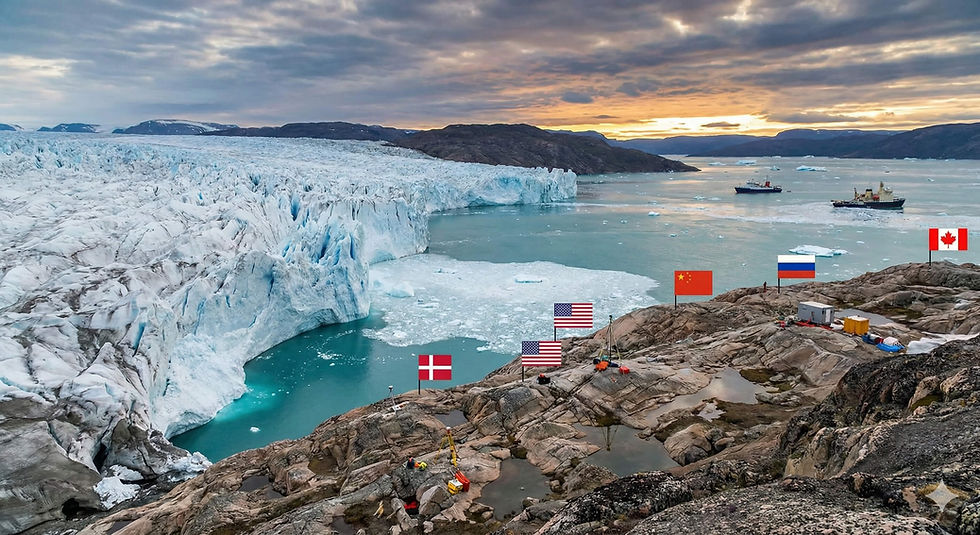
U.S. leadership during the Trump era was characterized by a transactional volatility that tested the Alliance's resilience. The administration applied immense, often abrasive, pressure on European allies to increase defense spending, questioning the value of the Alliance if members did not meet the 2% of GDP target. The diplomatic crisis over Greenland in 2019 exemplified this tension. Following a rebuffed offer to purchase the territory, the U.S. administration leveraged trade tariffs and threatened to downgrade participation in NATO advisory groups to signal dissatisfaction.8
Despite the diplomatic bruising, this pressure campaign achieved a long-sought strategic objective: it shattered the European complacency regarding defense investment. By 2024, spurred by both U.S. pressure and Russian aggression, a majority of NATO allies had formulated plans to reach or exceed the 2% spending target, directly alleviating the burden on U.S. taxpayers and increasing the aggregate military power of the West.10
The Biden Era and the "DragonBear" Dynamic
The current phase of U.S. leadership, under the Biden administration, has focused on repairing transatlantic unity while aggressively expanding the Alliance's aperture to include the Indo-Pacific. The strategic environment is now defined by the "DragonBear" dynamic—the deepening coordination between the People's Republic of China (PRC) and the Russian Federation.12
The 2022 Madrid Summit was a watershed moment for U.S. diplomacy within NATO. American negotiators successfully advocated for the inclusion of China in the Alliance’s new "Strategic Concept," marking the first time NATO formally recognized Beijing’s coercive policies and "no limits" partnership with Moscow as a challenge to Euro-Atlantic security.13 This was a significant victory for U.S. grand strategy, effectively globalizing the Alliance. It linked the security of Europe to the security of Asia, creating a framework where European allies are increasingly aligned with U.S. efforts to contain Chinese technological and military expansion.6
Under this leadership, NATO has transitioned from a posture of "deterrence by punishment" (promising to liberate territory after an invasion) to "deterrence by denial" (preventing the invasion physically). This has manifested in the deployment of multinational battlegroups to the Eastern Flank, the pre-positioning of U.S. heavy equipment, and the integration of Finland and Sweden into the Alliance—moves that have fundamentally altered the strategic geography of Europe in Washington's favor.15
Part II: The Economic Dividend – NATO as a Multiplier for the US Economy
While the costs of the U.S. commitment to NATO are a frequent topic of political debate, the economic benefits are often understated. The Alliance functions as a massive, structured marketplace for the United States Defense Industrial Base (DIB). By establishing U.S. military standards as the default for 32 nations, NATO effectively locks allied defense establishments into the American industrial ecosystem, generating hundreds of billions of dollars in export revenue and supporting high-tech manufacturing jobs across the United States.
The Mechanics of Foreign Military Sales (FMS)
Foreign Military Sales (FMS) are the primary mechanism through which the U.S. government sells defense articles and services to foreign partners. This is not a simple commercial transaction; it is a complex government-to-government agreement that deepens strategic ties. In the context of NATO, the FMS system ensures that allied militaries are equipped with American hardware, creating long-term dependencies for spare parts, software updates, and training.
The rearmament of Europe following Russia’s 2022 invasion of Ukraine has triggered a historic surge in demand for U.S. weaponry. In Fiscal Year 2024, total U.S. defense exports (FMS) reached a record $117.9 billion, a staggering 45.7% increase from the $80.9 billion recorded in FY2023.17 This surge is driven primarily by NATO allies divesting from legacy Soviet-era equipment and standardizing on modern U.S. platforms.
Table 1: Growth in US Foreign Military Sales (FMS) (FY2023–FY2024)
Metric | FY 2023 Value (Billions USD) | FY 2024 Value (Billions USD) | Growth Rate | Primary Drivers |
Total FMS Volume | $80.9 | $117.9 | +45.7% | NATO Rearmament, Ukraine Aid Backfill |
3-Year Rolling Avg | $55.9 (FY21-23) | $83.6 (FY22-24) | +49.6% | Sustained demand trajectory |
Key Transactions | Poland (Apache, HIMARS) | Turkey (F-16), Germany (F-35) | N/A | Eastern Flank Modernization |
Data Sources: 17
This capital influx has a direct impact on the American workforce. Unlike foreign aid, FMS contracts are paid for by the purchasing nations (often with their own defense budgets) but executed by U.S. factories. For example, Poland’s acquisition of M1A1 Abrams tanks, HIMARS rocket systems, and AH-64E Apache helicopters translates directly into production shifts at the Joint Systems Manufacturing Center in Lima, Ohio, and Boeing’s facilities in Mesa, Arizona.18 The jobs supported by these sales are high-quality, high-wage positions. In 2024, the average salary for a worker in the U.S. defense sector was $112,000, roughly 50% higher than the national average.20 By 2025, this premium had widened further, reinforcing the role of defense exports as a pillar of the American industrial middle class.
The F-35 Lightning II: A Transatlantic Industrial Web
The F-35 Joint Strike Fighter program stands as the supreme example of how U.S. leadership in NATO creates a captive market for American technology. The program was designed from the outset as an international partnership, with allies contributing to development costs in exchange for industrial participation. Today, the F-35 is rapidly becoming the standard "fifth-generation" fighter for NATO air forces, with nations including the UK, Italy, Netherlands, Norway, Denmark, Belgium, Poland, Germany, and Finland procuring the jet.
The economic scale of this program is immense. Independent estimates place the total annual economic impact of the F-35 program on the U.S. economy at approximately $72 billion.21 It supports over 290,000 direct and indirect jobs across 45 states and Puerto Rico.21
Crucially, the F-35 creates a dynamic of "interoperability lock-in." An ally that operates the F-35 is integrated into a U.S.-controlled logistics and data network. The aircraft’s sophisticated sensor fusion and data links allow it to act as a quarterback for coalition operations, but this capability relies on proprietary U.S. software and mission data files.23 This technical reality makes it prohibitively expensive and operationally difficult for these nations to switch to non-U.S. suppliers in the future. By securing the NATO market for the F-35, the United States has effectively marginalized European competitors like the French Rafale or the Eurofighter Typhoon in key contests, ensuring the long-term dominance of U.S. aerospace firms.25
The "2% Dividend" and Supply Chain Resilience
The persistent U.S. demand for allies to spend 2% of their GDP on defense is often framed as burden-sharing, but it is also a revenue-generating strategy for the U.S. DIB. As European nations increase their budgets to meet this target, a significant proportion of that spending flows across the Atlantic. Between 2020 and 2024, the United States supplied 64% of all arms imports to European NATO states, a substantial increase from 52% in the previous five-year period.26 This dominance is partly due to the inability of the fragmented European defense industry to meet the rapid surge in demand, leaving the U.S. as the only supplier with the capacity to deliver high-end capabilities at scale.25
Furthermore, the U.S. is now leveraging Allied industrial capacity to address its own supply chain vulnerabilities. The war in Ukraine exposed critical shortages in the production of 155mm artillery shells and solid rocket motors. In response, the U.S. has initiated co-production agreements with allies like Poland and Germany. These partnerships allow the U.S. to tap into Allied manufacturing bases to replenish its own stockpiles, effectively outsourcing surge capacity while maintaining control over the technical standards.18 This bidirectional industrial integration strengthens the resilience of the U.S. military, ensuring that in a high-intensity conflict, American forces can rely on a distributed network of friendly suppliers.
Part III: The Scientific Dividend – NATO as a Technology Incubator
Beyond the direct economic exchange of hardware, NATO serves as a powerful engine for scientific advancement and technological innovation. The NATO Science and Technology Organization (STO) operates as a force multiplier for U.S. research and development (R&D), providing access to a vast network of over 5,000 scientists and engineers from allied nations.29 Through this framework, the U.S. is able to cost-share high-risk research, access unique geographical testing environments, and crowdsource solutions to complex physical and engineering problems.
Deep Dive: Oceanography and Autonomous Systems at CMRE
The Centre for Maritime Research and Experimentation (CMRE), located in La Spezia, Italy, acts as NATO’s premier maritime research facility. For the United States Navy, CMRE provides critical data and testing capabilities that are essential for maintaining undersea dominance, particularly in the face of a resurgent Russian submarine threat.
1. The "Atlantification" of the Arctic and Sonar Physics
The strategic environment in the North Atlantic and Arctic is undergoing a profound physical transformation due to climate change. A phenomenon known as "Atlantification" is occurring, wherein warm, saline water from the Atlantic is intruding further north into the Arctic Ocean. This influx alters the thermocline—the distinct layer in a body of water where temperature changes more rapidly with depth than it does in the layers above or below.
In underwater warfare, the thermocline acts as a barrier to sound. Sonar waves bend (refract) as they pass through water layers of different temperatures and densities. The changing thermal structure of the Barents and Nordic Seas renders legacy Cold War-era acoustic models obsolete; a submarine that would have been detected in 1990 might now be acoustically invisible due to new refraction patterns.
To address this, CMRE conducted the NREP24 Sea Trial in June 2024. Utilizing autonomous underwater gliders equipped with advanced sub-bottom profiling sensors, NATO scientists gathered high-fidelity oceanographic data to map these new acoustic realities.29 This data is shared directly with the U.S. Navy, allowing American anti-submarine warfare (ASW) platforms to recalibrate their sonar algorithms, ensuring they can detect quiet Russian nuclear submarines in the altered environment of the High North.
2. JANUS: The "Wi-Fi of the Sea"
A persistent challenge in naval robotics has been the inability of underwater drones from different nations to communicate. Unlike in the air, where radio waves propagate freely, underwater communication relies on acoustic waves. Historically, each manufacturer used proprietary coding schemes, meaning a U.S. Navy drone could not "speak" to a British or Italian one.
CMRE led the development of STANAG 4748, known as the JANUS protocol. JANUS is the first digital underwater communication standard—effectively the "Wi-Fi of the sea." It defines a standardized frequency and coding preamble that allows disparate systems to establish a handshake and exchange data. The operational value of this was demonstrated during the REPMUS 24 exercise in Portugal, where real-time sensor data from a multi-national fleet of unmanned systems was fed directly into NATO command networks using the JANUS standard.30 For the U.S., this technology means that in a future mine-clearing operation, a U.S. command ship could seamlessly control a swarm of allied drones, exponentially increasing its operational reach without additional hardware costs.
Deep Dive: Aerospace and Hypersonics (AVT Panels)
The Applied Vehicle Technology (AVT) panel within the STO facilitates critical research into hypersonics, an area where the U.S. is locked in a fierce technological race with China and Russia.
1. Boundary Layer Transition and Entropy Swallowing
One of the most difficult physics problems in hypersonic flight (speeds exceeding Mach 5) is predicting the "boundary layer transition." This is the moment when the thin layer of air flowing over the vehicle’s surface switches from a smooth, orderly "laminar" flow to a chaotic, churning "turbulent" flow. Turbulent flow generates significantly more friction and heat—often enough to melt the vehicle's thermal protection system (TPS) or destabilize its flight path.
Through research groups like AVT-324 and AVT-346, U.S. researchers collaborated with allies to study these phenomena on complex geometries, such as blunt cones at high angles of attack.32 They investigated complex interactions like "entropy layer swallowing," a phenomenon where the layer of high-entropy gas created by the shock wave at the nose of the vehicle is absorbed into the boundary layer further downstream. This absorption changes the density and energy profile of the air near the skin, often triggering premature transition to turbulence.
By sharing wind tunnel data and computational fluid dynamics (CFD) models with allies like Germany and the UK, the U.S. gains access to a broader dataset than it could generate alone. This accelerates the development of more resilient heat shields and control surfaces for U.S. hypersonic glide vehicles, reducing the risk of catastrophic failure during flight tests.34
2. Operationalizing Hypersonic Defense (AVT-359)
While much U.S. domestic research focuses on the physics of building these weapons, the NATO AVT-359 study focused on the operational implications of defending against them. The study analyzed how hypersonic threats impact the military "OODA loop" (Observe, Orient, Decide, Act). The findings highlighted critical vulnerabilities in hypersonic missiles: while they are incredibly fast, the plasma sheath generated by their speed can blind their own sensors (a "blackout" effect), and their extreme maneuverability bleeds kinetic energy rapidly. The study concluded that these physical limitations create specific "engagement windows" where defensive systems can be effective.35 This insight is vital for U.S. missile defense planners designing the next generation of interceptors.
Electronic Warfare and Interoperability Standards
The Systems Concepts and Integration (SCI) panel has driven advances in Electronic Warfare (EW), particularly regarding operations in congested electromagnetic environments.
1. Cognitive Electronic Warfare
Modern battlefields are flooded with radio signals from civilian 5G networks, commercial radar, and friendly comms, making it difficult to identify enemy jamming or radar emissions. NATO’s SCI-293 task group has focused on developing "cognitive EW" capabilities—systems that use Artificial Intelligence (AI) to automatically analyze the radio spectrum, distinguish between hostile and benign signals, and devise novel jamming techniques in real-time. The MAI2F project (Maritime AI and Information Fusion), developed under this framework, successfully demonstrated AI algorithms that could predict ship trajectories and detect anomalies in maritime traffic, a capability that directly enhances U.S. domain awareness.38
2. STANAG 4586: The Universal Drone Interface
Perhaps the most significant yet underreported technical achievement is STANAG 4586. This standard defines the interface for Unmanned Control Systems (UCS), decoupling the ground control station from the air vehicle. Before this standard, a specific drone required its own specific cockpit or trailer. STANAG 4586 introduced the "Vehicle Specific Module" (VSM), a software translation layer that allows a generic NATO ground station to pilot any compliant aircraft.
This means that a U.S. Reaper drone crew could, in theory, take control of a British Watchkeeper or an Italian Predator during a mission if necessary.39 This "interchangeability" effectively expands the U.S. fleet size during coalition operations, allowing for dynamic tasking of assets regardless of national ownership.
Part IV: The Diplomatic Force Multiplier
Beyond the tangible realms of economics and technology, NATO serves as a massive force multiplier for U.S. diplomacy. It provides a structured bloc of democratic nations that amplifies American preferences in international forums, legitimizes U.S. foreign policy, and provides a mechanism for coordinating non-military forms of coercion such as sanctions.
The Quantitative Advantage in International Voting
Empirical research into voting behavior at the United Nations General Assembly (UNGA) reveals a strong, statistically significant correlation between NATO membership and alignment with U.S. positions. Studies analyzing voting patterns from 1991 to 2020 indicate that NATO member states are, on average, 8% more likely to vote in alignment with the United States than non-NATO democracies.41
This voting bloc is critical in an era where China and Russia are aggressively courting the "Global South" through the Group of 77 (G-77) and BRICS. As these revisionist powers seek to reshape international norms regarding human rights, internet sovereignty, and territorial integrity, NATO remains the most cohesive voting coalition resisting these shifts. The political unity of the Alliance prevents the "fragmentation" of the Western vote, ensuring that U.S. initiatives retain a critical mass of support and preventing adversaries from isolating Washington diplomatically.42
Sanctions Coordination as Asymmetric Warfare
In the 21st century, economic sanctions have become a primary tool of statecraft. However, the efficacy of sanctions is directly proportional to the size of the coalition enforcing them. Unilateral U.S. sanctions can often be circumvented; multilateral sanctions are devastating. NATO provides the political consultation mechanisms necessary to synchronize these complex economic weapons.
Following Russia’s invasion of Ukraine, the U.S. leveraged NATO channels to ensure near-total alignment on sanctions across Europe. This coordination went beyond mere trade bans; it involved the complex synchronization of export controls on dual-use technologies, financial asset freezes, and energy embargoes. This "sanctions firewall" denied the Kremlin access to critical components for its war machine and severed its ties to Western capital markets—an outcome that would have been diplomatically impossible to achieve if the U.S. had to negotiate separate bilateral agreements with 30 individual nations.43
Similarly, regarding China, the inclusion of the PRC as a "systemic challenge" in the 2022 Strategic Concept has provided the U.S. with the leverage to push for stricter controls on Chinese technology. By framing the dominance of companies like Huawei in 5G networks as a collective security risk to the Alliance, Washington has successfully persuaded allies to restrict or ban high-risk Chinese vendors, protecting the integrity of transatlantic intelligence sharing.13
Part V: Hypothetical Negative Effects of Diminished NATO Strength
To fully appreciate the strategic value of NATO, one must engage in counterfactual analysis. What would happen if the United States withdrew from the Alliance, or if NATO collapsed due to neglect? The consequences of such a scenario would be catastrophic, far outweighing any fiscal savings, and would likely signal the end of the American superpower status.
1. The Collapse of Global Power Projection
The U.S. military’s ability to project power globally is physically anchored in a network of bases in Europe that exist largely due to the NATO Status of Forces Agreements (SOFA).
Ramstein Air Base (Germany): This facility is not merely a local airbase; it is the central nervous system for U.S. operations across Africa and the Middle East. It houses the headquarters for U.S. Air Forces in Europe and Africa (USAFE-AFAFRICA) and serves as the primary logistical hub for medical evacuations and cargo transit. Losing access to Ramstein would force the U.S. to fly missions from the continental United States or rely on expensive, politically fragile agreements with third-party nations. Flight times would double, tanker requirements would skyrocket, and the U.S. response time to crises in the Middle East would degrade from hours to days.45
Naval Station Rota (Spain): This base hosts forward-deployed U.S. Aegis destroyers responsible for ballistic missile defense (BMD). These ships provide the first line of defense against missiles launched from the Middle East aimed at the U.S. or its allies. Without the NATO framework ensuring access, the U.S. BMD architecture would be severely compromised, leaving the homeland more vulnerable.46
2. Intelligence Blindness
The "Five Eyes" alliance is often cited as the gold standard of intelligence, but NATO provides a broader, tactical layer of intelligence sharing that is irreplaceable.
Loss of Human Intelligence (HUMINT): European intelligence services often possess deeper networks and linguistic capabilities in North Africa, the Balkans, and Russia than the CIA. A rupture in the Alliance would sever the formal liaison channels for sharing this data. The U.S. would lose "eyes and ears" on the ground, potentially missing early warning signals of terrorist plots or Russian hybrid operations until they reach American borders.12
Cyber Vulnerability: The NATO Cyber Operations Centre serves as a clearinghouse for malware signatures and threat intelligence. European networks are often the first victims of Russian cyberattacks. Without the real-time sharing mandated by NATO cooperation, USCYBERCOM would lose critical lead time to analyze and patch vulnerabilities before those same cyberweapons are turned against U.S. critical infrastructure.15
3. Economic Shock to the Defense Industrial Base
As detailed in Part II, the U.S. defense industry relies heavily on sales to NATO allies to maintain production lines and fund R&D. A political collapse of NATO would likely accelerate the European drive for "Strategic Autonomy."
The Loss of Markets: European nations, no longer trusting the U.S. security guarantee, would likely prioritize the development of indigenous weapons systems (e.g., the Future Combat Air System - FCAS) to replace U.S. imports. If Europe shifts its procurement to domestic industries, U.S. contractors could lose an estimated $20–$30 billion annually in revenue.
Rising Costs for the Pentagon: The loss of these export volumes would reduce economies of scale. The per-unit cost of F-35s or Abrams tanks purchased by the U.S. military would rise significantly as the fixed costs of production are spread over fewer units. This would force the Pentagon to either cut procurement numbers or demand higher budgets from Congress, creating a vicious cycle of rising costs and diminishing capabilities.25
4. The Geopolitical Vacuum and the "DragonBear" Hegemony
The most profound consequence would be geopolitical. The fragmentation of the Atlantic Alliance would cede the Eurasian rimland to the Sino-Russian partnership.
The "Finlandization" of Europe: Without the credible threat of U.S. intervention, Eastern European states might be forced to cut accommodationist deals with Russia to ensure their survival, effectively neutralizing them as independent strategic actors.
China’s Entry: A fractured Europe, lacking the collective bargaining power of the transatlantic bloc, would be highly susceptible to Chinese economic coercion. Beijing could leverage infrastructure investments through the Belt and Road Initiative to secure political loyalty, effectively pushing the U.S. out of the European market and ending the era of transatlantic democratic norms. This would isolate the United States in the Western Hemisphere, facing a united Eurasian bloc with superior aggregate resources and manpower.47
Conclusion
The empirical evidence and historical record presented in this report demonstrate that the North Atlantic Treaty Organization is not a relic of the past, nor a charitable burden on the United States. It is a highly adaptable, multi-dimensional instrument of American power.
Economically, it acts as a subsidy engine for the U.S. industrial base, generating billions in export revenue and sustaining hundreds of thousands of manufacturing jobs. Scientifically, it functions as an innovation accelerator, allowing the U.S. to leverage allied intellect to solve complex problems in hypersonics and oceanography. Diplomatically, it serves as a force multiplier, ensuring that American interests are defended by a coalition of 32 nations rather than Washington standing alone.
The alternative—a world without NATO—is not a world where the United States saves money and focuses on domestic renewal. It is a world where the United States is poorer, blind to emerging threats, and strategically isolated on the edge of a Eurasian supercontinent dominated by its adversaries. In the final analysis, the cost of leadership within NATO is a fraction of the price the United States would pay for its absence.
Works cited
The United States in a World of Great Power Competition - Международная аналитика, accessed January 20, 2026, https://www.interanalytics.org/jour/article/download/296/286
STRENGTHENING NATO AND EUROPEAN SECURITY - The White House, accessed January 20, 2026, https://clintonwhitehouse5.archives.gov/WH/EOP/NSC/html/nsc-05.html
Bill Clinton: Why I Expanded NATO : r/CredibleDefense - Reddit, accessed January 20, 2026, https://www.reddit.com/r/CredibleDefense/comments/tyfct0/bill_clinton_why_i_expanded_nato/
NATO-Russia charter 1997 was “forced step,” said Yeltsin | National Security Archive, accessed January 20, 2026, https://nsarchive.gwu.edu/briefing-book/nato-75-russia-programs/2024-07-09/nato-russia-charter-1997-was-forced-step-said
Report to Congress on NATO Enlargement - State Department, accessed January 20, 2026, https://1997-2001.state.gov/regions/eur/9702nato_report.html
Special Operations Forces in an Era of Great Power Competition - Henry A. Kissinger Center for Global Affairs, accessed January 20, 2026, https://kissinger.sais.jhu.edu/programs-and-projects/kissinger-center-papers/special-operations-forces-era-great-power-competition/
Winning the Infinite Game: Defining Victory in Strategic Competition - AHS, accessed January 20, 2026, https://alexanderhamiltonsociety.org/security-strategy/issue-one/winning-the-infinite-game-defining-victory-in-strategic-competition/
The US and NATO can avoid catastrophe over Greenland and emerge stronger. Here’s how., accessed January 20, 2026, https://www.atlanticcouncil.org/dispatches/the-us-and-nato-can-avoid-catastrophe-over-greenland-and-emerge-stronger-heres-how/
Trump's Greenland threats spark outrage from EU and test longtime NATO alliance, accessed January 20, 2026, https://www.wdrb.com/news/national/trumps-greenland-threats-spark-outrage-from-eu-and-test-longtime-nato-alliance/article_6ffe321e-e32f-524d-8f9b-e65b17416c57.html
Trump's Five Percent Doctrine and NATO Defense Spending | PIIE, accessed January 20, 2026, https://www.piie.com/blogs/realtime-economics/2025/trumps-five-percent-doctrine-and-nato-defense-spending
As Trump twists NATO's arm, let's run the math on defense spending - Brookings Institution, accessed January 20, 2026, https://www.brookings.edu/articles/as-trump-twists-natos-arm-lets-run-the-math-on-defense-spending/
Integrated Deterrence and US Defense Strategy in NATO and AUKUS - DoD, accessed January 20, 2026, https://media.defense.gov/2025/Sep/25/2003808532/-1/-1/1/GLOBAL%20-%20DOLAN%20-%20DISCLAIMER.PDF
NATO 2022 Strategic Concept, accessed January 20, 2026, https://www.nato.int/en/about-us/official-texts-and-resources/strategic-concepts/nato-2022-strategic-concept
FACT SHEET: The 2022 NATO Summit in Madrid - U.S. Embassy & Consulates in China, accessed January 20, 2026, https://china.usembassy-china.org.cn/fact-sheet-the-2022-nato-summit-in-madrid/
Deterrence and defence | NATO Topic, accessed January 20, 2026, https://www.nato.int/en/what-we-do/deterrence-and-defence/deterrence-and-defence
Key Outcomes from the Madrid Summit - State Department Home, accessed January 20, 2026, https://2021-2025.state.gov/briefings-foreign-press-centers/key-outcomes-from-the-madrid-summit/
Fiscal Year 2024 U.S. Arms Transfers and Defense Trade - U.S. Department of State, accessed January 20, 2026, https://www.state.gov/fiscal-year-2024-u-s-arms-transfers-and-defense-trade
DOD Has Seen 'Huge' Increase in Military Sales Since Ukraine Invasion, accessed January 20, 2026, https://www.war.gov/News/News-Stories/Article/Article/3736017/dod-has-seen-huge-increase-in-military-sales-since-ukraine-invasion/
Europe's Defense Investment Fuels NATO Strength—and U.S. Jobs - U.S. Mission to the North Atlantic Treaty Organization, accessed January 20, 2026, https://nato.usmission.gov/europes-defense-investment-fuels-nato-strength-and-u-s-jobs/
The Impact of Global Defense Policies on U.S. Job Creation - JOBSwithDOD, accessed January 20, 2026, https://jobswithdod.com/department-of-defense-analysis/the-impact-of-global-defense-policies-on-u-s-job-creation/
Economic Impact - F-35 Lightning II, accessed January 20, 2026, https://www.f35.com/f35/about/economic-impact.html
EVALUATING THE ECONOMIC IMPACT OF THE F-35 - Lockheed Martin, accessed January 20, 2026, https://www.lockheedmartin.com/content/dam/lockheed-martin/aero/f35/documents/Aerodynamic-Advisory-White-Paper_FINAL.pdf
How Exporting F-35 Fighter Jets Strengthens the United States - The National Interest, accessed January 20, 2026, https://nationalinterest.org/blog/buzz/how-exporting-f-35-fighter-jets-strengthens-united-states-hk-110225
F-35 Lightning II: Background and Issues for Congress, accessed January 20, 2026, https://www.congress.gov/crs-product/R48304
Europe's dependence on US foreign military sales and what to do about it - Bruegel, accessed January 20, 2026, https://www.bruegel.org/policy-brief/europes-dependence-us-foreign-military-sales-and-what-do-about-it
SIPRI Fact Sheet March 2025: Trends in International Arms Transfers, 2024 [EN/CA/SV], accessed January 20, 2026, https://reliefweb.int/report/world/sipri-fact-sheet-march-2025-trends-international-arms-transfers-2024-encasv
Trends in International Arms Transfers, 2024 - SIPRI, accessed January 20, 2026, https://www.sipri.org/sites/default/files/2025-03/fs_2503_at_2024_0.pdf
United States Defense Industrial Base - European Parliament, accessed January 20, 2026, https://www.europarl.europa.eu/RegData/etudes/BRIE/2025/777967/EPRS_BRI(2025)777967_EN.pdf
HIGHLIGHTS - NATO Science and Technology Organization, accessed January 20, 2026, https://www.sto.nato.int/wp-content/uploads/2024-nato-sto-highlights-web-v3-1-2025-03-31.pdf
Anchor Alert - NATO STO CMRE, accessed January 20, 2026, https://www.cmre.nato.int/anchor-alert-nrv-alliance-detects-undersea-threats-in-baltic-first/
NATO's Digital Ocean Initiative gets a boost in Portugal, accessed January 20, 2026, https://www.nato.int/en/news-and-events/articles/news/2024/09/20/natos-digital-ocean-initiative-gets-a-boost-in-portugal
Hypersonic Boundary-Layer Transition on Blunted Cones at Angle of Attack - NASA Technical Reports Server, accessed January 20, 2026, https://ntrs.nasa.gov/api/citations/20210017225/downloads/Paredes_Aviation_2021%200616.pdf
Predicting Hypersonic Boundary-Layer Transition on Complex Geometries: Chapter 1 - General Introduction - electronic library -, accessed January 20, 2026, https://elib.dlr.de/214036/
Testing materials to their hypersonic limits for next generation aircraft, accessed January 20, 2026, https://www.aerospacetestinginternational.com/features/testing-materials-to-their-hypersonic-limits-for-aircraft.html
Applied Vehicle Technology Panel Archives, accessed January 20, 2026, https://www.sto.nato.int/panels/avt/
Hypersonic Capabilities: A Journey from Almighty Threat to Intelligible Risk, accessed January 20, 2026, https://www.armyupress.army.mil/Journals/Military-Review/English-Edition-Archives/March-2024/Hypersonic-Capabilities/
NATO AVT Hypersonic Operational Threats - YouTube, accessed January 20, 2026, https://www.youtube.com/watch?v=1tTmEqXr1vg
NATO Science & Technology Organization: 2020 Highlightsopens in a new tab, accessed January 20, 2026, https://www.nato.int/content/dam/nato/legacy-wcm/media_pdf/2021/4/pdf/210419-NATO_STO_Highlights_2020.pdf
STANAG 4586 - Wikipedia, accessed January 20, 2026, https://en.wikipedia.org/wiki/STANAG_4586
STANAG 4586–Standard Interfaces of UCS for NATO UAV Interoperability, accessed January 20, 2026, https://publications.sto.nato.int/publications/STO%20Educational%20Notes/STO-EN-SCI-271/EN-SCI-271-03.pdf
Bloc Politics at the UN: How Other States Behave When the United States and China–Russia Disagree - Oxford Academic, accessed January 20, 2026, https://academic.oup.com/isagsq/article/3/3/ksad034/7223049
Bloc Politics at the UN: How Other States Behave When the United States and China–Russia Disagree, accessed January 20, 2026, https://sgpp.arizona.edu/sites/default/files/documents/Published%20Paper_Nurullayev.pdf
Issue brief: A NATO strategy for countering Russia - Atlantic Council, accessed January 20, 2026, https://www.atlanticcouncil.org/in-depth-research-reports/issue-brief/issue-brief-a-nato-strategy-for-countering-russia/
Relations with Russia | NATO Topic, accessed January 20, 2026, https://www.nato.int/en/what-we-do/partnerships-and-cooperation/relations-with-russia
NATO Without America? $1 Trillion Price Tag For Europe To Boost Military Might; Will Brussels Bite The Bullet? - EurAsian Times, accessed January 20, 2026, https://www.eurasiantimes.com/nato-without-america-1-trillion-price-tag-for-europe/
Reducing the US Force Presence in Europe Would Weaken American Interests, accessed January 20, 2026, https://www.hudson.org/defense-strategy/reducing-us-force-presence-europe-would-weaken-american-interests-daniel-kochis
The End of an Era: What the US Retreat from European Security Means for the World, accessed January 20, 2026, https://behorizon.org/the-end-of-an-era-what-the-us-retreat-from-european-security-means-for-the-world/
The Future of US Bases in Europe: General (Ret.) Gordon B. Davis - CEPA, accessed January 20, 2026, https://cepa.org/article/the-future-of-us-bases-in-europe-general-ret-gordon-b-davis/


Comments